
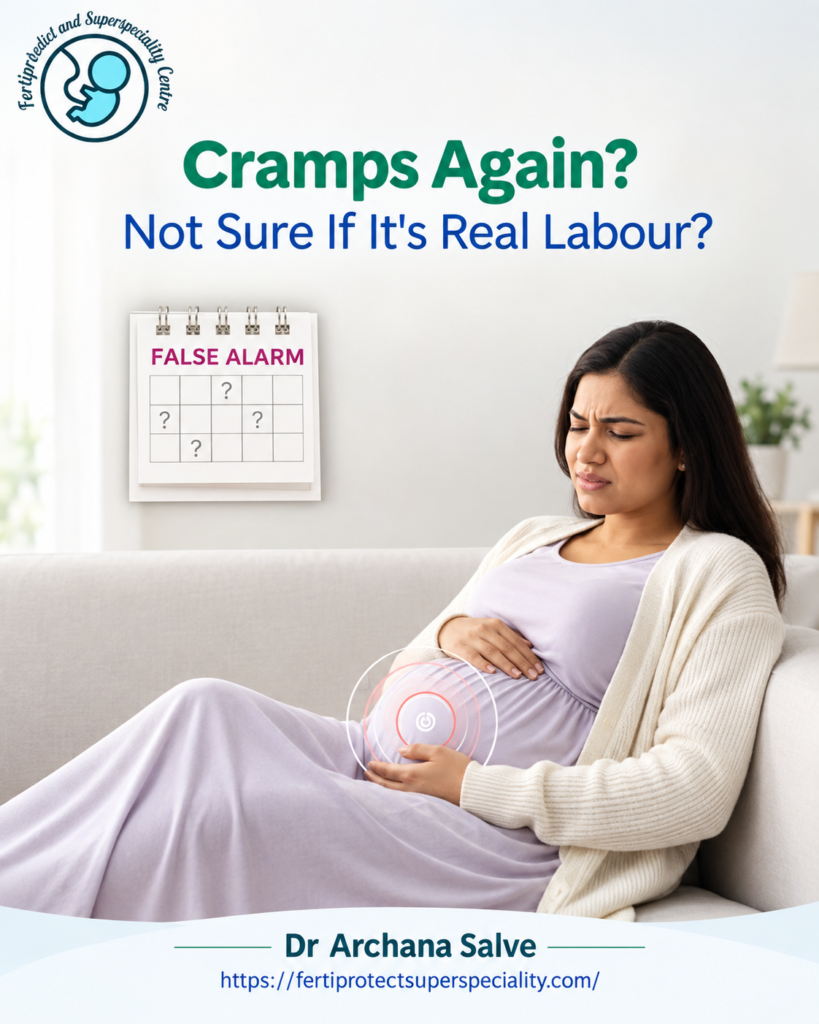
As the expected delivery date approaches, every new cramp, tightening sensation, or backache can raise an important question: “Is labour starting?” This uncertainty is common, particularly for first-time mothers. The body undergoes many changes during the final weeks of pregnancy, and some of these changes can feel similar to the early stages of labour.
Understanding the general differences between Braxton Hicks contractions, often called practice or false labour contractions, and true labour contractions can help expectant mothers know when they should contact their maternity healthcare provider.
For women seeking pregnancy guidance from Dr. Archana Salve best gynecologist-obstetrician in Viman Nagar, consultation can help assess symptoms, monitor maternal and fetal well-being, and provide individual guidance as delivery approaches.
What Are Braxton Hicks Contractions?
Braxton Hicks contractions are uterine contractions that may occur during pregnancy without indicating that active labour has begun. They are sometimes described as practice contractions because the uterus tightens and then relaxes.
A woman may notice her abdomen becoming firm or tight for a short period before relaxing again. These contractions can become more noticeable later in pregnancy.
Unlike true labour, Braxton Hicks contractions are generally irregular. They usually do not develop into a consistent pattern of contractions that progressively become longer, stronger, and closer together.
However, every pregnancy is different. Symptoms alone should not be used to make a definite diagnosis at home when there is uncertainty.
What Does True Labour Feel Like?
True labour contractions tend to follow a more organised and progressive pattern. They may initially feel like menstrual cramps, pressure, lower abdominal discomfort, or backache.
As labour progresses, contractions generally become more regular, last longer, feel stronger, and occur closer together. Rather than disappearing completely after resting or changing position, they tend to continue and progress.
The experience of labour can vary significantly between women. Some notice abdominal tightening first, while others initially experience discomfort in their lower back or pelvis.
Because there is no single experience that applies to everyone, your maternity team’s personalised instructions should take priority over general online advice.
False Labour vs True Labour: What Should You Notice?
When cramps begin, paying attention to the pattern of contractions can provide useful information.
False labour contractions are commonly irregular and may not consistently increase in frequency or intensity. True labour contractions, on the other hand, typically establish a pattern and progressively become stronger and closer together.
Timing your contractions can therefore be useful. Note when each contraction begins, how long it lasts, and how much time passes before the next contraction begins.
The timing at which you should travel to the hospital can depend on several factors, including whether this is your first delivery, how far you live from the maternity facility, your pregnancy history, and instructions given by your obstetrician.
Other Signs That Labour May Be Approaching
Contractions are not the only changes that can occur as labour approaches.
Some women notice increased pelvic pressure, lower back discomfort, or a mucus discharge as the cervix begins changing. The membranes surrounding the baby may also rupture, commonly described as the “water breaking.”
The water breaking does not always happen as a dramatic gush. Sometimes it may present as a continuous trickle or persistent wetness.
If you think your waters may have broken, contact your maternity healthcare provider for advice rather than waiting for contractions to become painful.
When Should You Contact Your Doctor?
Pregnant women should seek professional advice whenever they are unsure about symptoms, particularly toward the end of pregnancy.
Prompt assessment is especially important if you experience vaginal bleeding, suspected rupture of membranes, reduced or changed fetal movements, severe or persistent abdominal pain, or contractions before 37 weeks of pregnancy.
Other concerning symptoms such as severe headache, vision changes, sudden swelling, breathing difficulty, or feeling significantly unwell should also receive medical attention.
Do not delay contacting your healthcare provider simply because you are unsure whether your symptoms are “serious enough.” Your maternity team can advise whether monitoring at home or an examination is appropriate.
Why Antenatal Care Matters Near Your Due Date
Regular antenatal check-ups remain important throughout the final weeks of pregnancy. These visits allow your obstetrician to review your health, discuss fetal movements, monitor relevant pregnancy parameters, and prepare you for labour and delivery.
They are also an opportunity to ask practical questions: When should contractions be timed? When should you call the hospital? What happens if your water breaks first? What symptoms require immediate attention?
Knowing these details before labour begins can make decision-making easier when contractions eventually start.
Preparing for Labour With Confidence
Preparation does not mean trying to predict exactly when labour will begin. Instead, it means knowing your maternity team’s instructions, understanding important warning signs, keeping necessary hospital information accessible, and knowing whom to contact when symptoms start.
Maintaining your scheduled pregnancy check-ups, discussing your birth plan, and asking questions about labour can help you approach the final stage of pregnancy with better information.
Pregnancy Care With Dr. Archana Salve
The final weeks before childbirth can bring both excitement and uncertainty. Knowing the broad differences between practice contractions and true labour is useful, but an online checklist cannot determine with certainty whether an individual woman is in labour.
The Google Business Profile Dr. Archana Salve provides information for patients seeking obstetric, antenatal, and pregnancy care in Viman Nagar. If cramps, contractions, or other pregnancy symptoms leave you uncertain, professional evaluation can provide guidance appropriate to your stage of pregnancy and individual circumstances.
Medical note: This article is intended for general educational purposes. Pregnancy symptoms should be discussed with your obstetrician or maternity healthcare team, particularly when symptoms are new, persistent, severe, or concerning.