
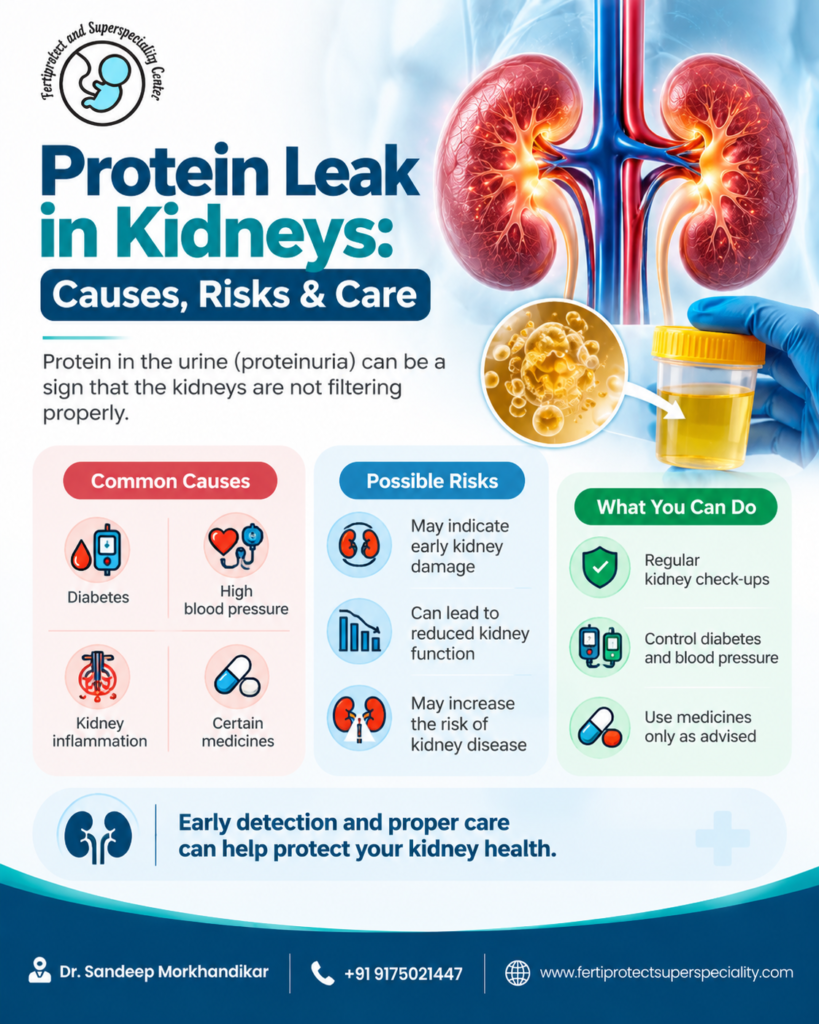
The kidneys work as natural filters for the blood. They remove waste products and excess fluid while retaining important substances, including proteins, within the bloodstream. When the kidney’s filtering system is affected, protein may pass into the urine.
The presence of protein in urine can be temporary or may indicate an underlying kidney concern that requires further assessment. A single abnormal urine report does not necessarily mean that a person has kidney disease. However, persistent protein in urine should be evaluated to understand its possible cause.
Protein Leak in Kidneys is commonly referred to as proteinuria or albuminuria, depending on the type of protein detected. Understanding why protein is appearing in urine is an important part of maintaining long-term kidney health.
At Fertiprotect and Superspeciality Centre, Dr. Sandeep Morkhandikar provides consultation and guidance for people with kidney-related concerns, abnormal urine reports, and conditions that may affect kidney function.
What Does Protein in Urine Mean?
Healthy kidneys normally prevent significant amounts of protein from passing into urine. Their filtering structures allow waste and excess fluid to pass while retaining essential proteins in the bloodstream.
When these filtering structures become affected, protein can appear in urine.
Protein in urine does not automatically indicate severe kidney disease. Temporary proteinuria may occur with dehydration, fever, infection, or strenuous exercise. This is why a doctor may recommend repeat testing before determining whether the finding is persistent.
Common Causes of Protein in Urine
1. Diabetes
Diabetes is an important risk factor for kidney problems. Persistently high blood sugar levels can affect the small blood vessels and filtering structures within the kidneys.
People with diabetes may benefit from regular Kidney Function Tests and urine assessments as advised by their healthcare professional.
2. High Blood Pressure
Uncontrolled high blood pressure can place additional stress on the blood vessels inside the kidneys.
Over time, this may affect kidney function and contribute to increased protein levels in urine. Maintaining healthy blood pressure is therefore an important part of Kidney Health.
3. Kidney Inflammation
Certain conditions affecting the kidney’s filtering units can cause protein and sometimes blood to appear in urine.
Inflammatory kidney conditions require appropriate medical evaluation to determine their cause and suitable management.
4. Temporary Health Changes
Protein may sometimes appear temporarily in urine due to:
- Dehydration
- Fever
- Infection
- Intense physical activity
- Temporary illness
An abnormal result should therefore be interpreted in relation to the person’s overall health and medical history.
What Are the Possible Symptoms?
Proteinuria may not cause noticeable symptoms, particularly during its early stages. It may be discovered during a routine urine examination.
Some people may notice:
- Foamy or unusually frothy urine
- Swelling around the eyes
- Swelling in the feet or ankles
- Changes in urination
- Elevated blood pressure
These symptoms can have several possible causes. They should not automatically be assumed to indicate kidney disease.
How Is Protein in Urine Evaluated?
A doctor may recommend different tests depending on the patient’s symptoms, medical history, and risk factors.
Urine Testing
Urine testing can help detect protein, albumin, blood, infection, and other abnormalities.
A urine albumin-to-creatinine ratio may also be recommended to assess albumin levels in urine.
Blood Tests
Blood tests can help assess kidney function. Common parameters may include creatinine and estimated glomerular filtration rate.
Blood Pressure Assessment
Blood pressure measurement is an important part of kidney evaluation because hypertension can both contribute to and result from kidney problems.
Imaging Tests
Depending on the clinical situation, imaging such as an ultrasound may be recommended to examine kidney structure and identify possible abnormalities.
What Are the Risks of Persistent Proteinuria?
Persistent protein in urine can be an important marker of kidney damage.
The significance depends on several factors, including:
- Amount of protein or albumin in urine
- Kidney function
- Duration of the abnormal finding
- Underlying medical condition
- Blood pressure and blood sugar levels
Proteinuria does not mean that kidney failure will definitely occur. However, persistent abnormalities should be monitored and appropriately managed.
How Is Proteinuria Managed?
Treatment depends on the underlying cause rather than simply treating the presence of protein in urine.
Depending on the individual’s condition, management may include:
Controlling Blood Pressure
Maintaining blood pressure within the recommended range can help protect kidney function.
Managing Diabetes
Good blood sugar management is important for reducing the risk of diabetes-related kidney complications.
Appropriate Medication
Certain medicines may help reduce protein loss through the kidneys in suitable patients. Medication should only be started or changed under professional medical guidance.
Dietary Management
Dietary recommendations may be provided according to kidney function, blood pressure, diabetes status, and overall health.
Regular Monitoring
Follow-up urine and blood tests can help doctors monitor kidney function and changes in protein levels.
Can Protein in Urine Be Prevented?
Not every cause of proteinuria can be prevented. However, several healthy habits can support better kidney health.
- Keep blood pressure under control
- Manage blood sugar levels
- Maintain a balanced diet
- Stay physically active as appropriate
- Avoid unnecessary medicines
- Follow medical advice regarding fluid intake
- Attend recommended health check-ups
- Do not ignore abnormal urine or blood test results
People with diabetes, hypertension, or a history of kidney disease may require regular monitoring.
When Should You Consult a Kidney Specialist?
Medical evaluation is particularly important when protein continues to appear in urine or when it occurs along with:
- Swelling
- Blood in urine
- Abnormal kidney function results
- High blood pressure
- Reduced urine output
- Recurrent urinary problems
A nephrologist can review your symptoms, medical history, urine reports, blood tests, and other relevant findings to determine whether further investigation is required.
Kidney Care with Dr. Sandeep Morkhandikar
Dr. Sandeep Morkhandikar at Fertiprotect and Superspeciality Centre provides guidance for patients with kidney-related concerns, abnormal urine findings, and conditions affecting kidney function.
Protein in urine should always be interpreted in context. A timely Kidney Evaluation can help identify possible causes and determine whether monitoring, lifestyle measures, medication, or additional investigation may be appropriate.
Taking an abnormal urine report seriously does not mean assuming the worst. It means understanding the finding and taking the appropriate next step for your kidney health.
Frequently Asked Questions
1. Is protein in urine always a sign of kidney disease?
No. Temporary factors such as dehydration, fever, infection, or strenuous exercise can sometimes cause protein to appear in urine. Persistent protein requires further evaluation.
2. What test checks protein in urine?
Urine testing, including an albumin-to-creatinine ratio, may be used to assess protein or albumin levels in urine.
3. Can diabetes cause protein in urine?
Yes. Diabetes can affect the kidney’s filtering structures and may result in increased albumin in urine.
4. Can high blood pressure cause proteinuria?
Yes. Long-term uncontrolled high blood pressure can affect kidney blood vessels and contribute to kidney damage.
5. Does foamy urine always mean protein in urine?
No. Foamy urine can occur for several reasons. Persistent or unexplained changes should be evaluated by a healthcare professional.
6. Can protein in urine be treated?
Management depends on the underlying cause. Controlling blood pressure and blood sugar, appropriate medication, lifestyle measures, and regular monitoring may be part of care.