
The kidneys continuously filter blood, remove waste products, regulate fluid levels, and help maintain the body’s electrolyte and acid-base balance. When kidney function suddenly declines, it can become an important medical concern that requires timely evaluation.
Dr. Sandeep Morkhandikar at Fertiprotect and Superspeciality Centre provides nephrology consultation for patients with kidney-related concerns and changes in kidney function.
What Is Acute Kidney Injury?
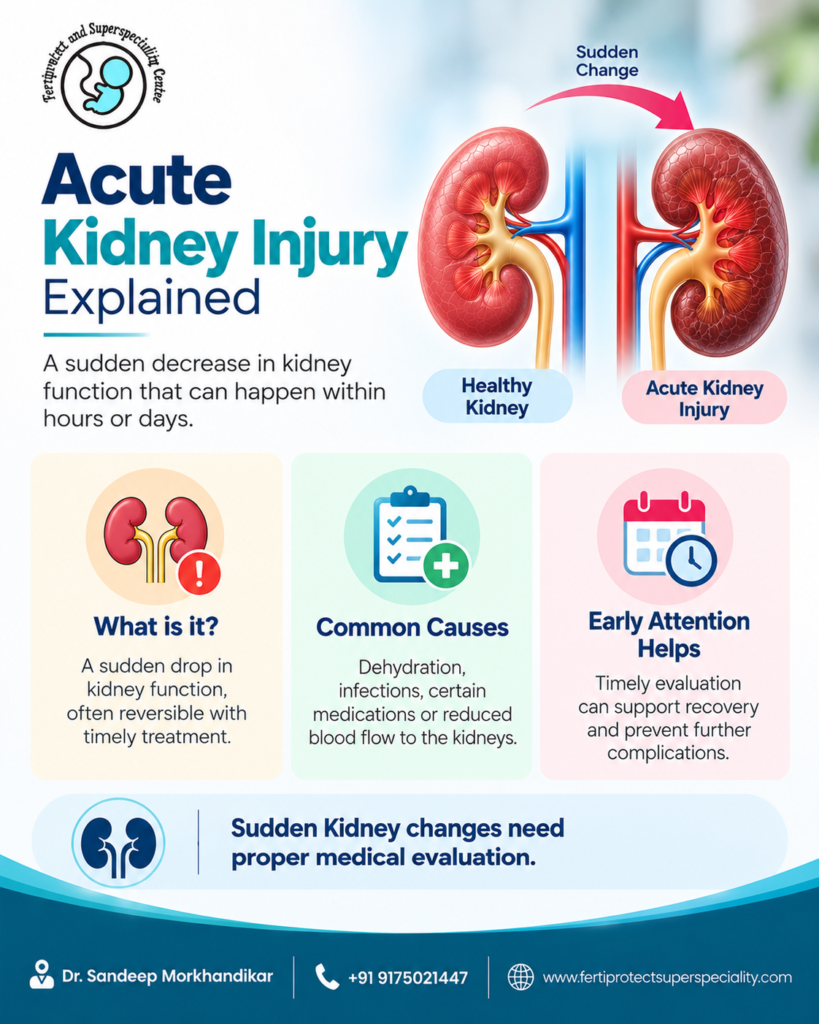
Acute Kidney Injury Explained refers to a sudden decrease in kidney function that develops over a relatively short period. It can occur because of reduced blood flow to the kidneys, direct kidney damage, infections, certain medicines, or blockage of urine flow.
The condition can range from mild changes detected through blood tests to more significant kidney dysfunction requiring hospital-based care. The underlying cause and severity play an important role in determining treatment.
What Causes Acute Kidney Injury?
There are several possible causes of a sudden decline in kidney function.
1. Dehydration and Reduced Blood Flow
Severe dehydration caused by vomiting, diarrhoea, fever, poor fluid intake, blood loss, or low blood pressure can reduce blood flow reaching the kidneys.
When the underlying problem is identified and treated promptly, kidney function may improve in appropriate cases.
2. Infections
Serious infections can affect circulation and place considerable stress on the kidneys. Infection-related kidney injury may occur alongside other changes in the body and requires appropriate medical management.
3. Certain Medicines
Some medicines can affect kidney function, particularly in people who are already vulnerable because of dehydration, older age, or existing kidney disease.
Medicines should not be started, stopped, or combined without appropriate medical guidance.
4. Urinary Tract Obstruction
A blockage that prevents urine from leaving the kidneys can contribute to kidney injury. Kidney stones, prostate-related obstruction and other urinary conditions can sometimes cause this problem.
5. Direct Kidney Conditions
Conditions affecting the kidney’s filtering structures, blood vessels, or tubules can also result in a sudden decline in kidney function.
The treatment depends on identifying the underlying cause rather than treating only the abnormal test result.
What Symptoms Can Occur?
Some people with acute kidney injury may not notice obvious symptoms initially. The condition may sometimes be discovered through blood tests performed during evaluation for another illness.
Possible symptoms include:
- Reduced urine output
- Swelling in the legs or feet
- Nausea or reduced appetite
- Unusual tiredness
- Breathlessness due to fluid accumulation
- Confusion in severe illness
- Changes in blood pressure
These symptoms can occur with many other medical conditions, so appropriate evaluation is important.
How Is Acute Kidney Injury Diagnosed?
Diagnosis usually involves a combination of medical history, physical examination, blood tests and urine assessment.
Blood Tests
Serum creatinine is commonly checked to assess changes in kidney filtration. Doctors may also monitor electrolytes and other blood parameters depending on the patient’s condition.
Urine Testing
Urine examination can provide useful information about possible causes of kidney dysfunction. Protein, blood and other findings may help guide further investigation.
Urine Output
Changes in the amount and frequency of urination can provide important clinical information. Monitoring urine output can be particularly important in seriously ill patients.
Imaging Tests
An ultrasound or other imaging investigation may be recommended when urinary obstruction or a structural kidney problem is suspected.
How Is Acute Kidney Injury Treated?
Treatment depends on the cause, severity and overall health of the individual.
Treating the Underlying Cause
The first step is identifying what has affected kidney function. Treatment may involve addressing dehydration, infection, obstruction, blood pressure problems or another underlying condition.
Reviewing Medicines
Doctors may review current medicines and adjust or stop medicines that could be contributing to kidney problems when clinically appropriate.
Managing Fluids and Electrolytes
Fluid treatment needs to be individualised. Some patients may need fluids, while others with fluid overload may require fluid restriction or other treatment.
Electrolyte abnormalities may also require monitoring and appropriate management.
Monitoring Kidney Function
Repeat blood and urine tests can help doctors determine whether kidney function is improving, remaining stable, or worsening.
Kidney Replacement Therapy
In severe cases, kidney replacement therapy such as dialysis may be required. The decision depends on the patient’s overall clinical condition and complications.
Can Kidney Function Recover?
Recovery depends on the cause, severity, duration of the injury and the person’s overall health.
Some patients may experience significant recovery after the underlying problem is treated. Others may have persistent kidney dysfunction or develop longer-term kidney problems.
Follow-up after an episode of acute kidney injury may therefore be important to assess recovery and ongoing kidney health.
Who May Be at Higher Risk?
Certain people may be more vulnerable to sudden kidney dysfunction, including those with:
- Existing chronic kidney disease
- Diabetes
- High blood pressure
- Heart or liver conditions
- Severe infections
- Significant dehydration
- Urinary obstruction
- Exposure to medicines that may affect kidney function
Having a risk factor does not mean that kidney injury will definitely occur, but it may make appropriate monitoring more important.
How Can Acute Kidney Injury Be Prevented?
Not every episode can be prevented, particularly when it occurs during serious illness. However, some general measures may help reduce avoidable risks.
- Stay appropriately hydrated, particularly during illnesses causing fluid loss.
- Avoid unnecessary self-medication.
- Inform your doctor about existing kidney disease before starting new medicines.
- Monitor diabetes and blood pressure as advised.
- Seek medical attention for severe vomiting, diarrhoea or infection.
- Report markedly reduced urine output promptly.
- Complete recommended blood and urine testing when you have kidney-related risk factors.
Fluid intake should be personalised for people with heart failure, advanced kidney disease or other conditions where excess fluid may be harmful.
When Should You Seek Medical Evaluation?
A sudden reduction in urine output, swelling, breathlessness, severe illness, persistent vomiting, or an unexpected change in kidney function warrants medical attention.
People who have recently been hospitalised or experienced significant kidney dysfunction may also require follow-up testing to assess recovery and longer-term kidney health.
Kidney Care With Dr. Sandeep Morkhandikar
Dr. Sandeep Morkhandikar at Fertiprotect and Superspeciality Centre provides nephrology consultation for kidney function abnormalities and kidney-related conditions.
A sudden change in kidney function should be evaluated in context. Identifying the cause, correcting reversible factors, monitoring kidney function and addressing complications are important components of appropriate care.
Timely medical evaluation can help guide the next steps and determine whether additional monitoring or treatment is needed.
Frequently Asked Questions
1. Is acute kidney injury always permanent?
No. Recovery varies considerably. Some people recover after the underlying cause is treated, while others may have persistent kidney problems.
2. Can dehydration affect kidney function?
Yes. Significant dehydration can reduce blood flow to the kidneys and contribute to acute kidney injury.
3. Can medicines cause kidney injury?
Yes. Certain medicines can contribute to kidney problems, particularly in susceptible individuals. Medication use should be reviewed by a healthcare professional when kidney function changes.
4. Can kidney stones cause acute kidney injury?
A urinary blockage caused by a kidney stone can contribute to kidney injury, particularly when the obstruction significantly affects urine drainage.
5. Is dialysis always needed?
No. Dialysis is required only in selected situations depending on the severity of kidney dysfunction and associated complications.
6. Should kidney function be checked after acute kidney injury?
Follow-up may be appropriate because some people can have ongoing kidney dysfunction after an acute episode. The timing and type of testing depend on the cause and severity.