Frozen Embryo Transfer (FET) has become a widely preferred option in assisted reproductive technology due to its higher success rates and flexibility. However, the success of an FET cycle does not depend solely on embryo quality—it is also strongly influenced by how well a woman prepares her body beforehand. Many couples unknowingly make mistakes before the procedure that can reduce implantation chances.
As a leading IVF Specialist in Kalyani Nagar, Dr Archana Salve emphasizes that careful planning, lifestyle discipline, and medical compliance play a crucial role in achieving a successful frozen embryo transfer. Below are some common mistakes to avoid before your FET cycle.
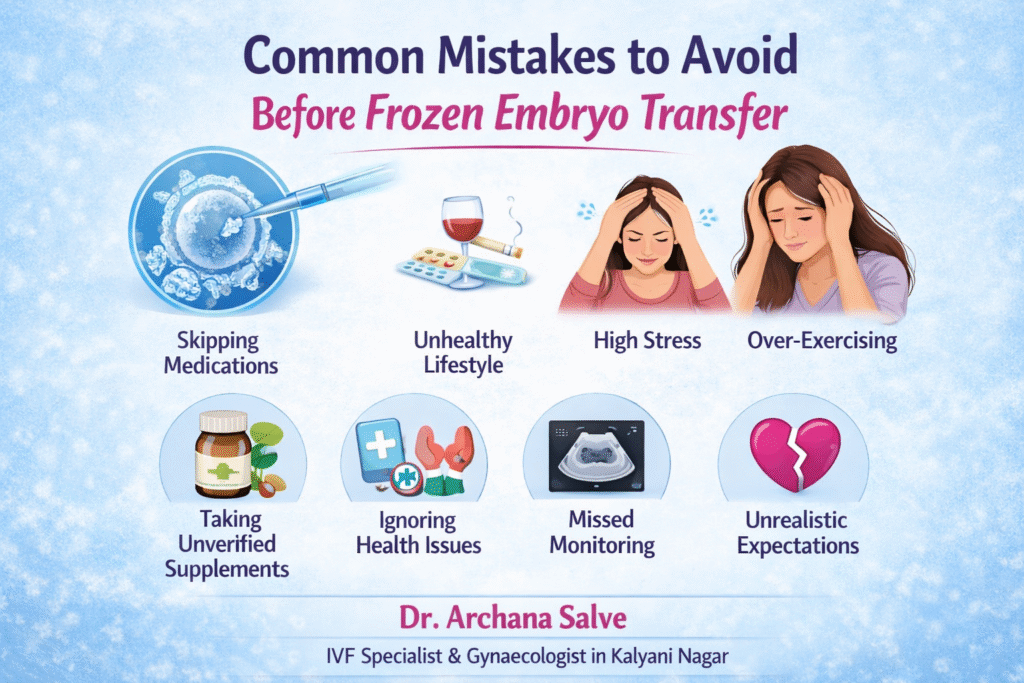
1. Ignoring Pre-Transfer Medical Instructions
One of the most common mistakes patients make is not strictly following their doctor’s instructions. Frozen embryo transfer cycles involve precise hormone preparation, including estrogen and progesterone support. Skipping doses, taking medications at irregular times, or self-adjusting dosages can disrupt endometrial receptivity.
It is essential to take medications exactly as prescribed and attend all scheduled ultrasounds and blood tests. These assessments ensure the uterine lining is at the ideal thickness and hormonal balance for embryo implantation.
2. Poor Lifestyle Choices Before Transfer
Lifestyle habits have a direct impact on fertility outcomes. Smoking, alcohol consumption, and excessive caffeine intake can negatively affect uterine blood flow and hormone balance, lowering implantation chances.
Dr Archana Salve, a trusted IVF Specialist in Kalyani Nagar, strongly advises patients to avoid smoking and alcohol at least a few weeks before embryo transfer. Maintaining a balanced diet, staying hydrated, and getting adequate sleep help create a supportive environment for implantation.
3. High Stress and Emotional Overload
Emotional stress is often underestimated but can significantly affect hormonal regulation. Anxiety, overthinking, and emotional exhaustion before the transfer can interfere with implantation by increasing stress hormones such as cortisol.
Practices like meditation, light yoga, deep breathing, or counselling can help manage emotional stress. As a compassionate Gynaecologist in Kalyani Nagar, Dr Archana Salve encourages patients to focus on mental well-being alongside physical preparation.
4. Over-Exercising or Complete Inactivity
While staying active is beneficial, excessive physical exertion before embryo transfer can be counterproductive. High-intensity workouts may reduce blood flow to the uterus and increase uterine contractions.
On the other hand, complete inactivity can also affect circulation. The key is balance—light walking, gentle stretching, or prenatal yoga is recommended, unless advised otherwise by your fertility specialist.
5. Self-Medication and Unverified Supplements
Many women take over-the-counter supplements, herbal remedies, or fertility boosters without consulting their doctor. Some of these substances may interfere with prescribed hormonal medications or affect implantation.
Before taking any supplement—even vitamins—always consult your IVF Specialist in Kalyani Nagar. Personalized medical guidance ensures safety and maximizes treatment effectiveness.
6. Neglecting Underlying Health Conditions
Conditions such as thyroid disorders, diabetes, PCOS, or uterine infections can reduce FET success if not properly managed. Some patients assume that embryo freezing alone guarantees success, overlooking the importance of overall reproductive health.
A thorough evaluation and treatment of any existing medical conditions before FET is essential. Dr Archana Salve carefully assesses and stabilizes such conditions to improve implantation and pregnancy outcomes.
7. Skipping Endometrial Preparation Monitoring
Endometrial lining thickness and receptivity play a vital role in embryo implantation. Missing scheduled scans or delaying follow-ups can lead to transfer at a suboptimal time.
Regular monitoring ensures that the embryo is transferred when the uterus is most receptive. A proactive approach guided by an experienced Gynaecologist in Kalyani Nagar can significantly improve success rates.
8. Unrealistic Expectations and Comparison
Comparing your IVF journey with others or expecting immediate results can lead to disappointment and stress. Every woman’s body responds differently, and success depends on multiple biological factors.
Understanding the process, trusting your doctor, and maintaining realistic expectations help create a positive mindset throughout the FET journey.
Conclusion
Frozen Embryo Transfer is a highly effective fertility treatment, but its success relies on careful preparation and avoiding common mistakes. Following medical advice, maintaining a healthy lifestyle, managing stress, and staying informed are key to improving implantation chances.
Under the expert care of Dr Archana Salve, a renowned Gynaecologist in Kalyani Nagar, patients receive personalized guidance and evidence-based treatment for optimal outcomes. With the right preparation and expert support, couples can move closer to achieving their dream of parenthood.
 Select an element to maximize. Press ESC to cancel.