Frozen Embryo Transfer (FET) is a crucial step in assisted reproductive treatment, offering hope to many couples on their fertility journey. While medical expertise and advanced technology play a vital role, diet and lifestyle choices before and after FET can significantly influence the outcome. Preparing your body holistically creates a healthier environment for embryo implantation and pregnancy.
According to Dr Archana Salve, one of the Best gynecologists in Kalyani Nagar, mindful nutrition and balanced daily habits can support hormonal balance, improve uterine receptivity, and enhance overall well-being during IVF treatment.
Why Diet and Lifestyle Matter in FET
FET involves transferring a previously frozen embryo into the uterus during a carefully planned cycle. The success of this process depends not only on embryo quality but also on the health of the uterine lining, hormonal stability, and reduced inflammation. A nutrient-rich diet and healthy lifestyle help optimize these factors, making your body more receptive to implantation.
Patients undergoing IVF Treatment in Kalyani Nagar are often advised to treat their body with extra care during this sensitive phase.
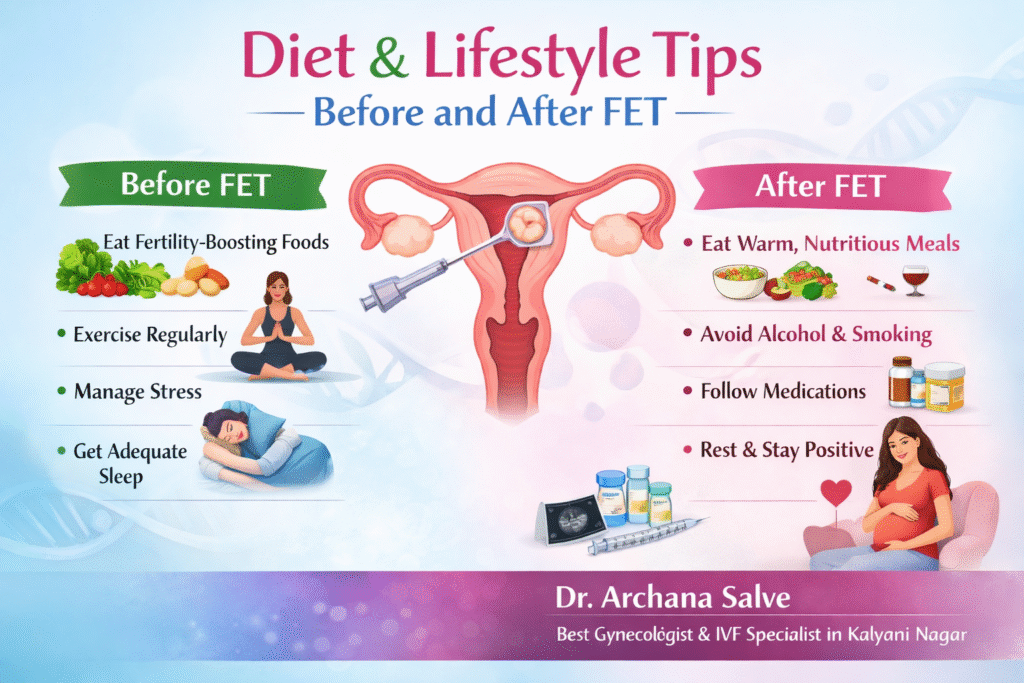
Diet Tips Before FET
1. Focus on Fertility-Boosting Nutrients
A balanced diet before FET should include:
- Folic acid (leafy greens, oranges, lentils)
- Iron (spinach, dates, beans)
- Omega-3 fatty acids (walnuts, flaxseeds)
- Protein (eggs, paneer, dals, lean meats)
These nutrients help prepare the uterine lining and support embryo development.
2. Include Whole and Natural Foods
Choose whole grains, fresh fruits, vegetables, nuts, and seeds. Avoid highly processed foods as they may cause inflammation and insulin imbalance, which can negatively impact fertility outcomes.
3. Maintain Healthy Hydration
Drink enough water to support blood circulation and hormone transport. Coconut water, herbal teas, and infused water can also be beneficial.
4. Limit Sugar and Refined Carbs
Excess sugar can lead to insulin resistance and hormonal fluctuations. Reduce intake of sweets, bakery items, sugary drinks, and white flour products before your FET cycle.
Lifestyle Tips Before FET
1. Maintain a Healthy Weight
Both underweight and overweight conditions can affect implantation success. Gentle weight management under medical guidance improves hormonal balance and uterine health.
2. Gentle Physical Activity
Light exercises such as walking, yoga, or stretching help improve blood flow to the reproductive organs. Avoid intense workouts that strain the body.
3. Prioritize Sleep
Aim for 7–8 hours of quality sleep daily. Sleep plays a vital role in hormone regulation and stress management.
4. Reduce Stress Levels
Stress can interfere with hormonal signals required for implantation. Meditation, deep breathing, journaling, or relaxing hobbies can help calm the mind.
Diet Tips After FET
Once the embryo transfer is completed, nutrition should focus on supporting implantation and early pregnancy.
1. Eat Warm, Easily Digestible Foods
Warm meals such as soups, khichdi, cooked vegetables, and dals improve digestion and blood circulation, supporting uterine comfort.
2. Continue Protein and Healthy Fats
Adequate protein intake supports cell growth and repair. Include healthy fats from nuts, seeds, and dairy products.
3. Increase Fiber Intake
Fiber helps maintain gut health and prevents constipation, which is common due to hormonal medications used during IVF Treatment in Kalyani Nagar.
4. Avoid Raw or Unpasteurized Foods
To reduce infection risk, avoid raw salads, unpasteurized dairy, and street food after FET.
Lifestyle Tips After FET
1. Avoid Complete Bed Rest
Contrary to popular belief, strict bed rest is not required. Gentle movement improves circulation. However, avoid heavy lifting, jumping, or strenuous exercise.
2. Emotional Well-Being Is Key
The waiting period after FET can be emotionally challenging. Stay connected with supportive family members and avoid excessive online searching that may increase anxiety.
3. Follow Medication Instructions Strictly
Hormonal support medications prescribed by your IVF Specialist in Kalyani Nagar are essential for implantation success. Take them exactly as directed.
4. Avoid Smoking, Alcohol, and Caffeine
Smoking and alcohol directly affect implantation and early pregnancy. Limit caffeine intake to minimal levels as advised by your doctor.
What to Avoid Before and After FET
- Junk food and trans fats
- Excessive caffeine
- Smoking and alcohol
- Heavy exercise
- Stressful environments
Making small but consistent changes can significantly improve outcomes.
Expert Guidance Matters
Every woman’s body responds differently to fertility treatment. Personalized guidance from an experienced specialist ensures the best possible care. Dr Archana Salve, a trusted name and one of the Best gynecologists in Kalyani Nagar, offers compassionate, evidence-based fertility care tailored to each patient’s needs.
With expert support, balanced nutrition, and mindful lifestyle habits, couples undergoing IVF Treatment in Kalyani Nagar can improve their chances of a successful FET and a healthy pregnancy.
Final Thought
Diet and lifestyle are not quick fixes, but they play a powerful supporting role in your fertility journey. Treat your body with patience, positivity, and care—and trust the process under the guidance of a skilled IVF Specialist in Kalyani Nagar like Dr Archana Salve.
 Select an element to maximize. Press ESC to cancel.