
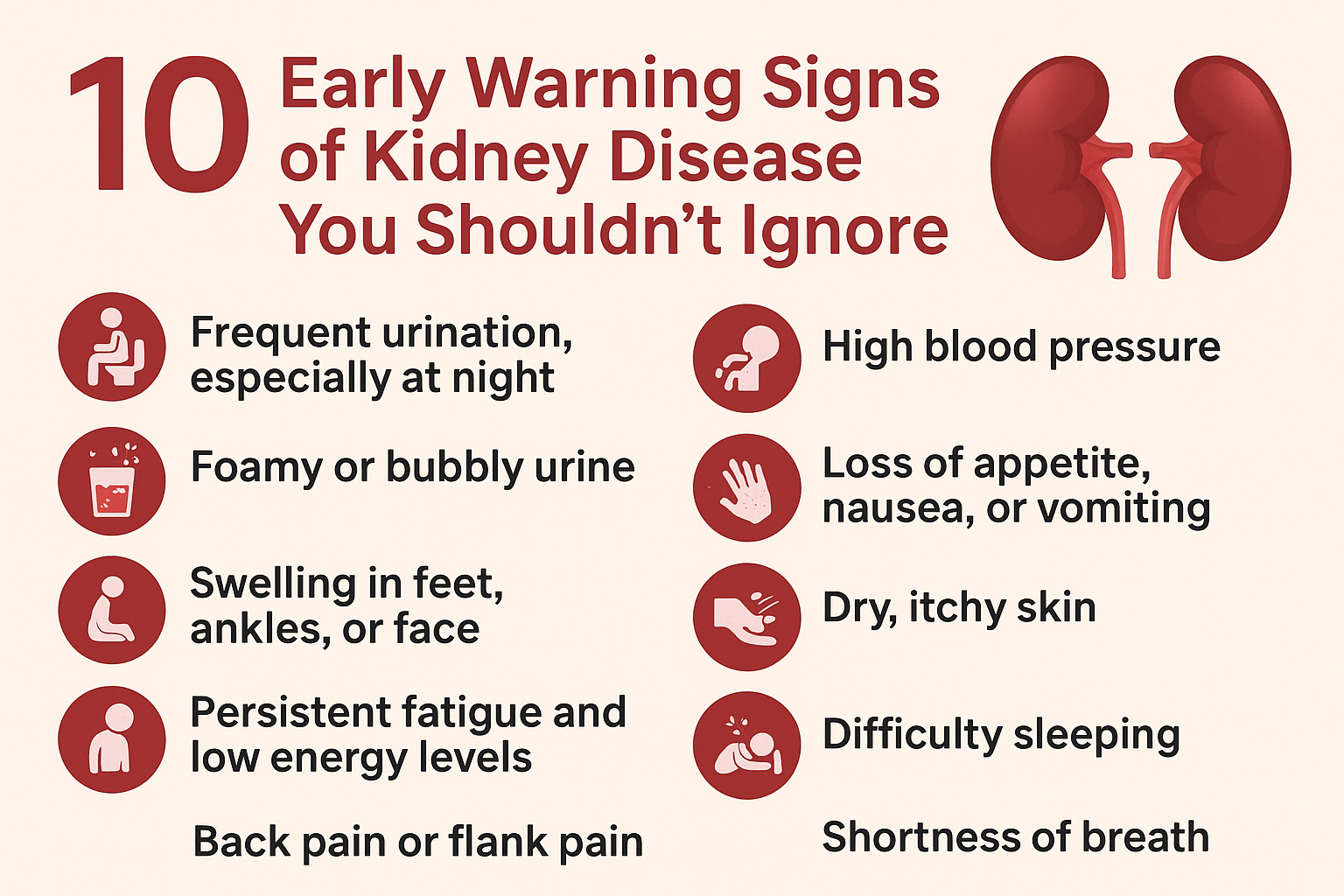
Kidneys work silently every day to filter waste, balance fluids, control blood pressure, and maintain overall health. But when they start to fail, the symptoms often appear late—and are usually subtle. Detecting kidney issues early can prevent long-term damage and reduce the risk of chronic kidney disease (CKD). According to the Best nephrologist in Pune, most kidney problems can be managed effectively if identified at an early stage.
Here are the 10 early warning signs of kidney disease that you should never ignore.
1. Frequent Urination, Especially at Night
One of the earliest signs of kidney trouble is an increased need to pass urine, especially during nighttime (nocturia). When kidneys fail to filter properly, fluid levels become imbalanced, leading to frequent urination. This may also signal infections or early-stage kidney dysfunction.
What to do:
If you urinate more than 2–3 times at night regularly, consult a Kidney doctor in Pune, Dr. Sandeep Morkhandikar for a urine test and kidney function check.
2. Foamy or Bubbly Urine
Persistent foam in urine—more than what typically appears after flushing—can be a sign of excess protein leakage. This condition, known as proteinuria, is a classic indicator of kidney disease.
What it means:
Healthy kidneys filter waste but retain protein. When damaged, they allow proteins to escape into the urine.
3. Swelling in Feet, Ankles, or Face
Kidney disease often leads to edema, or fluid retention. This happens because kidneys fail to remove extra sodium and fluids from the body. Swelling is commonly seen in:
- Feet
- Ankles
- Hands
- Under eyes (puffy eyes)
Warning:
If swelling is new, persistent, or worsening, it may suggest reduced kidney function.
4. Persistent Fatigue and Low Energy Levels
Healthy kidneys produce a hormone called erythropoietin, which helps in the production of red blood cells. When kidney function drops, the hormone level decreases, leading to anemia.
Symptoms may include:
- Extreme tiredness
- Weakness
- Difficulty concentrating
If your energy levels remain low despite rest, a kidney evaluation is recommended.
5. Back Pain or Flank Pain
Pain on one side of the lower back or near the ribs can indicate kidney issues. This may be due to:
- Kidney stones
- Kidney infection
- Polycystic kidney disease
Unlike muscular pain, kidney pain is typically deeper and does not improve with movement or massage.
6. High Blood Pressure
Your kidneys regulate blood pressure by controlling fluid balance and hormones. Damaged kidneys often contribute to uncontrolled or newly developed hypertension.
Remember:
High blood pressure can both cause and result from kidney disease—a dangerous cycle.
If your BP remains elevated despite medication or lifestyle changes, it’s wise to consult the Best nephrologist in Pune for further evaluation.
7. Loss of Appetite, Nausea, or Vomiting
As kidney function worsens, waste accumulates in the bloodstream. This buildup, known as uremia, can affect digestion and lead to symptoms like:
- Poor appetite
- Metallic taste in mouth
- Nausea
- Frequent vomiting
Ignoring these symptoms may lead to severe complications.
8. Dry, Itchy Skin
The kidneys also maintain your body’s mineral and nutrient balance. When they cannot cleanse the blood properly, toxins accumulate and cause skin dryness and severe itching.
Why it happens:
Impaired kidney function may cause imbalances in calcium and phosphorus levels, which irritate the skin.
9. Difficulty Sleeping
Restless legs, muscle cramps, or interrupted sleep may indicate kidney-related electrolyte imbalances. Waste accumulation in the bloodstream also causes discomfort and disrupts sleep patterns.
Look out for:
- Insomnia
- Continuous fatigue despite long sleep hours
- Restless leg movements
10. Shortness of Breath
There are two main reasons why kidney disease may lead to breathing difficulty:
- Fluid buildup in the lungs due to poor kidney drainage
- Anemia, which reduces oxygen delivery to tissues
If breathlessness occurs even at rest or with minimal activity, it requires immediate medical attention.
When Should You See a Nephrologist?
If you experience any of the above symptoms consistently for more than a week, it’s important to seek help from a specialist. Early diagnosis through simple tests like:
- Kidney Function Test (KFT)
- Urine Routine Examination
- Ultrasound
- Blood Pressure Monitoring
can help detect and manage kidney conditions before they worsen.
The Best nephrologist in Pune will guide you on the right treatment, lifestyle changes, and preventive measures to protect your kidney health long-term.
How You Can Protect Your Kidneys
To maintain optimal kidney function, adopt these daily habits:
- Stay hydrated
- Manage blood pressure and blood sugar
- Reduce salt intake
- Avoid overuse of painkillers
- Maintain a healthy weight
- Go for annual kidney check-ups if you have diabetes or hypertension
These habits go a long way in preventing kidney damage.
Final Thoughts
Kidney disease often progresses silently, but your body gives early warning signs—if you know how to recognize them. Paying attention to changes in urine, swelling, fatigue, or blood pressure can help catch kidney problems early and prevent lifelong complications. If you notice any of these signs, consult an experienced Kidney doctor in Pune for proper evaluation and treatment.
Your kidneys work hard for you every day—take care of them before it’s too late.
 Select an element to maximize. Press ESC to cancel.