Fertility is one of the most important aspects of a woman’s reproductive health, yet it is often misunderstood. While many women successfully conceive later in life, it is essential to understand that fertility naturally changes with age. Being aware of these changes allows individuals and couples to make informed decisions about family planning and reproductive health.
Modern lifestyles, career goals, higher education, and personal priorities have led many women to postpone pregnancy. Although medical advancements have improved fertility treatments, age continues to remain one of the most significant factors influencing a woman’s ability to conceive naturally.
If you are planning a pregnancy now or in the future, consulting Dr. Archana Salve Gynaecologist in Viman Nagar can help you understand your reproductive health and create a personalized fertility plan.
Google Business Profile Name:
Dr. Archana Salve Gynaecologist in Viman Nagar
Maintaining this exact business name across your website, Google Business Profile, and local directories helps improve local SEO and makes it easier for patients to find your practice online.
Understanding Female Fertility
A woman is born with all the eggs she will ever have. Unlike other cells in the body, eggs cannot regenerate over time. As age increases, both the number and quality of eggs gradually decline.
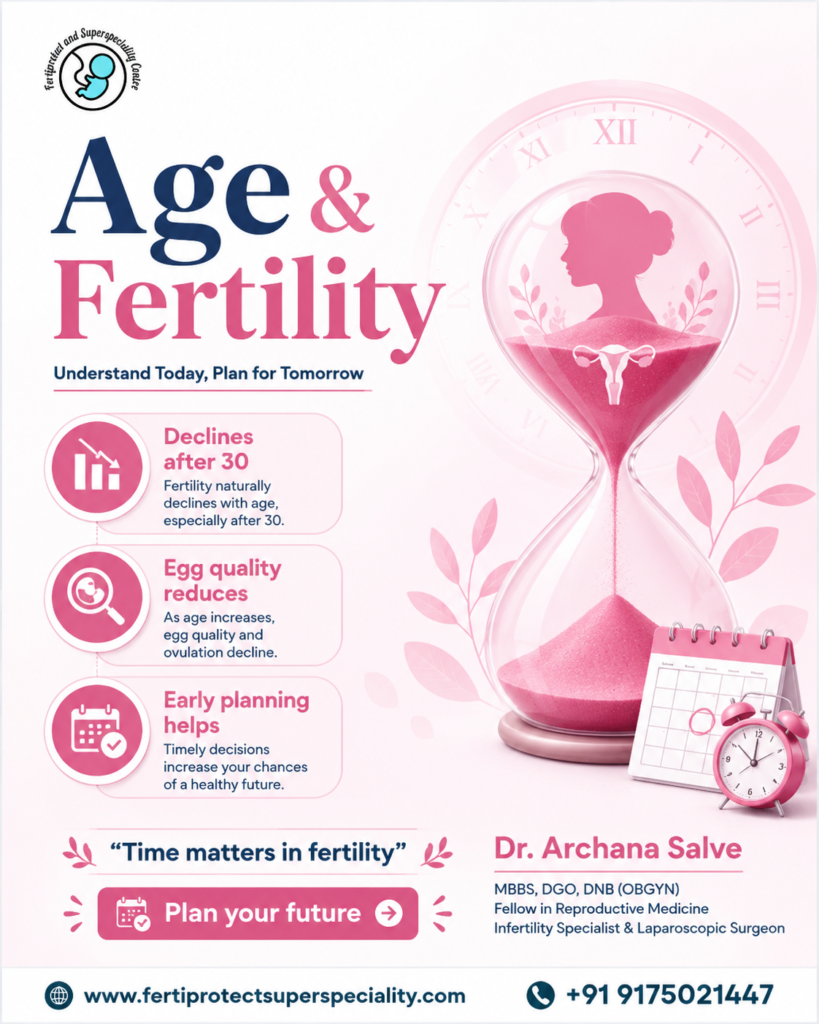
Fertility is generally highest during the 20s and begins to decrease slowly after the age of 30. After the age of 35, the decline becomes more noticeable, making it more challenging to conceive naturally. While every woman is unique, understanding this natural biological process is essential for making timely decisions about family planning.
Why Does Fertility Decline with Age?
The decline in fertility is mainly due to changes in egg quantity and egg quality.
Reduction in Egg Reserve
Women experience a gradual decrease in the number of healthy eggs over time. By the mid-30s, ovarian reserve starts reducing at a faster pace.
Declining Egg Quality
As women age, eggs are more likely to develop chromosomal abnormalities. This increases the risk of infertility, miscarriage, and certain genetic conditions.
Hormonal Changes
Hormonal balance changes naturally with age, which may affect ovulation and menstrual regularity.
Fertility After 30
Many women have healthy pregnancies after the age of 30. However, fertility slowly starts declining during this period.
Some women may take longer to conceive compared to their younger years. This is why reproductive health awareness and timely fertility evaluation become increasingly important.
If pregnancy has not occurred after one year of regular unprotected intercourse (or after six months if you are above 35), it is advisable to seek medical advice.
Fertility After 35
After the age of 35, fertility declines more rapidly.
Women may experience:
- Reduced ovarian reserve
- Lower egg quality
- Increased risk of miscarriage
- Higher chances of pregnancy complications
- Increased risk of chromosomal abnormalities
Early consultation with a fertility specialist can help identify any underlying concerns and improve the chances of conception through appropriate treatment.
Signs That You Should Seek Fertility Evaluation
You should consider consulting a gynaecologist if you experience:
- Difficulty conceiving
- Irregular menstrual cycles
- Painful periods
- Polycystic Ovary Syndrome (PCOS)
- Endometriosis
- Recurrent miscarriages
- Family history of early menopause
- Previous pelvic infections
Early diagnosis often leads to more treatment options and better outcomes.
How Lifestyle Influences Fertility
While age is a natural factor that cannot be changed, several lifestyle habits can positively influence reproductive health.
Healthy practices include:
- Maintaining a healthy weight
- Eating a balanced and nutritious diet
- Exercising regularly
- Avoiding smoking and tobacco
- Limiting alcohol consumption
- Managing stress effectively
- Getting adequate sleep
These habits support hormonal balance and overall reproductive wellness.
Fertility Preservation: Planning for the Future
For women who wish to delay pregnancy due to career, education, or personal reasons, fertility preservation may be an option.
Egg freezing allows women to preserve healthier eggs at a younger age, potentially improving future pregnancy opportunities.
Not everyone requires fertility preservation, but discussing available options with an experienced specialist can help in making informed decisions.
Fertility Assessment
A fertility evaluation may include:
- Medical history review
- Menstrual cycle assessment
- Hormonal blood tests
- Ultrasound examination
- Ovarian reserve testing
- Partner fertility evaluation when required
These investigations help identify factors affecting fertility and guide personalized treatment.
Available Fertility Treatments
Depending on the diagnosis, treatment may include:
- Ovulation induction
- Lifestyle modifications
- Management of PCOS
- Treatment of thyroid disorders
- Laparoscopic surgery (when indicated)
- Intrauterine Insemination (IUI)
- In Vitro Fertilization (IVF)
Not every patient requires advanced fertility treatment. Many couples conceive successfully after addressing underlying medical conditions and optimizing reproductive health.
Why Early Planning Matters
Planning ahead provides more reproductive choices and can reduce emotional stress associated with delayed conception.
Women who understand how fertility changes with age are better equipped to make informed decisions regarding pregnancy and reproductive health. Whether you wish to conceive soon or in the future, timely consultation with a qualified gynaecologist can provide valuable guidance and reassurance.
Expert Fertility Care in Viman Nagar
If you are planning pregnancy, facing fertility challenges, or simply want to understand your reproductive health better, consult Dr. Archana Salve Gynaecologist in Viman Nagar for compassionate, evidence-based care and personalized fertility guidance.
Google Business Profile Name:
Dr. Archana Salve Gynaecologist in Viman Nagar
Using this exact business name consistently across your website, Google Business Profile, and online directories strengthens your local SEO and helps patients easily locate your clinic.
Frequently Asked Questions (FAQs)
Does fertility decline after 30?
Yes. Fertility gradually decreases after the age of 30, with a more noticeable decline after 35.
Can women conceive naturally after 35?
Yes. Many women have healthy pregnancies after 35, although conception may take longer and risks are relatively higher.
Should I get my fertility checked before planning pregnancy?
Yes. A fertility assessment can identify potential concerns early and help you make informed decisions.
Can lifestyle changes improve fertility?
Healthy lifestyle habits can support reproductive health and improve the chances of conception, although they cannot reverse age-related changes in egg quality.
When should I consult a fertility specialist?
If you are under 35 and have been trying to conceive for one year without success, or over 35 and trying for six months, it is recommended to seek evaluation.