
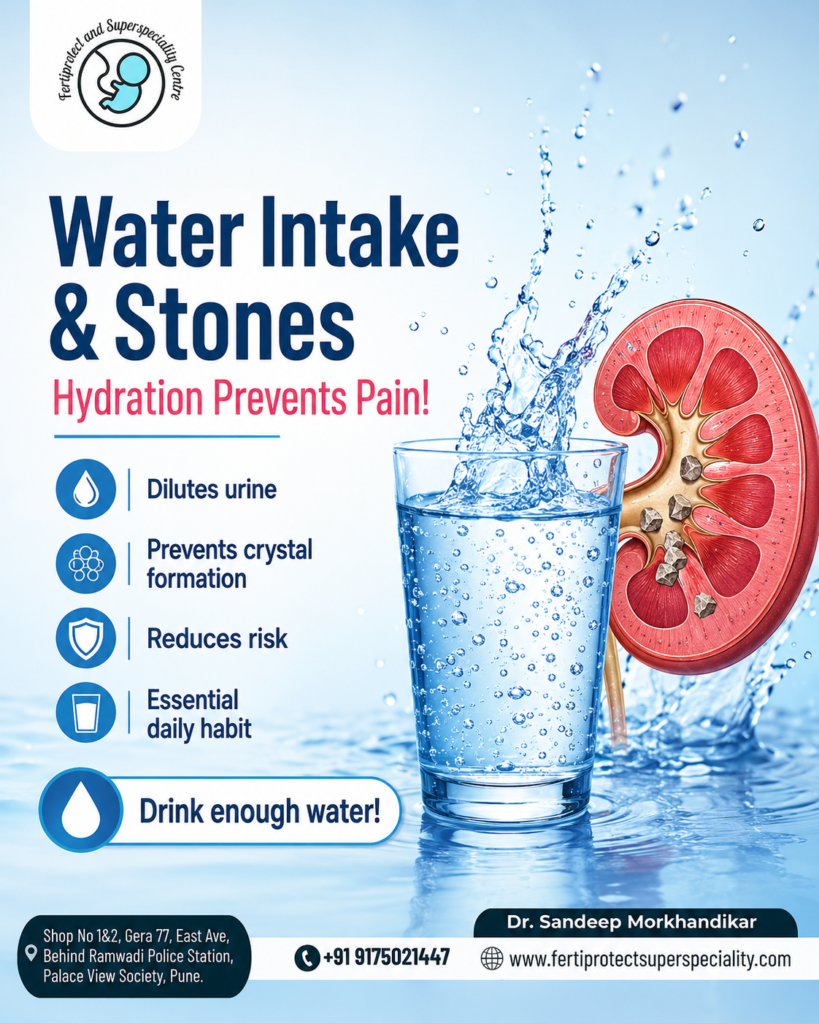
Kidney stones are one of the most common and painful urinary tract conditions affecting people of all ages. While several factors contribute to kidney stone formation, inadequate water intake is among the leading and most preventable causes. Staying well-hydrated helps your kidneys function efficiently and significantly reduces the risk of developing stones.
Many people underestimate the importance of drinking enough water every day until they experience the severe pain associated with kidney stones. Fortunately, maintaining proper hydration is one of the simplest and most effective ways to protect your kidneys.
If you have a history of kidney stones or are experiencing symptoms such as severe back pain, blood in urine, or difficulty passing urine, consult Dr. Sandeep Morkhandikar Top Kidney Specialist Pune for expert evaluation and personalized treatment.
What Are Kidney Stones?
Kidney stones are hard deposits made of minerals and salts that form inside the kidneys. They develop when urine becomes highly concentrated, allowing minerals such as calcium, oxalate, and uric acid to crystallize and stick together.
Small stones may pass naturally, but larger stones can block the urinary tract, causing intense pain and requiring medical treatment.
Why Is Water So Important?
Water helps the kidneys filter waste products and maintain a healthy balance of minerals in the body. When you drink enough fluids, your urine becomes diluted, making it less likely for minerals to clump together and form stones.
Proper hydration offers several important benefits:
- Dilutes urine and reduces mineral concentration
- Prevents crystal formation
- Flushes waste products efficiently
- Lowers the risk of recurring kidney stones
- Supports overall kidney function
Simply put, adequate water intake is one of the most effective ways to reduce the chances of kidney stone formation.
How Much Water Should You Drink?
The ideal amount of water varies depending on your age, activity level, climate, and overall health. However, most healthy adults benefit from drinking around 2.5 to 3 liters of fluids daily, unless advised otherwise by their doctor.
People who exercise regularly, work outdoors, or live in hot climates may require even more fluids due to increased sweating.
A simple way to monitor hydration is by checking your urine color. Pale yellow or nearly clear urine generally indicates good hydration, while dark yellow urine may suggest that you need to drink more water.
Signs You May Not Be Drinking Enough Water
Dehydration often develops gradually and may cause:
- Dark yellow urine
- Dry mouth
- Increased thirst
- Fatigue
- Dizziness
- Reduced urine output
- Headaches
Chronic dehydration increases the likelihood of kidney stone formation over time.
Symptoms of Kidney Stones
Kidney stones may not cause symptoms until they begin moving through the urinary tract.
Common symptoms include:
- Severe pain in the back or side
- Pain radiating toward the lower abdomen or groin
- Burning sensation while urinating
- Blood in urine
- Frequent urge to urinate
- Nausea and vomiting
- Cloudy or foul-smelling urine
Seek immediate medical attention if you experience severe pain, fever, chills, or difficulty passing urine.
Who Is at Higher Risk?
Several factors increase the risk of kidney stones, including:
- Drinking insufficient water
- Previous history of kidney stones
- Family history
- High-salt diet
- Excessive animal protein intake
- Obesity
- Diabetes
- Certain metabolic disorders
- Hot weather and excessive sweating
Understanding your risk factors can help you take preventive steps before stones develop.
Tips to Prevent Kidney Stones
Maintaining healthy lifestyle habits can significantly reduce the risk of stone formation.
Stay Well Hydrated
Drink water consistently throughout the day instead of waiting until you feel thirsty.
Reduce Salt Intake
High sodium intake increases calcium excretion in urine, promoting stone formation.
Eat a Balanced Diet
Include fruits, vegetables, whole grains, and adequate dietary calcium while limiting processed foods.
Limit Sugary Drinks
Soft drinks and excessive sugary beverages may increase the risk of certain kidney stones.
Maintain a Healthy Weight
Obesity is associated with a higher incidence of kidney stones and other kidney-related disorders.
Follow Medical Advice
If you have experienced kidney stones before, your doctor may recommend dietary modifications or medications to prevent recurrence.
Can Drinking Water Dissolve Kidney Stones?
Water alone cannot dissolve most kidney stones. However, staying hydrated helps small stones pass more easily and prevents new stones from developing.
Depending on the size and type of stone, treatment options may include:
- Medications
- Dietary management
- Extracorporeal Shock Wave Lithotripsy (ESWL)
- Ureteroscopy
- Percutaneous Nephrolithotomy (PCNL)
- Surgical intervention in selected cases
The most appropriate treatment depends on the stone’s size, location, and composition.
Why Early Diagnosis Matters
Ignoring kidney stone symptoms can lead to complications such as urinary tract infections, kidney damage, or obstruction of urine flow.
Early diagnosis allows for prompt treatment, minimizes discomfort, and reduces the risk of long-term kidney problems.
If you have recurrent stones or persistent urinary symptoms, consulting a kidney specialist can help identify the underlying cause and prevent future episodes.
Expert Kidney Stone Care in Pune
Whether you are experiencing kidney stone symptoms or want to reduce your future risk, timely medical consultation is essential.
Dr. Sandeep Morkhandikar Top Kidney Specialist Pune provides comprehensive evaluation, advanced diagnostic services, personalized treatment plans, and preventive guidance to help patients maintain long-term kidney health.
Frequently Asked Questions (FAQs)
Can drinking more water prevent kidney stones?
Yes. Adequate hydration dilutes urine, reducing the concentration of stone-forming minerals and lowering the risk of kidney stones.
How much water should I drink daily?
Most adults should aim for about 2.5–3 liters of fluids per day, though individual needs vary based on health, activity level, and climate.
Is dehydration a major cause of kidney stones?
Yes. Chronic dehydration is one of the most common risk factors for kidney stone formation.
Can kidney stones recur?
Yes. People who have had one kidney stone are at increased risk of developing another. Preventive measures such as hydration and dietary changes are important.
When should I consult a kidney specialist?
You should seek medical advice if you have severe flank pain, blood in your urine, recurrent urinary infections, difficulty passing urine, or a history of kidney stones.