
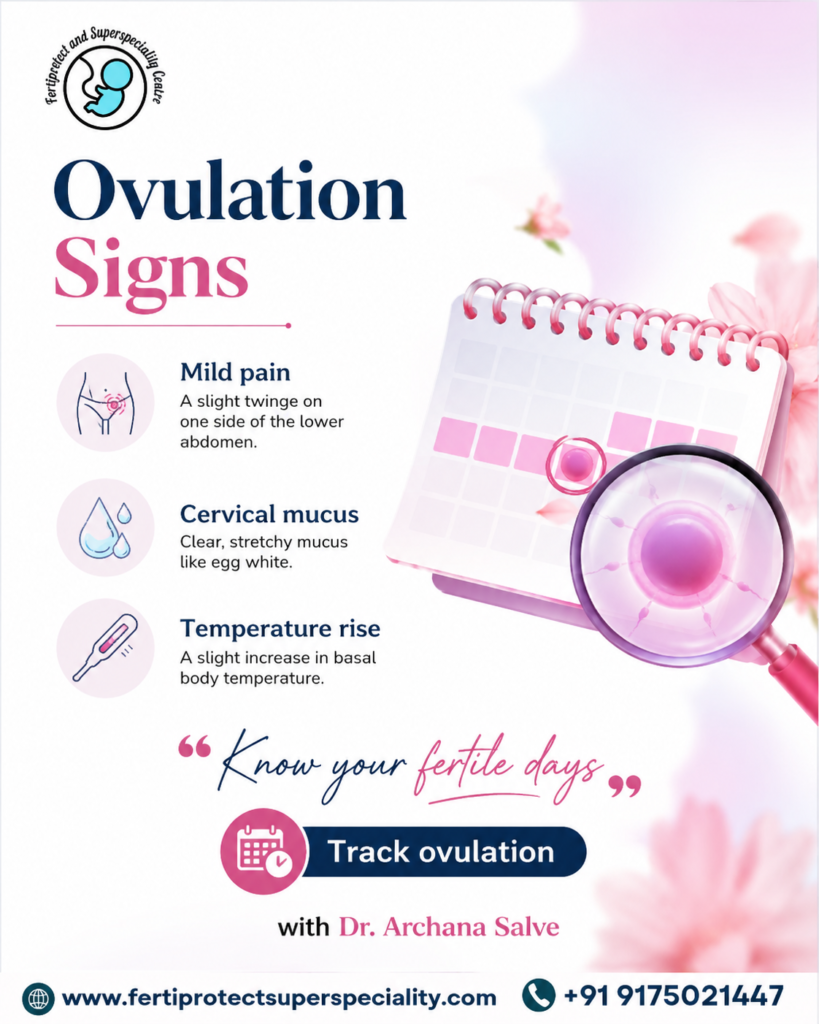
Understanding ovulation can be an important part of a woman’s reproductive health and family-planning journey. Ovulation is the process in which an ovary releases an egg, which can then potentially be fertilized by sperm. Knowing the signs associated with ovulation may help women better understand their menstrual cycles and identify the time when pregnancy is most likely to occur.
For couples trying to conceive, recognizing the fertile window can be useful. However, fertility can be influenced by many factors, including age, menstrual cycle regularity, hormonal health, sperm health, and other medical conditions. If you have been trying to conceive without success, consulting a fertility specialist can help identify possible factors affecting conception.
Dr. Archana Salve – Infertility Treatment in Viman Nagar provides fertility evaluation and personalized guidance for individuals and couples who are planning a pregnancy or experiencing fertility concerns.
What Is Ovulation?
Ovulation is a natural part of the menstrual cycle. During ovulation, a mature egg is released from one of the ovaries. The egg then travels through the fallopian tube, where fertilization may occur if sperm is present.
The timing of ovulation is not exactly the same for every woman. It can vary depending on the length and regularity of the menstrual cycle. Stress, hormonal changes, certain health conditions, and other factors may also influence the timing of ovulation.
Understanding your individual cycle can help you become more aware of changes in your body and recognize possible signs of ovulation.
Common Signs of Ovulation
Some women notice physical or hormonal changes around the time of ovulation, while others may not experience any noticeable symptoms. Common signs can include changes in cervical mucus, a slight rise in basal body temperature, and mild lower abdominal discomfort.
Let’s look at some of the signs that may occur during the fertile period.
1. Changes in Cervical Mucus
One of the commonly recognized signs of ovulation is a change in cervical mucus. Around the fertile period, cervical mucus may become clearer, thinner, and more stretchy. Some women describe it as having a consistency similar to raw egg white.
This type of cervical mucus can help sperm move more easily through the reproductive tract. Observing changes in cervical mucus over several menstrual cycles may help women understand their individual fertility patterns.
However, cervical mucus can vary between individuals, and factors such as infections, medications, and hormonal changes can affect its appearance.
2. Mild Ovulation Pain
Some women experience mild pain or a slight twinge on one side of the lower abdomen around the time of ovulation. This is sometimes referred to as mittelschmerz.
The discomfort may last for a short period, although the experience can vary from person to person. Mild, temporary discomfort may not be a cause for concern, but severe, persistent, or unusual pelvic pain should be evaluated by a healthcare professional.
Not every instance of abdominal or pelvic pain is related to ovulation, so an appropriate medical assessment may be necessary when symptoms are concerning.
3. Slight Rise in Basal Body Temperature
Basal body temperature (BBT) is the body’s resting temperature, typically measured immediately after waking and before physical activity.
Following ovulation, hormonal changes can cause a small increase in basal body temperature. Tracking BBT consistently over several menstrual cycles may help identify a pattern and provide an indication that ovulation has already occurred.
Since the temperature rise generally happens after ovulation, BBT tracking may be more useful for understanding past ovulation patterns than predicting ovulation in real time.
Understanding Your Fertile Window
The fertile window refers to the days during the menstrual cycle when conception is most likely. Because sperm can survive in the female reproductive tract for several days under favorable conditions, the fertile window includes the days leading up to ovulation as well as a short period around ovulation.
Tracking menstrual cycles, observing cervical mucus changes, and using ovulation predictor kits are some methods that may help identify the fertile period. However, these methods are not equally reliable for everyone, particularly for women with irregular menstrual cycles.
If you are trying to conceive and are unsure about your ovulation pattern, a fertility specialist can help assess your cycle and recommend appropriate methods for tracking ovulation.
When Should You Seek Infertility Evaluation?
Recognizing ovulation signs can be helpful, but difficulty conceiving may have many possible causes. Problems with ovulation are one possible factor, but fertility concerns can also involve the fallopian tubes, uterus, ovarian reserve, sperm health, or other medical factors.
Consider seeking professional fertility guidance if:
- Your menstrual cycles are very irregular or absent.
- You have difficulty identifying your fertile period.
- You have been trying to conceive without success.
- You experience significant pelvic pain.
- You have concerns about your reproductive health.
- You have previously been diagnosed with a condition that may affect fertility.
A timely evaluation can help identify potential factors and determine whether further testing or treatment may be appropriate.
Infertility Treatment in Viman Nagar
If you are searching for Infertility Treatment in Viman Nagar, Dr. Archana Salve offers fertility-focused consultation and personalized guidance for individuals and couples planning to start or expand their families.
Every fertility journey is unique. A detailed assessment may help understand menstrual patterns, ovulation, reproductive health, and other factors that could influence conception. Based on the evaluation, your doctor can discuss appropriate next steps and available fertility care options.
Understanding your fertile days is only one part of the journey toward conception. If you have concerns about ovulation or have been trying to conceive for some time, professional guidance can help you move forward with greater clarity.
Take the Next Step Toward Better Fertility Awareness
Learning to recognize possible ovulation signs can help you understand your menstrual cycle and become more aware of your fertile period. Changes in cervical mucus, mild ovulation discomfort, and a slight rise in basal body temperature are some signs that may occur around ovulation.
However, fertility is complex, and identifying ovulation alone does not guarantee pregnancy. If conception is taking longer than expected or you have concerns about your menstrual cycle or reproductive health, consulting a qualified fertility specialist is an important step.
For personalized fertility guidance and Infertility Treatment in Viman Nagar, consult Dr. Archana Salve to discuss your concerns and understand the appropriate evaluation and care options for your individual needs.
Disclaimer: This blog is intended for general educational purposes only and should not be considered a substitute for professional medical advice, diagnosis, or treatment. Fertility concerns should be evaluated by a qualified healthcare professional based on individual medical history and circumstances.