
The kidneys perform several essential functions in the body. They filter waste products and excess fluid from the blood, help maintain the body’s electrolyte balance, and contribute to blood pressure regulation and other important processes.
When the kidneys become severely damaged and are no longer able to perform these functions adequately, waste and excess fluid can build up in the body. In some situations, dialysis may be recommended to perform some of the filtering functions that failing kidneys can no longer manage effectively.
Dr. Sandeep Morkhandikar, a nephrologist in Pune, provides evaluation and management for various kidney-related conditions, including chronic kidney disease and conditions that may affect kidney function.
What Is Dialysis?
Dialysis is a treatment that helps remove certain waste products and excess fluid from the blood when the kidneys are unable to do this sufficiently.
It is important to understand that dialysis does not necessarily mean that a person’s kidneys have stopped working completely. The need for dialysis depends on several factors, including kidney function, symptoms, laboratory results, fluid balance and the underlying medical condition.
A nephrologist evaluates these factors before recommending an appropriate treatment plan.
When May Dialysis Be Needed?
Dialysis may be considered when kidney function becomes severely impaired and the body is unable to maintain a safe internal balance.
Some situations in which dialysis may be required include:
- Severe or advanced kidney failure
- Significant accumulation of waste products in the blood
- Excess fluid that cannot be adequately controlled with other treatments
- Certain electrolyte or acid-base abnormalities
- Some complications associated with severely reduced kidney function
- Certain cases of acute kidney injury where kidney function temporarily becomes severely impaired
The decision is individualized. A specific blood test value alone does not always determine whether someone needs dialysis.
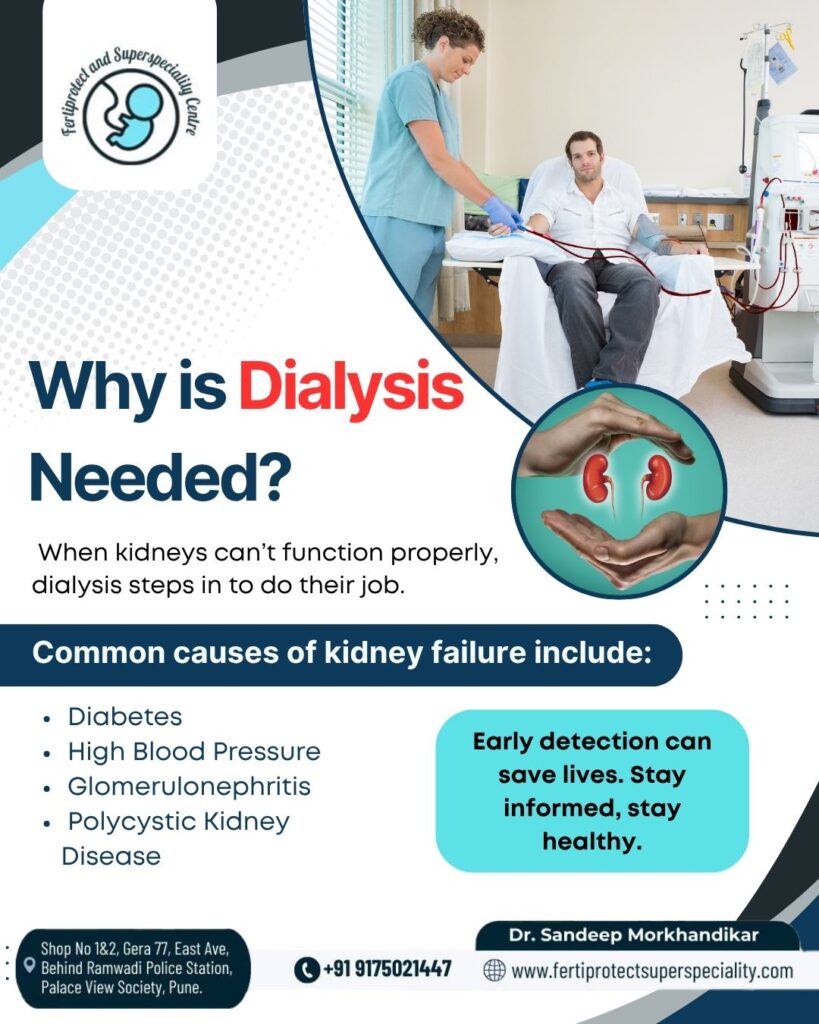
Common Causes of Kidney Failure
Several medical conditions can progressively damage the kidneys. Some common causes include:
Diabetes
Diabetes can damage the small blood vessels in the kidneys over time. Poorly controlled blood sugar levels can increase the risk of chronic kidney damage.
High Blood Pressure
Long-standing high blood pressure can place stress on the kidney’s blood vessels and contribute to progressive kidney disease.
Glomerulonephritis
Glomerulonephritis refers to inflammation affecting the kidney’s filtering structures. Depending on the cause and severity, it may lead to reduced kidney function.
Polycystic Kidney Disease
Polycystic kidney disease is an inherited condition in which multiple cysts develop in the kidneys and can gradually affect kidney function.
Other causes can include certain autoimmune conditions, recurrent kidney problems, urinary tract obstruction, inherited kidney disorders and other medical conditions.
What Happens During Dialysis?
The exact process depends on the type of dialysis being used.
Hemodialysis
In hemodialysis, blood is circulated through a specialized dialysis machine and filter. The filter helps remove waste products and excess fluid before the blood is returned to the body.
Hemodialysis may be performed at a dialysis centre or, for selected patients and depending on their circumstances, at home with appropriate training and medical support.
Peritoneal Dialysis
Peritoneal dialysis uses the lining of the abdomen, called the peritoneum, as part of the filtering process. A specially prepared dialysis solution is introduced into the abdominal cavity through a catheter and later drained.
The choice between different dialysis approaches depends on the patient’s medical condition, lifestyle, suitability, access considerations and medical advice.
Does Everyone With Kidney Disease Need Dialysis?
No. Many people with kidney disease do not require dialysis.
Early-stage kidney disease may often be managed through regular monitoring, treatment of the underlying cause, blood pressure and blood sugar management when appropriate, lifestyle measures and prescribed medications.
For people with advanced kidney disease, a nephrologist monitors kidney function and overall health to determine when additional kidney replacement therapy may become necessary.
Early identification of kidney disease can therefore be important for appropriate management and monitoring.
How Can Kidney Disease Be Detected Early?
Kidney disease may not always cause obvious symptoms during its early stages. Routine evaluation can be particularly important for people who have risk factors such as diabetes, high blood pressure or a family history of kidney disease.
Depending on the individual’s situation, a doctor may recommend tests such as:
- Blood tests to assess kidney function
- Urine tests to check for protein or other abnormalities
- Blood pressure monitoring
- Imaging studies when clinically appropriate
Regular follow-up can help doctors identify changes in kidney function and plan appropriate care.
Can Kidney Failure Be Prevented?
Not every case of kidney failure can be prevented, but managing known risk factors may help protect kidney health.
Some general measures include:
- Keeping blood pressure under appropriate control
- Managing diabetes effectively
- Following prescribed medications correctly
- Avoiding unnecessary use of certain medicines that can affect the kidneys
- Maintaining a healthy lifestyle
- Staying appropriately hydrated according to individual medical advice
- Attending recommended kidney health check-ups
People with established kidney disease should follow advice tailored to their individual condition rather than making major dietary or medication changes without medical guidance.
When Should You Consult a Nephrologist?
Consider speaking with a kidney specialist if you have abnormal kidney test results, persistent swelling, changes in urination, uncontrolled blood pressure, diabetes with kidney-related concerns, or a known history of kidney disease.
Dr. Sandeep Morkhandikar offers nephrology care focused on evaluating kidney conditions, monitoring kidney function and helping patients understand appropriate treatment options.
Conclusion
Dialysis can play an important role when severely reduced kidney function prevents the body from adequately removing waste and excess fluid. However, dialysis is not automatically required for every person with kidney disease.
The right approach depends on the individual’s kidney function, symptoms, laboratory findings, underlying condition and overall health. Early evaluation and regular monitoring can help identify kidney problems and support timely management.
If you are looking for a Best Nephrologist in Pune or require evaluation for kidney-related concerns, Dr. Sandeep Morkhandikar can provide specialist nephrology consultation and guidance based on your individual medical needs.