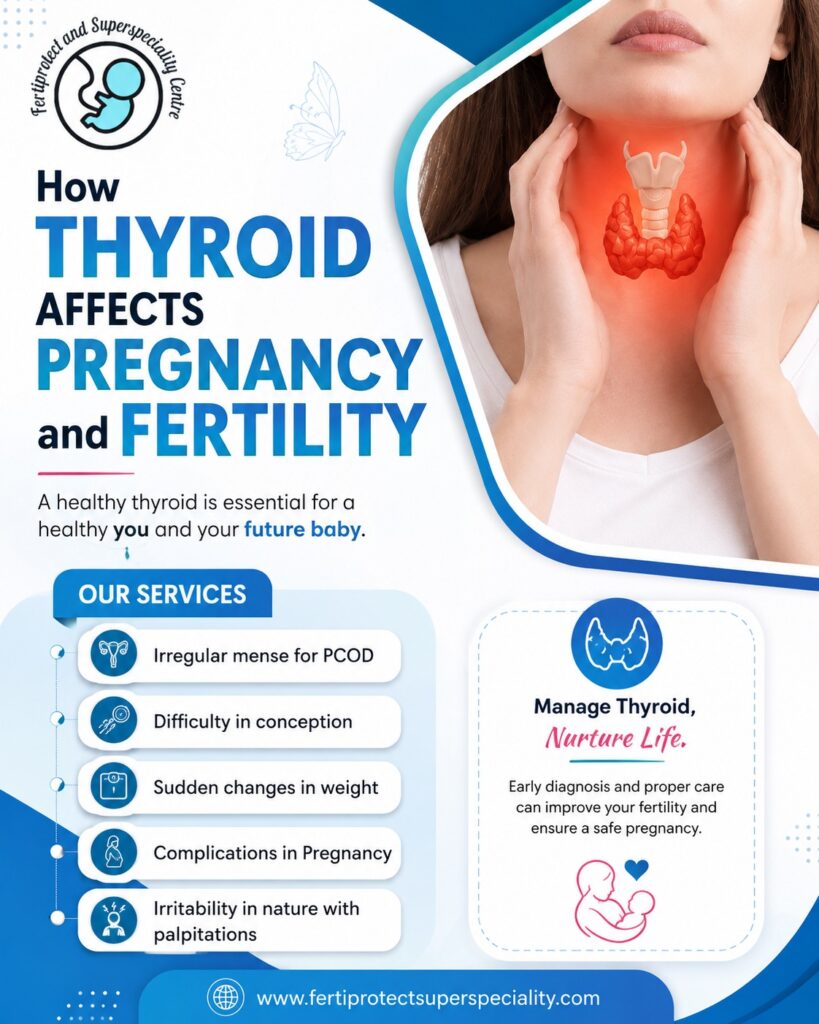
The thyroid is a small, butterfly-shaped gland located in the neck, but the hormones it produces have an important role in many body functions. Thyroid hormones influence metabolism, energy levels and several reproductive processes.
For women planning pregnancy, maintaining healthy thyroid function can be an important part of preconception care. Both an underactive thyroid (hypothyroidism) and an overactive thyroid (hyperthyroidism) may affect menstrual patterns, ovulation and pregnancy when they are not appropriately managed.
Dr. Archana Salve, a Gynaecologist in Pune, provides women’s health and reproductive care, including evaluation of menstrual and fertility concerns. Understanding the relationship between thyroid health and reproductive health can help women seek appropriate medical advice when needed.
What Is the Thyroid?
The thyroid gland produces hormones that help regulate the body’s metabolism and influence several organs and systems. Thyroid hormones also interact with reproductive hormones.
When thyroid hormone levels are too low or too high, normal reproductive processes may be affected. However, having a thyroid disorder does not mean that pregnancy is impossible. With appropriate evaluation and management, many women with thyroid conditions can plan and experience healthy pregnancies.
How Hypothyroidism Can Affect Fertility
Hypothyroidism occurs when the thyroid does not produce enough thyroid hormones.
In some women, untreated or inadequately controlled hypothyroidism may contribute to menstrual irregularities or problems with ovulation. Changes in reproductive hormone balance may make conception more difficult in some cases.
Possible signs of hypothyroidism can include:
- Irregular or heavy menstrual periods
- Tiredness or low energy
- Increased sensitivity to cold
- Changes in weight
- Dry skin
- Constipation
- Hair changes
- Difficulty concentrating
These symptoms are not specific to thyroid disease and can occur with many other conditions. Appropriate testing is needed to determine whether thyroid dysfunction is present.
How Hyperthyroidism Can Affect Reproductive Health
Hyperthyroidism occurs when the thyroid produces more thyroid hormone than the body needs.
It may be associated with irregular menstrual cycles and other reproductive changes. Some women may experience symptoms such as:
- Increased heart rate or palpitations
- Anxiety or irritability
- Heat intolerance
- Unexplained weight loss
- Increased sweating
- Tremors
- Changes in menstrual patterns
If you are experiencing these symptoms, a healthcare professional can determine whether thyroid testing or further evaluation is appropriate.
Thyroid and Menstrual Cycles
A regular menstrual cycle depends on coordinated communication between the brain, ovaries and reproductive hormones. Thyroid hormones can influence this hormonal system.
Thyroid dysfunction may therefore be associated with changes in menstrual frequency, flow or regularity. If periods become consistently irregular or significantly different from your usual pattern, it is worth discussing the changes with a gynaecologist.
Other conditions, including PCOS, can also affect menstrual cycles and fertility. Thyroid disorders and PCOS are different medical conditions, although they can occur in the same person. A proper evaluation helps distinguish between possible causes.
Thyroid and Ovulation
Ovulation is an important part of natural conception. Significant thyroid hormone abnormalities may interfere with the hormonal processes involved in ovulation.
If a woman is having difficulty conceiving, her doctor may consider several possible factors, including ovulation, menstrual history, age, ovarian function, reproductive health and thyroid status.
A thyroid test may therefore be part of a broader fertility evaluation when clinically appropriate.
How Can Thyroid Disorders Affect Pregnancy?
Thyroid hormones are important during pregnancy for both maternal health and fetal development. Untreated or poorly controlled thyroid disorders can be associated with pregnancy complications.
Depending on the type and severity of thyroid dysfunction, potential concerns may include pregnancy loss, high blood pressure during pregnancy, premature birth and effects on fetal development.
This does not mean that every woman with a thyroid condition will develop complications. Appropriate medical care, monitoring and treatment can help manage thyroid disorders during pregnancy.
Women who already have a thyroid condition and are planning pregnancy should discuss their treatment and thyroid monitoring with their healthcare professional.
Thyroid Testing Before or During Pregnancy
A doctor may recommend thyroid testing based on symptoms, medical history, previous thyroid problems, fertility concerns or pregnancy-related factors.
Commonly assessed thyroid tests include TSH and, when appropriate, thyroid hormone levels such as free T4. Additional testing may be recommended depending on the individual situation.
Thyroid test results should always be interpreted according to the person’s clinical circumstances and pregnancy status. Pregnancy can change thyroid physiology, so thyroid management may require closer monitoring during this period.
Can Thyroid Problems Be Treated During Pregnancy?
Yes. Thyroid disorders can often be managed during pregnancy with appropriate medical supervision.
Treatment depends on whether the thyroid is underactive or overactive and on the individual’s health status. Medication choices and doses should be determined by a qualified healthcare professional.
Women taking thyroid medication should not stop or change their medication on their own after becoming pregnant. They should contact their healthcare provider for appropriate advice and monitoring.
When Should You Consult a Gynaecologist?
Consider discussing your thyroid and reproductive health with a gynaecologist if you have:
- Persistent irregular periods
- Difficulty conceiving
- A known thyroid disorder
- Previous thyroid-related pregnancy concerns
- Symptoms suggestive of thyroid dysfunction
- A planned pregnancy with an existing thyroid condition
Dr. Archana Salve can help evaluate menstrual, reproductive and pregnancy-related concerns and guide patients toward appropriate investigations and specialist care.
Thyroid Health and Pregnancy: The Key Takeaway
Thyroid hormones play an important role in reproductive health, and significant thyroid dysfunction may affect menstrual cycles, ovulation, fertility and pregnancy. However, thyroid disorders are manageable conditions, and having a thyroid problem does not automatically prevent a healthy pregnancy.
If you are planning pregnancy or experiencing irregular periods or difficulty conceiving, an appropriate medical evaluation can help identify possible contributing factors. Thyroid assessment may be recommended when clinically indicated.
For women looking for a Gynaecologist in Pune, Gynaecologist in Viman Nagar, or Gynaecologist in Kalyani Nagar, Dr. Archana Salve provides personalized women’s healthcare and guidance for reproductive and pregnancy-related concerns.