Pain or discomfort in the lower abdomen and pelvic region can be concerning, particularly when it keeps returning or begins to interfere with everyday activities. While some discomfort may be associated with menstruation, there are several other possible causes that should be considered.
The pelvis contains organs and structures belonging to the reproductive, urinary, and digestive systems. Muscles, connective tissues, and nerves in this region can also contribute to discomfort. Therefore, identifying the possible source is important before deciding on any treatment.
At Fertiprotect and Superspeciality Centre, Dr. Archana Salve provides individualized gynecological care for women experiencing reproductive and pelvic health concerns.
What Can Cause Pelvic Pain?
There is no single cause of pelvic discomfort. It can be temporary or persistent and may feel like cramping, pressure, heaviness, aching, or sharp pain. Some women notice symptoms around their periods, while others experience discomfort at different times.
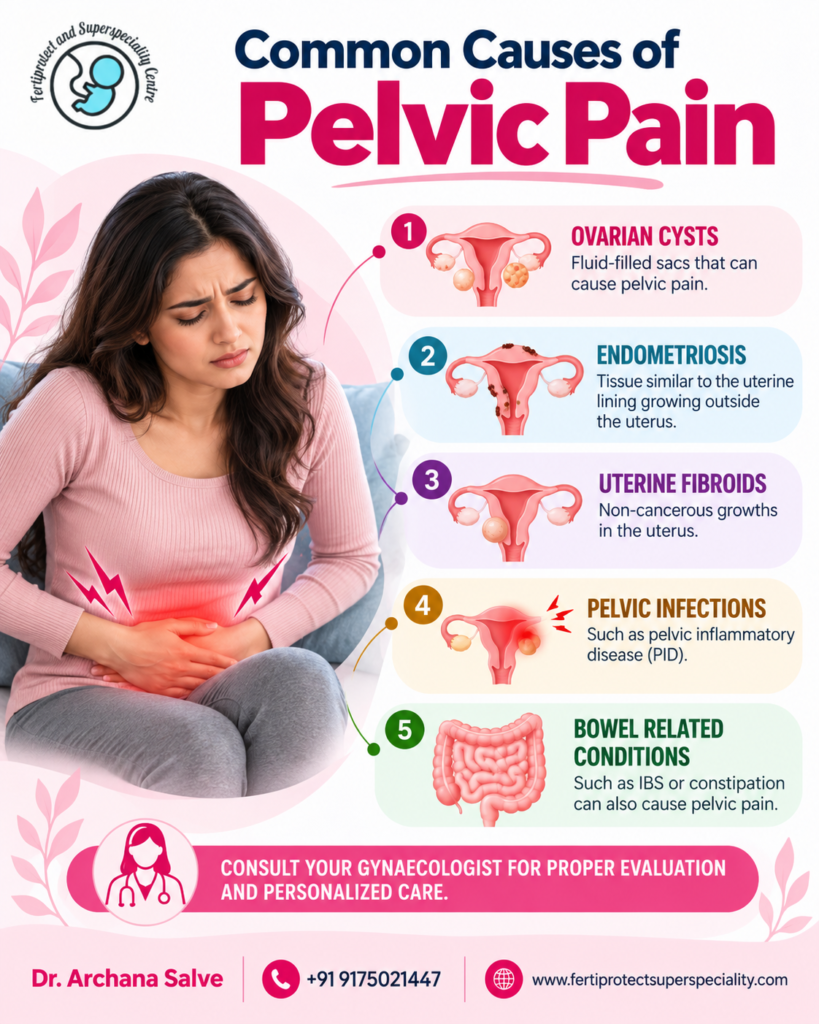
1. Ovarian Cysts
Ovarian cysts are fluid-filled structures that can develop in or on the ovaries. Many cysts may not cause noticeable symptoms, while some can result in lower abdominal or pelvic discomfort.
Symptoms can vary depending on the type, size, and characteristics of the cyst. Persistent symptoms may require medical evaluation to determine whether an ovarian cyst is contributing to the discomfort.
2. Endometriosis
Endometriosis is a condition in which tissue similar to the lining of the uterus grows outside the uterus. It may cause recurring pelvic discomfort, particularly around menstruation.
Some women may also experience pain during intercourse or bowel movements. Because symptoms can vary considerably, persistent or severe period-related discomfort should be discussed with a gynecologist.
3. Uterine Fibroids
Uterine fibroids are non-cancerous growths that develop in or around the uterus. Depending on their size and location, they may be associated with pelvic pressure, heaviness, menstrual changes, or discomfort.
Some women with fibroids have no symptoms, while others may experience noticeable menstrual or pelvic concerns. Appropriate evaluation can help determine whether fibroids are contributing to the symptoms.
4. Pelvic Infections
Pelvic infections can cause pain or discomfort in the lower abdomen. Some women may also experience unusual vaginal discharge, fever, pain during intercourse, or discomfort while urinating.
Symptoms suggesting an infection should be medically evaluated rather than treated through self-medication.
5. Menstrual-Related Causes
Menstrual cramps are a common reason for temporary lower abdominal discomfort. However, unusually severe, worsening, or persistent pain should not simply be considered a normal part of every menstrual cycle.
Keeping track of when discomfort occurs in relation to your menstrual cycle can provide useful information during a consultation.
6. Urinary Causes
The urinary system can also cause symptoms that are felt around the pelvic region. Urinary tract infections, bladder problems, and kidney stones may sometimes result in lower abdominal or pelvic discomfort.
Symptoms such as burning during urination, increased urinary frequency, blood in the urine, fever, or significant pain should be discussed with a healthcare professional.
7. Digestive Causes
The digestive organs are located close to the reproductive organs, so gastrointestinal problems can sometimes feel like pelvic discomfort.
Constipation, irritable bowel syndrome, bloating, and other digestive concerns may cause abdominal pressure, cramping, or discomfort.
How Is the Cause Evaluated?
Finding the cause begins with a detailed discussion about your symptoms and medical history.
Your doctor may ask:
- When did the discomfort begin?
- Is it constant or occasional?
- Does it occur around your periods?
- Does urination or bowel movement affect it?
- Are there changes in vaginal discharge?
- Is there unexpected bleeding?
- Have you had previous pelvic surgery or infections?
- Are you experiencing fertility-related concerns?
Depending on your symptoms, a clinical examination, laboratory tests, ultrasound, or other investigations may be recommended.
At Fertiprotect and Superspeciality Centre, Dr. Archana Salve focuses on understanding each patient’s concerns before suggesting suitable evaluation and care.
When Should You See a Gynecologist?
Medical guidance is recommended when pelvic discomfort:
- Keeps returning
- Becomes progressively worse
- Interferes with daily activities
- Occurs with unusual bleeding
- Is associated with abnormal vaginal discharge
- Occurs during intercourse
- Is accompanied by urinary or bowel symptoms
Sudden or severe pelvic pain should receive prompt medical attention, particularly when accompanied by heavy bleeding, fever, fainting, nausea, or vomiting.
Why Individualized Care Matters
The same symptom can have different causes in different women. For example, discomfort during periods may be related to menstrual cramps in one woman but associated with endometriosis or fibroids in another.
This is why repeatedly managing symptoms without understanding the underlying cause may not address the actual problem.
For women looking for Pelvic Pain Treatment in Pune, Dr. Archana Salve at Fertiprotect and Superspeciality Centre provides personalized gynecological evaluation based on individual symptoms and health needs.
Taking Care of Your Pelvic Health
Women should feel comfortable discussing pelvic and reproductive health concerns with their healthcare provider.
Keeping a record of menstrual dates, symptoms, bleeding patterns, medications, and possible triggers can make a consultation more informative.
Persistent pelvic discomfort should not simply be ignored. Understanding the possible cause can help guide appropriate management.
Conclusion
Pelvic discomfort can have many possible causes, ranging from menstrual changes and ovarian cysts to endometriosis, fibroids, infections, urinary conditions, and digestive problems.
Since several conditions can produce similar symptoms, professional evaluation is important when symptoms persist or interfere with everyday life.
At Fertiprotect and Superspeciality Centre, Dr. Archana Salve provides personalized women’s healthcare and gynecological guidance to help women understand their symptoms and make informed decisions about their care.
FAQ
1. Is pelvic pain always related to a gynecological problem?
No. Reproductive, urinary, digestive, muscular, and other conditions can contribute to pelvic discomfort.
2. Can ovarian cysts cause pelvic pain?
Yes. Some ovarian cysts can cause pelvic or lower abdominal discomfort, although many cysts may not cause symptoms.
3. Can endometriosis cause recurring pelvic pain?
Yes. Endometriosis may cause recurring pelvic discomfort, particularly around menstruation.
4. When should pelvic pain be evaluated?
Consider medical evaluation when the discomfort is persistent, worsening, recurring, or affecting your everyday activities.
5. Can an ultrasound help identify the cause?
Depending on the symptoms, an ultrasound may help evaluate conditions such as ovarian cysts or uterine fibroids. Your doctor can determine whether imaging is appropriate.