
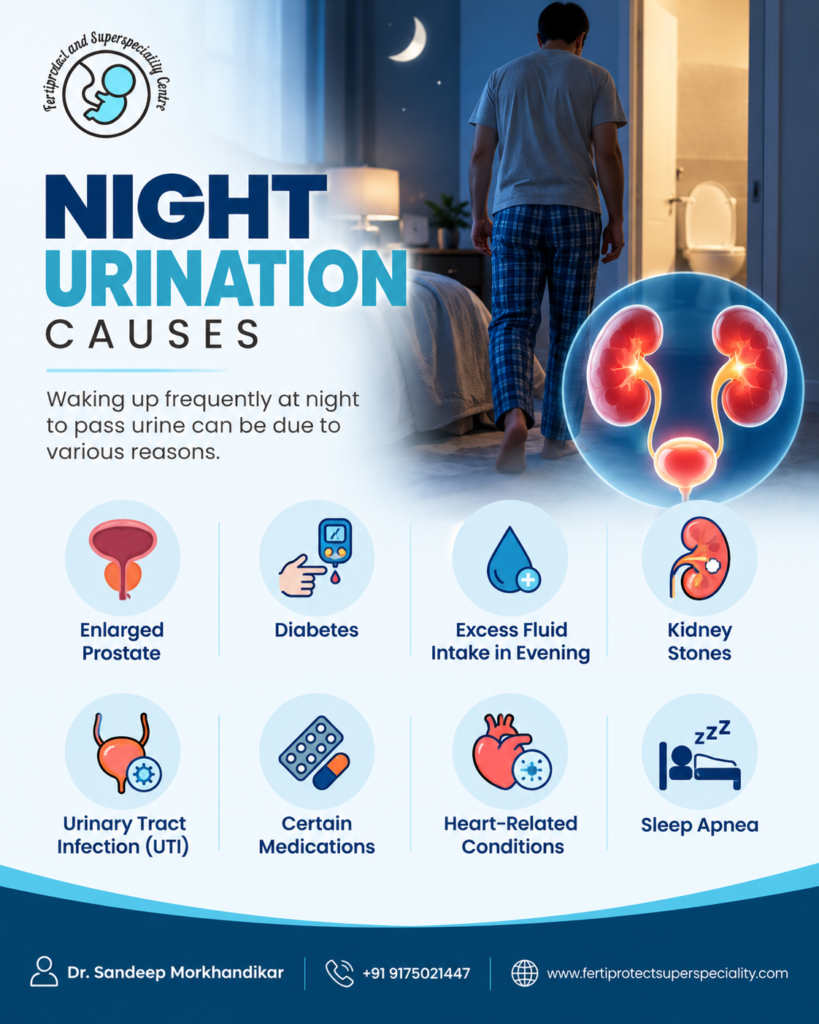
Waking up occasionally during the night to use the bathroom may not always indicate a health problem. However, when nighttime urination happens frequently and repeatedly interrupts sleep, it can affect sleep quality, energy levels, concentration, and overall daily well-being.
There are several possible reasons for frequent urination at night. These can range from drinking too many fluids before bedtime to conditions involving the prostate, bladder, kidneys, blood sugar, or other aspects of health.
Understanding the possible cause is important because treatment depends on what is triggering the symptoms.
Dr. Sandeep Morkhandikar provides consultation and guidance for patients experiencing kidney and urinary health concerns at Fertiprotect and Superspeciality Centre.
What Is Nocturia?
Nocturia is the medical term used when a person wakes from sleep one or more times to pass urine.
Occasional nighttime urination can occur after consuming a large amount of fluid in the evening. However, repeated episodes that disturb normal sleep may require evaluation.
The number of times a person urinates at night can vary depending on age, fluid intake, medications, lifestyle, and underlying health conditions. Therefore, the symptoms should be considered along with the person’s overall health rather than in isolation.
Common Reasons for Frequent Nighttime Urination
1. Enlarged Prostate
In men, an enlarged prostate can affect normal urine flow and bladder emptying. This may result in increased urinary frequency, urgency, a weak urine stream, difficulty starting urination, or the feeling that the bladder has not emptied completely.
Nighttime urination may be one of several urinary symptoms associated with prostate enlargement.
Men experiencing persistent urinary changes should consider discussing their symptoms with a healthcare professional rather than assuming they are simply part of ageing.
2. Diabetes and High Blood Sugar
Changes in blood sugar levels can affect urination. When blood glucose remains elevated, the body may try to remove excess glucose through urine, which can increase urine production.
Frequent urination may occur alongside increased thirst, tiredness, or other symptoms.
People with diabetes should maintain regular monitoring and discuss significant changes in urinary patterns with their healthcare provider.
3. Excessive Fluid Intake in the Evening
Drinking large amounts of water or other fluids shortly before going to bed may increase the need to urinate during the night.
Caffeinated beverages can also increase urinary frequency in some people. Reviewing the timing of evening beverages may help identify whether fluid intake is contributing to the problem.
However, fluids should not be excessively restricted without appropriate medical advice.
4. Urinary Tract Infection
A urinary tract infection can cause increased urinary frequency and urgency. Other symptoms may include:
- Burning or discomfort while urinating
- Strong urgency to urinate
- Lower abdominal discomfort
- Changes in urine appearance
- Fever in some cases
If these symptoms occur together, medical evaluation can help determine whether an infection is present.
5. Overactive Bladder
An overactive bladder may cause a sudden and difficult-to-control urge to urinate. Some people may need to urinate frequently during both the day and night.
The underlying reason for bladder overactivity varies between individuals. Evaluation can help determine the appropriate management approach.
6. Kidney-Related Conditions
Changes in kidney function can sometimes be associated with altered urination patterns. Other kidney-related symptoms may include swelling, changes in urine appearance, fatigue, or abnormal kidney test results.
People who already have kidney disease or risk factors such as diabetes and high blood pressure may benefit from regular kidney health monitoring.
7. Certain Medicines
Some medicines can increase urine production and may contribute to nighttime bathroom visits. The timing of medication can also influence when increased urination occurs.
If symptoms begin after starting or changing a medicine, discuss the issue with your doctor. Do not stop or change prescribed medication on your own.
When Should Nighttime Urination Be Evaluated?
Persistent nighttime urination should not always be ignored, particularly when it regularly affects sleep.
Consider seeking medical advice if you experience:
- Frequent waking to urinate
- Difficulty starting urination
- Weak or interrupted urine flow
- Burning while passing urine
- Blood in the urine
- Changes in urine output
- Excessive thirst
- Swelling of the legs or face
- Persistent fatigue
Immediate medical attention may be required for severe symptoms such as inability to pass urine, significant pain, high fever, or blood in the urine.
How Is the Cause Diagnosed?
A medical evaluation generally begins with a discussion about your symptoms and health history.
Your doctor may ask about:
- How frequently you wake during the night
- Fluid consumption during the evening
- Daytime urinary frequency
- Urine flow and bladder symptoms
- Existing medical conditions
- Current medications
- Previous kidney or urinary problems
Depending on the symptoms, your doctor may recommend urine tests, blood tests, kidney-function assessment, ultrasound, or other investigations.
Keeping a simple record of fluid intake and urination for a few days can also help identify patterns.
What Can Help Reduce Nighttime Urination?
Management depends on the underlying cause. Some general measures may include:
Maintain Appropriate Fluid Intake
Drink adequate fluids during the day while avoiding excessive fluid consumption close to bedtime.
Review Evening Beverages
Reducing caffeine-containing beverages in the evening may help some individuals.
Manage Diabetes and Blood Pressure
Keeping underlying health conditions under appropriate control is important for overall urinary and kidney health.
Review Medicines
Discuss medication-related urinary changes with your doctor before making any changes.
Maintain Healthy Habits
Regular physical activity, a balanced diet, and appropriate weight management can support overall health.
Why You Should Not Simply Blame Ageing
Frequent nighttime urination becomes more common with age, but that does not mean it should automatically be considered a normal part of ageing.
In older adults, symptoms may be related to prostate enlargement, bladder changes, diabetes, medications, kidney conditions, or other health issues.
Finding the underlying cause can help determine whether lifestyle changes, medical treatment, or further investigation is appropriate.
Kidney and Urinary Health Guidance by Dr. Sandeep Morkhandikar
At Fertiprotect and Superspeciality Centre, Dr. Sandeep Morkhandikar provides consultation for patients experiencing kidney and urinary health concerns.
Persistent nighttime urination can have different causes, and the right approach depends on an individual’s symptoms and medical history. A proper evaluation can help identify possible contributing factors and guide appropriate care.
If frequent nighttime urination is affecting your sleep or daily routine, consider discussing your symptoms with a qualified healthcare professional.
Frequently Asked Questions
1. Is waking up once at night to urinate a concern?
Occasional nighttime urination can happen due to fluid intake and other temporary factors. If it becomes frequent or regularly interrupts sleep, medical evaluation may be useful.
2. Can an enlarged prostate cause nighttime urination?
Yes. An enlarged prostate can contribute to urinary frequency, urgency, weak urine flow, and difficulty emptying the bladder.
3. Can diabetes cause frequent urination?
Yes. Elevated blood sugar can increase urine production and may lead to more frequent urination.
4. Should I stop drinking water before bedtime?
Avoiding excessive fluids close to bedtime may help some people, but complete or excessive fluid restriction is not advisable without medical guidance.
5. What tests may be needed?
Depending on symptoms, a doctor may recommend urine examination, blood tests, kidney-function tests, ultrasound, or other investigations.
6. When should I consult a doctor?
Seek medical advice if nighttime urination is persistent, affects your sleep, or occurs with pain, burning urination, blood in urine, difficulty passing urine, fever, swelling, or other concerning symptoms.