
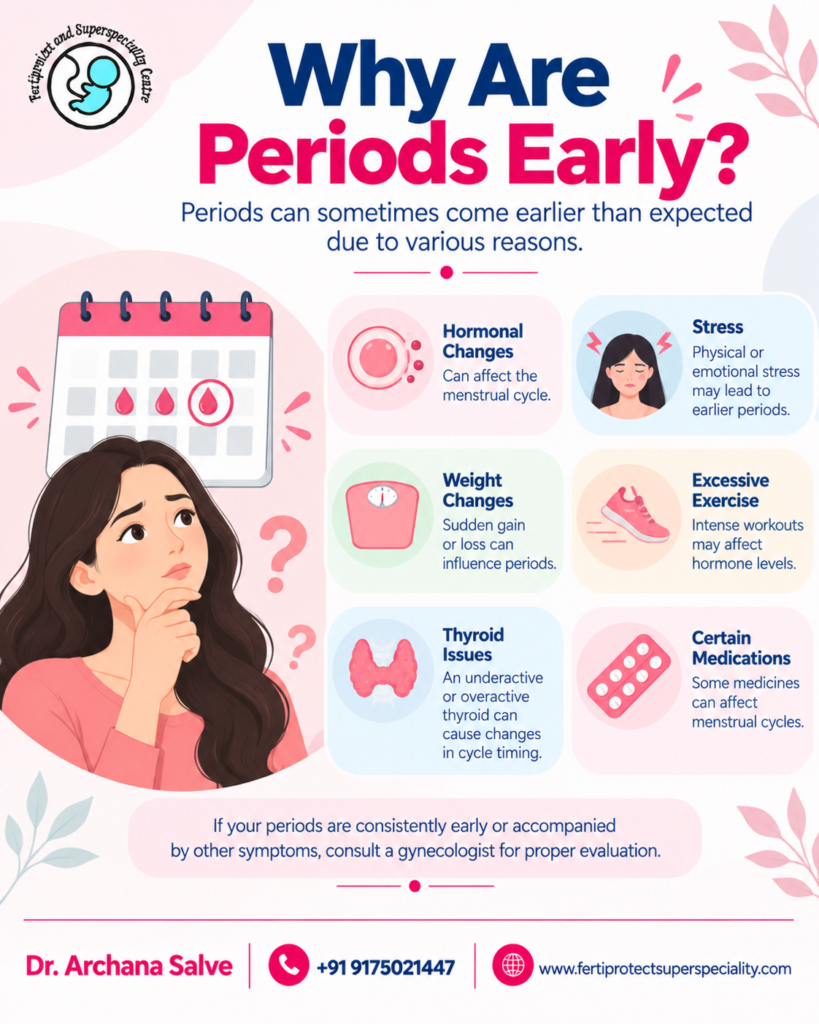
Menstrual cycles can vary from one woman to another, and an occasional change in timing does not always indicate a health problem. However, when periods repeatedly arrive earlier than expected, it is useful to understand what may be influencing the cycle. Hormonal changes, stress, lifestyle factors, thyroid concerns, weight fluctuations and certain medications can all affect menstrual patterns.
Understanding your cycle and noticing changes can help you discuss concerns appropriately with a gynecologist. Dr. Archana Salve provides women’s healthcare and gynecological guidance through Dr. Archana Salve, serving women in Pune, including Pashan, Kalyani Nagar and Viman Nagar.
Why Are Periods Early?
A menstrual cycle is controlled by a complex interaction of reproductive hormones. Changes in hormone levels can influence when ovulation occurs and when menstrual bleeding begins. A cycle that occasionally comes earlier may simply reflect normal variation, but repeated changes can sometimes point toward an underlying factor that deserves evaluation.
Keeping track of the first day of each period can help identify whether the change is occasional or becoming a consistent pattern.
Common Reasons for Early Periods
1. Hormonal Changes
Hormones play a central role in regulating the menstrual cycle. Natural hormonal fluctuations can sometimes cause periods to arrive earlier or later than expected.
Hormonal changes may occur during adolescence, after pregnancy, around perimenopause or in association with conditions affecting reproductive hormones. Conditions such as PCOS can also cause changes in menstrual patterns, although PCOS more commonly causes irregular or infrequent periods.
2. Stress and Emotional Pressure
Ongoing physical or emotional stress can influence the hormones involved in the menstrual cycle. Changes in sleep, work routines, emotional wellbeing or daily habits may affect cycle timing.
Managing stress through adequate rest, regular physical activity, relaxation techniques and a consistent routine may support overall wellbeing. If menstrual changes continue despite lifestyle improvements, professional evaluation can be helpful.
3. Changes in Body Weight
Significant or rapid changes in body weight can affect hormonal balance. Both substantial weight loss and weight gain may influence ovulation and menstrual timing.
Rather than focusing only on the number on the weighing scale, maintaining balanced nutrition, regular movement and healthy lifestyle habits is generally more important for overall reproductive health.
4. Intense Physical Activity
Regular exercise can be beneficial for health, but sudden increases in exercise intensity or excessive physical training may affect menstrual cycles in some women.
Athletes and women following demanding exercise routines may notice changes in cycle timing, particularly when intense activity is combined with inadequate nutrition or insufficient recovery.
5. Thyroid Problems
The thyroid gland produces hormones that influence several functions throughout the body, including reproductive processes. Both an underactive and overactive thyroid can be associated with menstrual irregularities.
If early periods occur alongside symptoms such as unusual tiredness, changes in weight, sensitivity to temperature, changes in heart rate or other persistent symptoms, a doctor may consider whether thyroid evaluation is appropriate.
6. Certain Medications
Some medicines can influence menstrual bleeding or cycle timing. Hormonal contraceptives, for example, can change the usual bleeding pattern, particularly when starting, stopping or changing a method.
If you notice a menstrual change after beginning a medication, do not stop prescribed treatment on your own. Discuss the change with the healthcare professional who prescribed it.
7. Perimenopause
As women approach menopause, hormonal patterns can become less predictable. During perimenopause, periods may become shorter, longer, heavier, lighter or irregular.
This transition is different for every woman. Persistent or unusually heavy bleeding should still be evaluated rather than automatically attributed to age-related hormonal changes.
When Should You Be Concerned?
An occasional early period may not require extensive investigation, particularly when there are no other symptoms. However, repeated changes should be discussed with a gynecologist.
Seek medical advice if you experience:
- Periods that repeatedly arrive much earlier than your usual pattern
- Very heavy or prolonged menstrual bleeding
- Bleeding between periods
- Bleeding after sexual intercourse
- Significant pelvic or lower abdominal pain
- Dizziness, unusual weakness or excessive fatigue
- A sudden major change in your established menstrual pattern
The cause cannot always be determined from the timing of bleeding alone. A healthcare professional may review your menstrual history, symptoms, medications and health background before deciding whether further assessment is needed.
How Can You Track Your Menstrual Cycle?
Tracking your periods is a simple way to understand your personal cycle pattern. Record the first day of each period and note the duration of bleeding. You can also record symptoms such as pelvic pain, unusually heavy flow or bleeding between periods.
This information can be useful during a consultation because it gives your doctor a clearer picture of changes over time.
It is better to focus on your individual pattern rather than comparing your cycle with someone else’s. Menstrual cycles can naturally differ between women.
Supporting Menstrual Health
Healthy lifestyle habits can contribute to overall wellbeing and may support regular menstrual function. Aim for a balanced diet, adequate sleep, regular moderate physical activity and appropriate stress management.
Avoid making major dietary or exercise changes solely to alter your menstrual cycle without professional guidance. If you have an existing condition such as PCOS, thyroid disease or another gynecological concern, following your healthcare professional’s advice is important.
Gynecological Care in Pune
Menstrual health is an important part of women’s overall health. Changes in your period can sometimes provide useful information about hormonal, metabolic or gynecological health.
Dr. Archana Salve offers personalized gynecological care in Pune for women seeking guidance about menstrual changes and other women’s health concerns. Patients from Pashan, Kalyani Nagar and Viman Nagar can seek professional consultation according to their individual needs.
At Dr. Archana Salve, the focus is on understanding the patient’s symptoms and health history before recommending appropriate evaluation or care.
Conclusion
An early period can occur for many reasons, ranging from temporary stress and lifestyle changes to hormonal or medical factors. One unusual cycle does not necessarily mean that something is wrong, but a repeated change in your normal pattern deserves attention.
Tracking your menstrual cycle and discussing persistent changes with a qualified gynecologist can help identify possible causes and guide appropriate care. Most importantly, avoid self-diagnosing based only on cycle timing. Your menstrual pattern is personal, and professional evaluation can help put changes into the right context.