
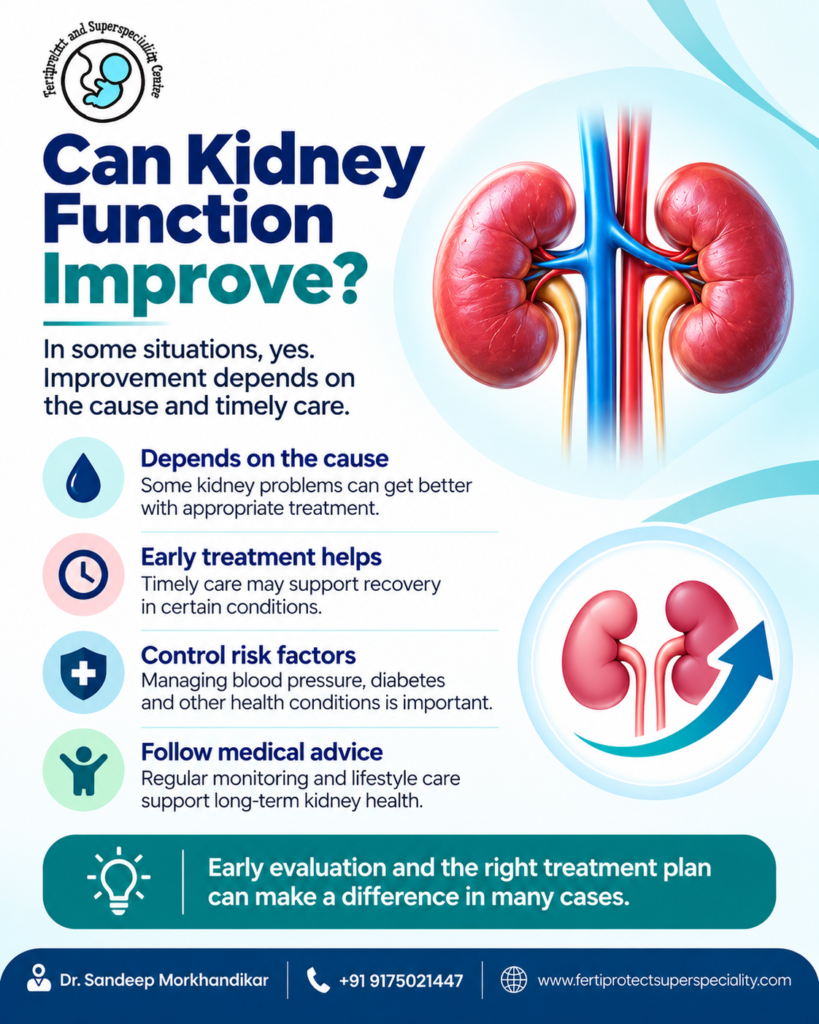
Kidneys perform several essential functions every day. They filter waste products from the blood, help maintain fluid and electrolyte balance, regulate blood pressure, and support the production of certain hormones. When kidney function decreases, the possibility of recovery depends largely on why the kidneys are affected, how severe the problem is, and how quickly appropriate care begins.
Some kidney problems can improve considerably when the underlying cause is identified and treated. Other conditions, particularly long-standing kidney disease, may require ongoing monitoring and management rather than expecting complete recovery.
At Fertiprotect and Superspeciality Centre, Pune, Dr. Sandeep Morkhandikar provides nephrology consultation for patients with kidney-related concerns, abnormal kidney reports, and conditions affecting renal function.
Can Kidney Function Improve?
Can Kidney Function Improve is an important question for people who have recently received an abnormal kidney test result. The answer is not the same for everyone.
A temporary decline may improve when the underlying problem is treated. For example, dehydration, certain infections, urinary obstruction, or some medication-related problems can contribute to a sudden reduction in kidney function. Once the cause is appropriately managed, kidney function may recover partially or substantially in some individuals.
In contrast, chronic kidney disease usually develops over a longer period. Treatment in such cases focuses on controlling the underlying cause, protecting remaining kidney function, and reducing the risk of further deterioration.
What Can Cause Reduced Kidney Function?
Several conditions can affect how well the kidneys work.
Dehydration
Significant fluid loss caused by vomiting, diarrhoea, fever, excessive sweating, or other illnesses can reduce blood flow to the kidneys. If addressed promptly, kidney function may improve in some cases.
Fluid requirements are different for every person, especially for people with kidney or heart conditions. Therefore, fluid intake should follow individual medical advice.
Diabetes
Long-term uncontrolled blood sugar can damage the small blood vessels and filtering structures within the kidneys.
People with diabetes may need regular Kidney Function Tests, urine testing, blood pressure monitoring, and blood sugar assessment to identify changes early.
High Blood Pressure
Persistent high blood pressure can place stress on the kidney’s blood vessels and filtering system. At the same time, kidney disease can make blood pressure more difficult to control.
Managing blood pressure is therefore an important part of Kidney Care.
Medicines
Some medicines can affect kidney function in susceptible individuals, particularly when used unnecessarily, at inappropriate doses, or during dehydration.
Patients should inform their healthcare professional about all prescribed medicines, over-the-counter products, and supplements they regularly use. Medicines should not be stopped or changed without appropriate medical advice.
Urinary Obstruction
Problems such as kidney stones, prostate enlargement, or other causes of urinary blockage can interfere with normal urine flow. Depending on the situation, treating the obstruction may help kidney function recover.
Does Recovery Depend on the Cause?
Yes. The cause is one of the most important factors determining the possibility of improvement.
A sudden decline caused by a treatable condition may have a different outlook from kidney damage that has developed gradually over several years.
The patient’s age, other medical conditions, severity of kidney dysfunction, duration of the problem, and response to treatment can also influence recovery.
This is why an abnormal creatinine result should not be interpreted in isolation.
How Do Doctors Check Kidney Function?
A nephrologist may consider several investigations based on the patient’s symptoms and medical history.
Blood Tests
Serum creatinine is commonly used to assess kidney filtration. Estimated glomerular filtration rate can provide additional information about overall kidney function.
Urine Tests
Urine testing can identify protein, albumin, blood, infection, and other abnormalities. A urine albumin-to-creatinine ratio may be recommended when appropriate.
Blood Pressure Assessment
Blood pressure is an important part of kidney evaluation because hypertension can contribute to kidney damage.
Imaging
An ultrasound or other imaging investigation may be advised when a structural abnormality, urinary obstruction, or another specific concern is suspected.
What Can Help Protect Kidney Function?
Although not every kidney condition can be reversed, several measures can support long-term renal health.
Control Blood Pressure
Follow the treatment plan recommended by your healthcare professional and monitor blood pressure when advised.
Manage Blood Sugar
For people with diabetes, appropriate blood glucose management is an important part of protecting the kidneys.
Avoid Unnecessary Self-Medication
Frequent or inappropriate use of certain painkillers and other medicines can affect kidney health in some individuals. Discuss regular medicine use with a healthcare professional.
Maintain a Balanced Lifestyle
Regular physical activity, a balanced diet, appropriate salt intake, and maintaining a healthy body weight can support overall cardiovascular and kidney health.
Dietary requirements can change when kidney disease is present, so people with established kidney problems may require personalised nutritional guidance.
Attend Regular Follow-Ups
If kidney function has previously been abnormal, periodic blood and urine testing may help monitor changes over time.
Can Kidney Function Improve After Acute Kidney Injury?
Acute kidney injury develops suddenly and can occur because of dehydration, severe illness, infection, reduced blood flow, certain medicines, or urinary obstruction.
Some patients experience substantial recovery after the underlying cause is addressed. Others may require longer monitoring because recovery can be incomplete.
In more serious situations, temporary dialysis may be necessary. Whether dialysis is required depends on the patient’s clinical condition and specific medical indications.
What About Chronic Kidney Disease?
Chronic kidney disease is different from a temporary reduction in kidney function. It involves persistent abnormalities in kidney structure or function over time.
In chronic disease, the focus is generally on identifying the cause, controlling risk factors, managing complications, and protecting remaining kidney function.
Diabetes and high blood pressure are important conditions that require careful management in people with chronic kidney disease.
Regular Kidney Evaluation can help doctors monitor kidney function and modify treatment when necessary.
When Should You Consult a Nephrologist?
Medical evaluation may be appropriate if you have:
- Persistently abnormal creatinine levels
- Reduced estimated kidney filtration
- Protein or albumin in urine
- Blood in the urine
- Swelling around the feet or eyes
- Significant changes in urine output
- Difficult-to-control blood pressure
- Diabetes with abnormal kidney tests
- A history of acute kidney injury
- Known chronic kidney disease
Early assessment can help identify potentially treatable factors and establish an appropriate monitoring plan.
Kidney Care With Dr. Sandeep Morkhandikar in Pune
Dr. Sandeep Morkhandikar at Fertiprotect and Superspeciality Centre, Pune provides nephrology consultation for kidney-related conditions and abnormal kidney function reports.
A reduced kidney function result does not automatically mean that recovery is impossible. The underlying cause, duration, severity, and response to treatment all matter.
Appropriate General Nephrology evaluation can help determine whether the change is temporary, related to an underlying medical condition, or requires long-term monitoring.
If you have received an abnormal kidney report, discussing the result with a qualified nephrologist can help you understand what it means and what further evaluation may be appropriate.
Frequently Asked Questions
1. Can reduced kidney function return to normal?
In some situations, kidney function can improve substantially, particularly when the underlying cause is temporary and treated promptly. Recovery varies between individuals.
2. Does high creatinine always mean permanent kidney damage?
Not necessarily. Creatinine can increase for several reasons, and the result needs to be interpreted alongside other clinical information and previous test results.
3. Can dehydration affect kidney function?
Yes. Significant dehydration can reduce blood flow to the kidneys and contribute to a temporary decline in kidney function.
4. Can diabetes affect kidney function?
Yes. Long-term diabetes can affect the kidney’s filtering structures, making regular monitoring important.
5. Does everyone with reduced kidney function need dialysis?
No. Dialysis is required only in certain situations based on the severity of kidney dysfunction and the patient’s overall clinical condition.
6. How can I protect my kidneys?
Managing blood pressure and diabetes, avoiding unnecessary self-medication, maintaining a healthy lifestyle, and following recommended medical check-ups can support long-term kidney health.