
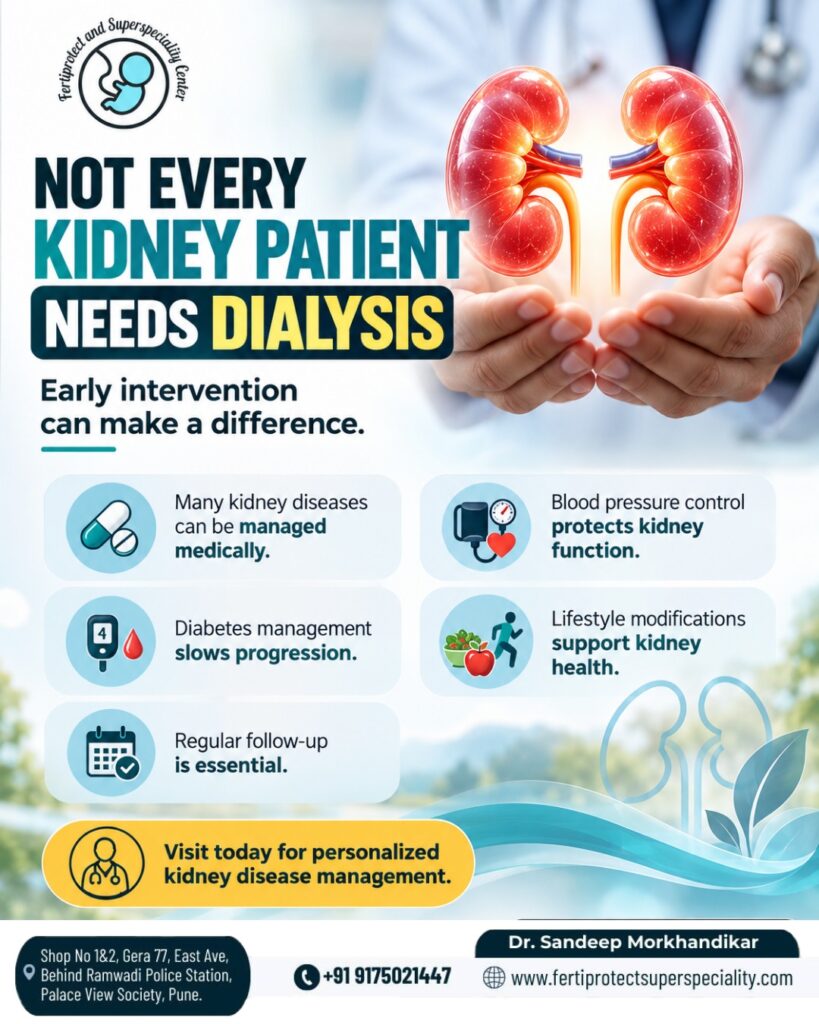
Being diagnosed with kidney disease can naturally raise an important question: “Will I need dialysis?” The answer is not always yes. Kidney disease can range from mild impairment to advanced kidney failure, and treatment depends on the underlying cause, kidney function, symptoms, other health conditions and how the disease changes over time.
Dialysis is an important treatment for people whose kidneys can no longer perform enough of their essential functions. However, it is not automatically required for every person with reduced kidney function. Current kidney-care guidance recommends considering several clinical factors rather than making the decision from a single laboratory value.
What Do the Kidneys Normally Do?
The kidneys continuously filter the blood and remove waste products and excess fluid through urine. They also help maintain the body’s electrolyte and acid-base balance and contribute to blood pressure regulation.
When kidney function begins to decline, the kidneys may still be able to perform these functions sufficiently for some time. In such cases, treatment may focus on identifying the cause, controlling risk factors and monitoring kidney function rather than immediately starting dialysis.
This is why an individual assessment is important.
Why Doesn’t Every Kidney Patient Need Dialysis?
Kidney disease exists across different stages and can progress at different rates. Some people may have stable kidney function for years, while others may experience a faster decline.
The decision to start dialysis is generally based on a combination of factors, including symptoms and signs of kidney failure, estimated kidney function, laboratory abnormalities, fluid balance, blood pressure, nutritional status and the person’s overall health and preferences.
Therefore, a low kidney-function number alone does not necessarily mean that dialysis must begin immediately.
Can Kidney Disease Be Managed Without Dialysis?
In many stages of kidney disease, medical management plays an important role.
Depending on the cause and individual circumstances, treatment may include managing blood pressure, controlling diabetes, reviewing medicines, addressing complications, making appropriate dietary and lifestyle changes, and regularly monitoring kidney function.
The aim is to protect remaining kidney function where possible and reduce the risk of complications.
It is important to understand that treatment is different for every patient. A management plan should be based on the underlying kidney condition, laboratory findings, medications and other health problems.
When May Dialysis Become Necessary?
Dialysis becomes an important consideration when the kidneys are no longer able to maintain the body’s internal balance adequately.
According to current KDIGO guidance, dialysis initiation should be based on a composite assessment rather than an arbitrary kidney-function threshold. Situations that may support starting dialysis include symptoms attributable to kidney failure, difficulty controlling fluid status or blood pressure, certain persistent electrolyte or acid-base abnormalities, worsening nutritional status and other complications.
For some people, these problems may occur when kidney function is very low, but the exact timing varies between individuals.
What Symptoms May Suggest Advanced Kidney Failure?
Symptoms can vary considerably. Some people with significant kidney disease may have few symptoms, while others may develop noticeable changes.
Possible symptoms associated with advanced kidney dysfunction can include persistent tiredness, swelling, reduced appetite, nausea, itching, changes in urination, breathlessness or difficulty maintaining fluid balance.
However, these symptoms can have many different causes. They should not be assumed to indicate kidney failure without appropriate medical assessment.
Why Regular Monitoring Matters
Regular monitoring becomes particularly important when kidney function is reduced.
Doctors may follow blood tests such as creatinine and estimated glomerular filtration rate, urine findings, blood pressure, electrolyte levels and other relevant parameters.
The pattern over time can be more informative than one isolated test. A sudden change may require a different evaluation from a stable, gradual decline.
Monitoring can also help identify complications early and determine whether treatment needs to be adjusted.
Blood Pressure and Diabetes Control
High blood pressure and diabetes are important conditions associated with kidney disease. Managing these conditions appropriately can be an important part of protecting kidney health.
Patients should take prescribed medicines as directed and attend recommended follow-up appointments. Medication doses may sometimes need adjustment as kidney function changes.
People with kidney disease should also discuss over-the-counter medicines, supplements and herbal products with their healthcare professional because some substances may not be appropriate for reduced kidney function.
What If Kidney Function Becomes Very Low?
Very low kidney function does not mean that every patient should make the same treatment decision at the same time.
When kidney function approaches the stage where kidney replacement therapy may be required, advance planning becomes important. This can include discussions about hemodialysis, peritoneal dialysis, kidney transplantation and, where appropriate, comprehensive conservative care.
Planning ahead allows patients and families to understand their options and make decisions based on medical advice and personal circumstances.
Can Dialysis Be Temporary?
Yes, in some situations.
Dialysis can sometimes be used temporarily in selected cases of acute kidney injury. Whether kidney function improves depends on the underlying cause and the patient’s overall condition.
This is different from advanced, irreversible kidney failure, where long-term dialysis or transplantation may be required.
The expected course therefore depends heavily on why kidney function has declined.
Kidney Disease Management in Pune
For patients looking for kidney disease management in Pune, Dr. Sandeep Morkhandikar provides nephrology consultation and individualized evaluation.
The appropriate treatment approach depends on kidney function, symptoms, medical history, laboratory findings, blood pressure, diabetes status and other individual factors. A personalized assessment can help determine whether medical management, closer monitoring, dialysis planning or another treatment approach is appropriate.
Conclusion
Not every person with kidney disease needs dialysis. Dialysis is an important treatment when the kidneys can no longer adequately maintain the body’s internal balance, but the decision to start it should be individualized.
Regular monitoring, appropriate management of associated conditions, medication review, healthy lifestyle measures and timely nephrology care can all play important roles in managing kidney disease.
If kidney function changes, symptoms develop or test results become abnormal, discussing the findings with a qualified kidney specialist can help clarify what they mean and what the next step should be.