Polycystic ovary syndrome, commonly known as PCOS, is a hormonal and metabolic condition that can affect menstrual cycles, ovulation, skin, hair, fertility and long-term metabolic health. Nutrition is an important part of overall management, but there is no single food or restrictive diet that can cure PCOS. A balanced eating pattern, regular physical activity and individualized medical care are more important than following a rigid diet plan.
For women living with PCOS, choosing nutritious foods consistently can support general health, help maintain steady energy levels and contribute to better metabolic wellbeing. The best approach depends on individual health, food preferences, lifestyle, medications and nutritional requirements.
Why Does Food Matter in PCOS?
PCOS is associated with metabolic concerns in many women, including an increased risk of insulin resistance and diabetes. However, PCOS can affect women across different body sizes, and healthy lifestyle management should not be focused only on weight loss.
International evidence-based guidance recommends healthy lifestyle behaviours, including healthy eating and physical activity, for women with PCOS. Importantly, there is no single dietary pattern proven to be superior for every woman with the condition.
Instead of completely eliminating carbohydrates or following extreme diets, women can focus on balanced meals containing vegetables, protein, high-fiber foods, whole grains and healthy fats.
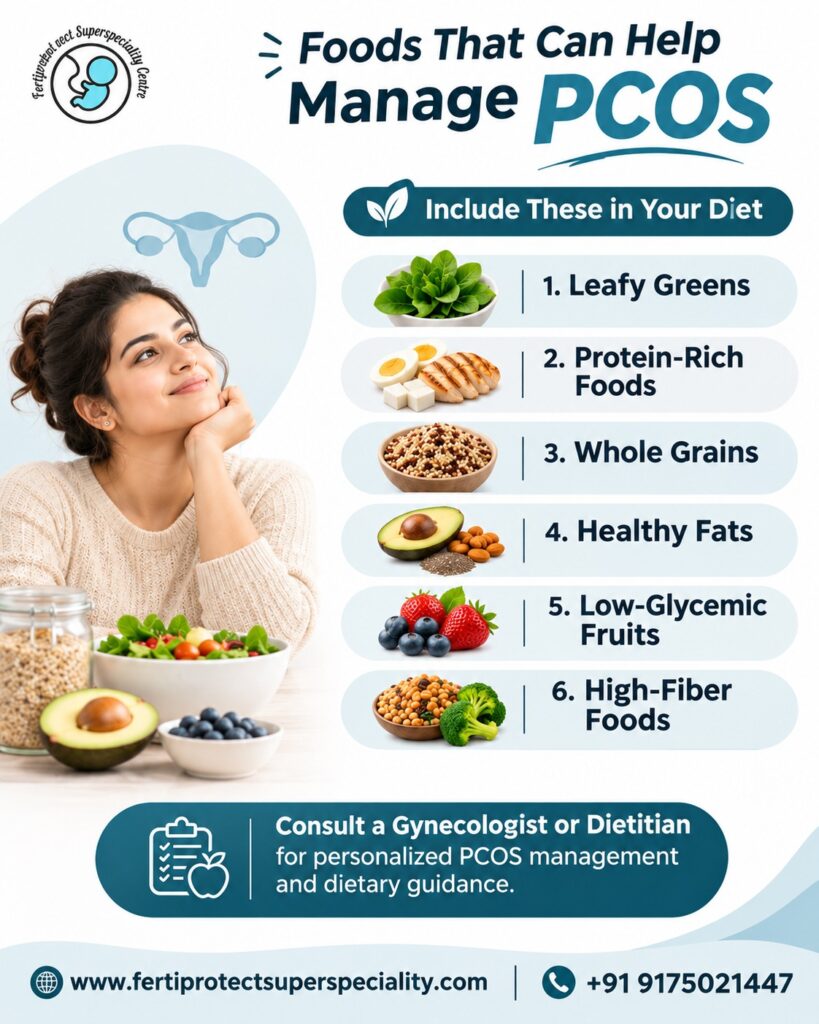
1. Include More Leafy Greens
Leafy vegetables such as spinach, fenugreek leaves, lettuce and other green vegetables can be useful additions to a balanced diet.
They provide fiber, vitamins, minerals and other plant nutrients while adding volume to meals. Combining vegetables with protein and healthy fats can make meals more satisfying.
Including vegetables regularly is generally more useful than relying on one particular “superfood” for hormonal health.
2. Choose Protein-Rich Foods
Protein can help make meals more filling and can be included at breakfast, lunch and dinner.
Suitable choices may include eggs, fish, chicken, paneer, tofu, curd, pulses, beans and other protein-rich foods depending on dietary preferences.
Pairing protein with vegetables and a suitable source of whole-grain carbohydrate can create a balanced meal.
Women following vegetarian or vegan diets can discuss suitable protein combinations with a qualified dietitian if they are unsure about meeting their nutritional requirements.
3. Prefer Whole Grains
Whole grains such as oats, brown rice, whole-wheat products, millets and quinoa can provide fiber and other nutrients.
The goal is not necessarily to eliminate carbohydrates. Instead, choosing appropriate portions and pairing carbohydrates with protein, vegetables and healthy fats can contribute to a more balanced meal pattern.
Individual carbohydrate requirements can vary, particularly in women with diabetes, insulin resistance or other metabolic concerns.
4. Add Healthy Sources of Fat
Healthy fats can form part of a balanced diet. Foods such as nuts, seeds, avocado and suitable vegetable oils provide fats along with other nutrients.
Portion size still matters because fats are energy-dense. A balanced approach is generally more sustainable than completely avoiding dietary fat.
5. Choose Fruit Wisely
Fruit can be part of a healthy eating pattern for women with PCOS.
Rather than avoiding fruit because of its natural sugar content, focus on whole fruits and appropriate portions. Berries, apples, oranges, guava and other whole fruits can provide fiber, vitamins and antioxidants.
Fruit juice is different from whole fruit because it generally contains less fiber and can be consumed more quickly.
6. Increase Fiber-Rich Foods
Fiber is found in vegetables, fruits, pulses, beans, whole grains, nuts and seeds.
Including a variety of fiber-rich foods can support digestive health and contribute to a balanced eating pattern.
Increase fiber gradually if your current intake is low, particularly if you experience bloating or digestive discomfort.
Foods to Limit Rather Than Completely Ban
There is usually no need to label individual foods as completely forbidden. However, frequent consumption of highly processed foods, sugar-sweetened beverages, refined snacks and foods high in saturated fat may make it harder to maintain an overall balanced diet.
Instead of focusing on strict restrictions, consider how often these foods appear in your diet and what you can add to make meals more nutritious.
Lifestyle Matters Alongside Food
Nutrition is only one part of PCOS management. Regular physical activity is also recommended as part of healthy lifestyle management. The international guideline emphasizes that lifestyle benefits can occur even without weight loss.
Sleep and emotional wellbeing are also important. PCOS can be associated with psychological concerns, and healthcare should address overall quality of life rather than focusing exclusively on weight or appearance.
When Should You Consult a Gynecologist?
Women experiencing irregular periods, difficulty with conception, excessive hair growth, persistent acne, unexplained weight changes or other symptoms should consider discussing them with a gynecologist.
PCOS management may involve menstrual-cycle management, fertility planning, metabolic assessment, lifestyle support or medicines depending on the individual’s needs. Diet should complement medical care rather than replace it.
Women searching for PCOS diet in Pune should remember that dietary recommendations are best personalized according to medical history, nutritional needs, lifestyle and metabolic health.
A Sustainable Approach Is Better Than a Perfect Diet
Managing PCOS does not require following a complicated meal plan or eliminating entire food groups without medical reason.
A practical approach is to build meals around vegetables, adequate protein, fiber-rich carbohydrates and healthy fats. Regular physical activity, adequate sleep and appropriate medical follow-up can complement these habits.
Most importantly, PCOS management should be individualized. What works well for one woman may not be appropriate for another.
Conclusion
Food can play a valuable role in supporting overall health when living with PCOS. Leafy greens, protein-rich foods, whole grains, healthy fats, whole fruits and high-fiber foods can all fit into a balanced eating pattern.
There is no single food that treats PCOS, and no universal diet that works for every woman. Evidence-based PCOS care focuses on sustainable healthy lifestyle habits, individualized medical management and long-term wellbeing.
With appropriate guidance from a qualified healthcare professional, women can develop realistic nutrition and lifestyle habits that fit their health needs and everyday routine.