
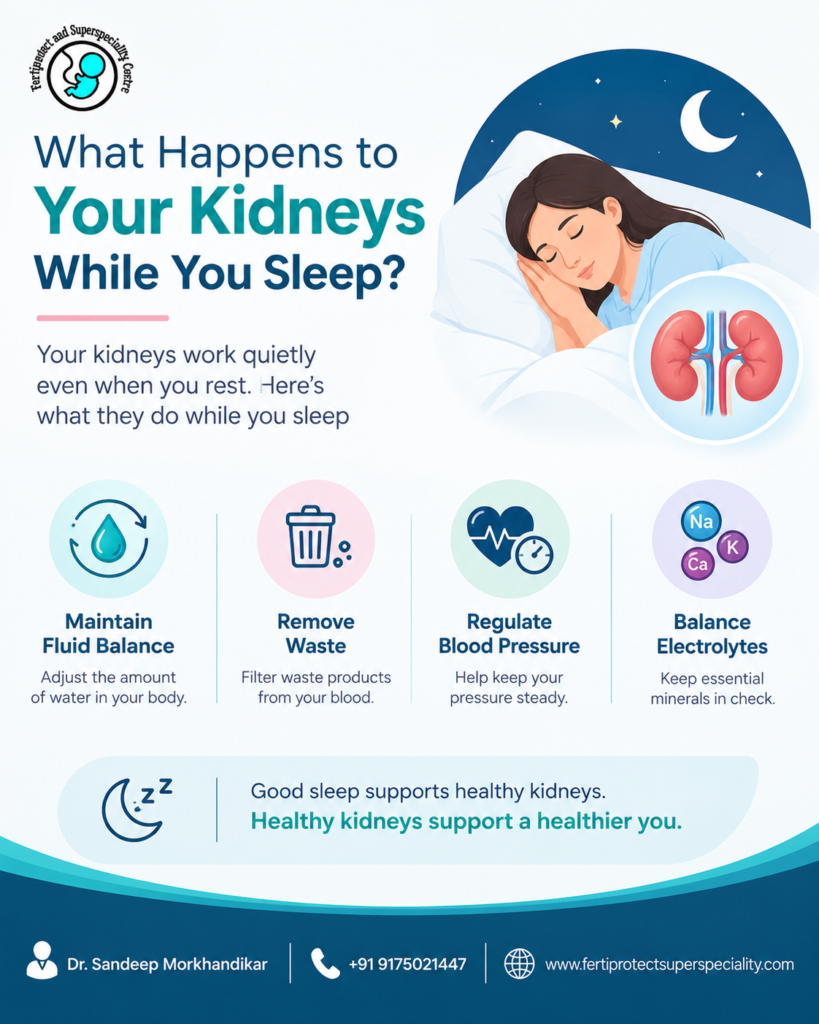
When you go to sleep, your body does not stop working. Several organs continue performing essential functions throughout the night, and your kidneys are among them. While you rest, your kidneys continue filtering the blood, managing fluid levels and helping maintain the balance of important minerals in the body.
Understanding how the kidneys work during sleep can help you appreciate why good sleep, healthy habits and appropriate medical care are important for overall kidney health.
Your Kidneys Keep Filtering Waste
One of the main functions of the kidneys is to filter waste products from the blood. These waste substances are produced naturally when the body processes food, uses energy and performs everyday activities.
Even while you are asleep, your kidneys continue their filtration process. The useful substances that the body needs are retained, while waste products are eventually removed through urine.
This continuous process helps maintain the body’s internal balance throughout the day and night.
How Do Kidneys Manage Fluid During Sleep?
Fluid balance is another important function of the kidneys. During the night, your body generally receives less fluid because you are not drinking water while sleeping.
The kidneys adjust urine production according to the body’s needs. Hormonal changes that occur during sleep can also influence how much water the body retains and how much urine is produced.
This is one reason why many healthy adults can sleep for several hours without needing to urinate.
However, frequent nighttime urination can sometimes be associated with conditions such as diabetes, urinary problems, certain medications, heart conditions or kidney disease. Persistent changes in nighttime urination should be discussed with a healthcare professional.
Kidneys and Blood Pressure
The kidneys and blood pressure are closely connected. The kidneys help regulate blood pressure by controlling fluid balance and participating in hormonal systems that influence blood vessel function.
Blood pressure also affects the kidneys. Persistently high blood pressure can damage the small blood vessels responsible for kidney filtration over time.
Sleep itself is also important for healthy blood pressure regulation. Poor sleep, irregular sleep patterns and certain sleep disorders may affect blood pressure and overall cardiovascular health.
Maintaining healthy sleep habits is therefore one part of a broader approach to protecting kidney and cardiovascular health.
Maintaining Electrolyte Balance
Your blood contains important minerals called electrolytes. These include sodium, potassium and calcium, among others.
The kidneys help regulate the levels of these substances by adjusting how much is retained or removed through urine. This process continues while you sleep.
Maintaining the right electrolyte balance is important because these minerals are involved in muscle function, nerve activity, heart rhythm and many other processes.
When kidney function becomes significantly impaired, the body’s ability to maintain electrolyte balance may be affected. This is one reason people with kidney disease may require regular blood tests and individualized medical monitoring.
Does Sleep Affect Kidney Health?
The relationship between sleep and kidney health works in both directions. Good-quality sleep supports overall physical health, while certain kidney-related conditions may interfere with comfortable sleep.
People with advanced kidney disease may experience symptoms such as itching, muscle cramps, restless legs, swelling or frequent urination, which can disturb sleep.
Sleep problems may also occur alongside conditions such as high blood pressure, diabetes and sleep apnea, which are important risk factors for kidney disease.
For this reason, persistent sleep difficulties should not always be dismissed as a simple lifestyle issue, particularly when other health symptoms are present.
What Can You Do to Support Kidney Health?
Healthy daily habits can support kidney function over the long term. These include maintaining appropriate hydration, following a balanced diet, staying physically active and keeping blood pressure and blood sugar within the recommended range.
Avoiding unnecessary use of medicines, especially frequent use of certain painkillers without medical advice, can also be important.
People who already have kidney disease may have specific dietary or fluid requirements. In such situations, general advice about water intake or diet may not apply to everyone. Following an individualized medical plan is more appropriate.
When Should You Pay Attention to Changes?
Changes in urination, swelling of the feet or face, persistent fatigue, unexplained itching, repeated nighttime urination or changes in blood pressure may warrant medical attention.
These symptoms do not necessarily mean that a person has kidney disease. They can have several possible causes. However, persistent or unexplained changes should be evaluated rather than ignored.
Routine kidney assessment may include blood tests such as creatinine and estimated glomerular filtration rate, along with urine testing when appropriate. The exact tests depend on a person’s age, medical history and risk factors.
Who May Need Regular Kidney Monitoring?
People with diabetes, high blood pressure, a family history of kidney disease, previous kidney injury or other medical conditions that can affect kidney function may benefit from regular monitoring.
Regular follow-up can help identify changes in kidney function and allow appropriate care to be planned according to individual needs.
For individuals looking for a Nephrologist in Pune, Dr. Sandeep Morkhandikar provides kidney-focused consultation and evaluation based on each patient’s health condition and medical requirements.
Conclusion
Your kidneys remain active while you sleep. They continue filtering waste, managing fluid, regulating electrolytes and contributing to blood pressure control.
Good sleep alone cannot prevent every kidney problem, but healthy sleep habits are an important part of overall wellness. Along with balanced nutrition, appropriate hydration, physical activity and regular health monitoring, they can contribute to better long-term health.
If you notice persistent changes in urination, blood pressure, swelling, sleep quality or other symptoms that concern you, discussing them with a qualified healthcare professional can help identify the underlying cause and determine whether further kidney evaluation is appropriate.