
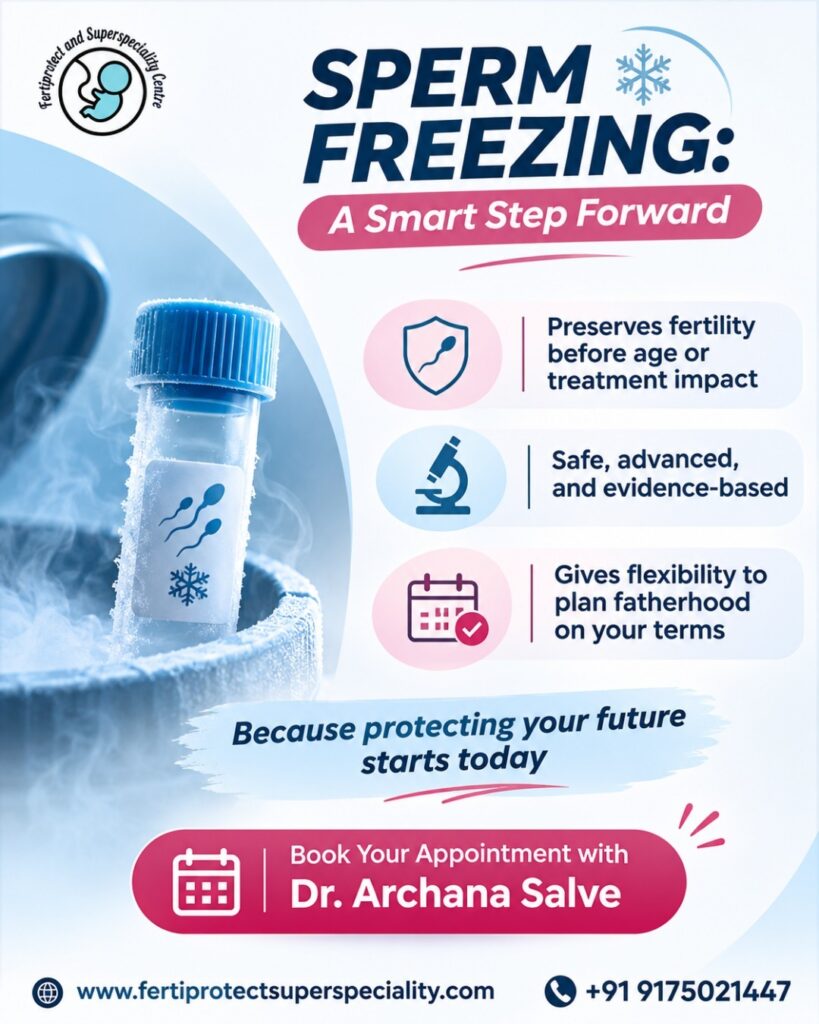
Planning for future fertility can be an important consideration at different stages of life. Medical treatments, age-related changes, personal circumstances and future family-planning goals may influence decisions about reproductive health. Sperm freezing is one fertility preservation option that allows sperm to be collected, evaluated and stored for possible future use.
Understanding how the process works, who may consider it and what factors affect the decision can help individuals make informed choices about their reproductive health.
What Is Sperm Freezing?
Sperm freezing, also known as sperm cryopreservation, is a process in which a semen sample is collected and specially prepared before being stored at very low temperatures. The frozen sample can potentially be used later for fertility treatment, depending on the individual’s circumstances and the quality of the stored sperm.
The process does not guarantee a future pregnancy. Instead, it provides an opportunity to preserve reproductive material that may be useful at a later stage.
Why Consider Fertility Preservation?
There are several reasons why an individual may discuss sperm preservation with a fertility specialist.
Some medical treatments can affect sperm production or reproductive function. For example, certain cancer treatments may have an impact on fertility. Preserving sperm before treatment may therefore be discussed when appropriate.
Age can also be a consideration. Although male fertility can continue for many years, sperm characteristics may change with age. Individuals who anticipate delaying parenthood may therefore discuss available fertility preservation options.
Other personal, occupational or medical circumstances may also lead someone to consider sperm storage. The decision is highly individual and should be made after discussing medical history, future plans and available options with a qualified specialist.
How Does the Sperm Freezing Process Work?
The process generally begins with a consultation and fertility assessment. The specialist may review medical history, medications, previous treatments and reproductive goals.
A semen sample is then collected according to the clinic’s instructions. The sample is evaluated in the laboratory to assess factors such as sperm concentration, movement and overall characteristics.
If the sample is suitable for cryopreservation, it is processed using specialized laboratory techniques and stored under controlled conditions. Proper identification and laboratory documentation are important parts of safe fertility preservation.
In some situations, more than one sample may be recommended. The appropriate approach depends on individual circumstances and the intended future use of the stored sperm.
Who May Consider Sperm Freezing?
Sperm preservation may be discussed with individuals who are facing medical treatment that could affect fertility. It may also be considered by those who want to preserve reproductive options before certain procedures or for personal family-planning reasons.
Men undergoing evaluation for fertility concerns may also discuss preservation depending on their circumstances.
It is important to remember that sperm freezing is not necessary for everyone. A fertility specialist can help determine whether preservation is appropriate based on health history, reproductive goals and the available treatment options.
Does Frozen Sperm Remain Usable?
Cryopreservation is designed to preserve sperm for potential future use. However, not every sperm cell necessarily survives the freezing and thawing process.
The quality of the original sample, sperm characteristics and laboratory procedures can influence the number of usable sperm after thawing. Fertility specialists and embryology teams can explain these factors in more detail during consultation.
The stored sperm may later be used with fertility treatments such as intrauterine insemination, in vitro fertilization or intracytoplasmic sperm injection, depending on the couple’s fertility circumstances and treatment plan.
Sperm Freezing Before Medical Treatment
For individuals who may undergo treatments that could affect sperm production, fertility preservation can be an important part of pre-treatment planning.
Depending on the medical condition and treatment schedule, a specialist may recommend discussing sperm storage before treatment begins. Early consultation can provide an opportunity to understand available options and complete the necessary laboratory procedures when medically appropriate.
Because every medical situation is different, fertility preservation should be coordinated with the treating medical team.
Is Sperm Freezing Right for Everyone?
There is no single fertility preservation approach that suits everyone. The decision may depend on age, sperm quality, medical history, current health, future reproductive plans and the reason for considering preservation.
A consultation can help explain the expected benefits, limitations, costs, storage arrangements and possible future use of the sample.
It is also useful to discuss how long the sample may be stored and what documentation or consent requirements apply to future use.
Choosing Appropriate Fertility Guidance
Fertility preservation involves both medical assessment and specialized laboratory care. Choosing an experienced fertility team can help patients understand the process clearly and make decisions according to their individual circumstances.
For individuals considering Sperm Freezing in Pune, a consultation can help clarify whether this option is suitable and what steps may be involved.
Final Thoughts
Sperm freezing can provide an opportunity to preserve reproductive material for possible future fertility treatment. It may be considered before certain medical treatments, when planning to delay parenthood or when future reproductive options are an important personal consideration.
However, preservation does not guarantee future fertility or pregnancy. The usefulness of stored sperm depends on several factors, including the original sample, laboratory handling and the fertility treatment selected later.
Discussing fertility preservation with a qualified specialist can help you understand the process, benefits and limitations before making a decision. Individualized guidance can make fertility planning more informed and aligned with your long-term reproductive goals.