
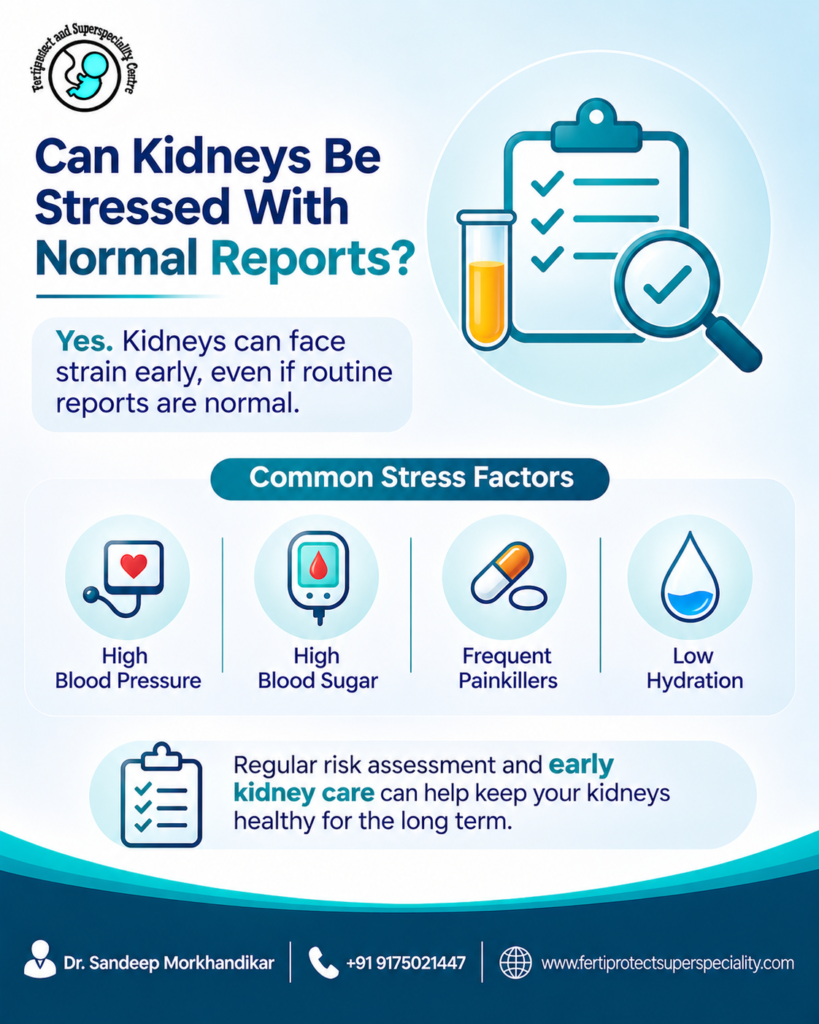
When a routine health report shows normal kidney numbers, many people assume that their kidneys are completely healthy. While normal results are reassuring, they do not always provide the complete picture. Some early kidney changes may not immediately cause symptoms or obvious abnormalities in routine blood tests.
Kidney health is influenced by several factors, including blood pressure, blood sugar, hydration, medicines, lifestyle and existing health conditions. Understanding these factors can help people take appropriate steps toward long-term kidney care.
What Does “Normal Kidney Function” Mean?
Kidney function is commonly assessed using blood and urine tests. A blood test can be used to calculate the estimated glomerular filtration rate, or eGFR, which gives an indication of how efficiently the kidneys filter waste from the blood.
A urine albumin-creatinine ratio, commonly called uACR, can identify albumin in the urine. Albuminuria may indicate kidney damage even when eGFR appears to be within a normal range. For this reason, both kidney filtration and urine protein assessment can be important when evaluating kidney health.
A single normal report should therefore be considered alongside the person’s medical history, risk factors and previous test results.
Can Kidneys Be Under Stress Without Obvious Symptoms?
Yes. Early kidney problems may not produce noticeable symptoms. This is one reason why people with certain risk factors may benefit from periodic kidney assessment.
High blood pressure and diabetes are important risk factors for chronic kidney disease. A family history of kidney disease, previous acute kidney injury, cardiovascular disease and certain other conditions can also increase risk.
The absence of symptoms does not necessarily mean that kidney health can be ignored. In some people, changes may first become apparent through urine or blood testing rather than through physical symptoms.
High Blood Pressure and Kidney Health
Blood pressure and kidney function have a close relationship. Persistently high blood pressure can place additional stress on the small blood vessels within the kidneys.
At the same time, kidney problems can contribute to blood pressure changes. This makes regular blood pressure monitoring an important part of kidney care.
If blood pressure remains elevated despite lifestyle measures or prescribed treatment, discussing the situation with a healthcare professional can help identify possible contributing factors.
Diabetes and the Kidneys
High blood sugar over a prolonged period can affect the small blood vessels that help the kidneys filter blood. Albumin appearing in the urine can sometimes be an early indicator of kidney involvement.
People with diabetes may therefore need periodic assessment of both eGFR and urine albumin. Guidelines recommend testing people at increased risk using these two measures rather than relying on a single kidney number.
Maintaining appropriate blood sugar levels and following an individualized treatment plan can be important for protecting long-term kidney health.
Can Medicines Affect the Kidneys?
Certain medicines can influence kidney function, particularly in people who already have kidney disease or are dehydrated. Some pain-relieving medicines, for example, can be harmful to the kidneys when used frequently or in inappropriate circumstances.
This does not mean that people should stop prescribed medicines on their own. Instead, medication use should be reviewed with a healthcare professional, particularly if kidney test results change or if several medicines are being taken together.
A medication review can help determine whether a medicine, dose or combination of medicines needs attention.
Why Hydration Matters
Fluid balance is another important aspect of kidney health. Dehydration can temporarily affect kidney function, particularly during hot weather, fever, vomiting, diarrhoea or reduced fluid intake.
However, drinking excessive amounts of water is not appropriate for everyone. People with advanced kidney disease, heart conditions or fluid restrictions may need individualized fluid advice.
The right amount of fluid depends on a person’s health, kidney function, medications and other medical factors.
Which Tests Give a Better Picture of Kidney Health?
A complete kidney assessment may involve more than a routine creatinine result. Depending on the person’s situation, a healthcare professional may consider:
- Serum creatinine and eGFR
- Urine albumin-creatinine ratio
- Blood pressure measurement
- Blood sugar assessment
- Electrolytes and other blood tests
- Medical history and medication review
- Imaging when clinically appropriate
Persistent abnormalities may need further evaluation. Chronic kidney disease is generally identified when reduced kidney function or markers of kidney damage remain present for at least three months.
Who Should Pay Extra Attention to Kidney Health?
People with diabetes, high blood pressure, a family history of kidney disease, previous kidney injury or certain cardiovascular conditions may have a higher risk of kidney problems.
Regular monitoring can be particularly useful for people who have these risk factors, even when they feel well.
The goal is not to assume that every normal report hides a problem. Instead, it is to understand that kidney health is best assessed using the right tests, interpreted in the context of the individual patient.
How Can You Support Long-Term Kidney Health?
Simple healthy habits can contribute to overall kidney care. These include maintaining healthy blood pressure and blood sugar levels, following a balanced diet, staying appropriately hydrated, remaining physically active and avoiding unnecessary use of medicines that may affect kidney function.
Regular health checks can also help identify changes early. If a person has an abnormal result, repeating the test when appropriate can help determine whether the finding is temporary or persistent.
When Should You Consult a Kidney Specialist?
If kidney test results are repeatedly abnormal, urine tests show albumin or protein, blood pressure is difficult to control, or there are multiple kidney disease risk factors, medical evaluation may be appropriate.
A nephrologist can review the complete picture rather than relying on one isolated number. This can include laboratory results, medications, medical history, blood pressure and other relevant findings.
For people looking for a Nephrologist & Kidney Specialist in Pune, Dr. Sandeep Morkhandikar provides kidney-focused consultation and individualized evaluation based on the patient’s health needs.
Conclusion
Normal kidney reports are encouraging, but kidney health involves more than one test result. Blood pressure, blood sugar, urine albumin, eGFR, medications, hydration and personal risk factors can all contribute to the overall picture.
Regular monitoring is especially important for people with known risk factors. Understanding your results and discussing unexpected changes with a qualified healthcare professional can help support better long-term kidney care.