
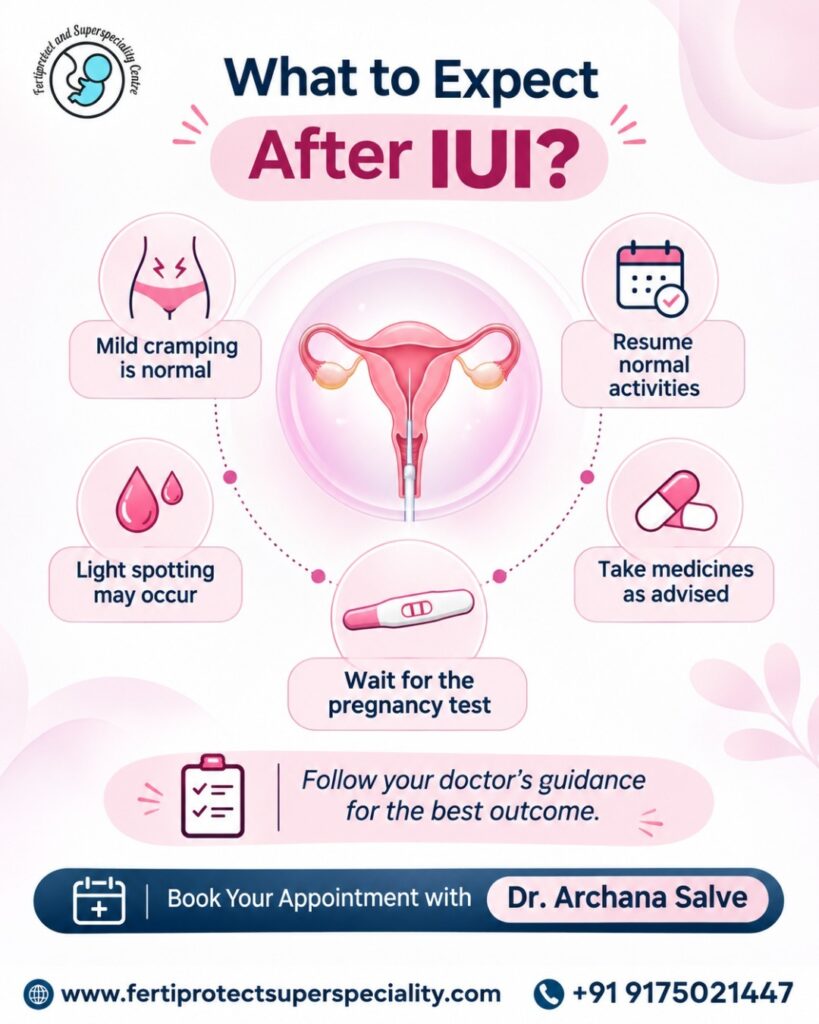
Intrauterine insemination, commonly known as IUI, is a fertility treatment in which specially prepared sperm is placed directly into the uterus around the time of ovulation. Because the procedure itself is quick, many questions arise after it is completed. What symptoms are normal? Can you continue your regular activities? When should you take a pregnancy test? And does cramping or spotting mean the treatment has worked?
Understanding what happens after IUI can make the waiting period easier to manage and help you know when to contact your fertility specialist.
What Happens Immediately After IUI?
IUI usually takes only a few minutes. A thin catheter is gently passed through the cervix and the prepared sperm sample is placed into the uterus. Some women experience temporary discomfort or mild cramping during or shortly after the procedure.
After the procedure, you may be asked to rest briefly before leaving the clinic. In most cases, prolonged bed rest is not necessary, and many women can return to their usual daily routine. However, your individual instructions may differ depending on your treatment plan and whether fertility medicines were used.
Mild Cramping After IUI
Mild abdominal or pelvic cramping can occur after IUI. It may be related to temporary irritation from the catheter or contractions of the uterus.
Cramping shortly after the procedure does not confirm whether pregnancy has occurred. Similarly, the absence of cramping does not mean that the treatment has not worked.
If discomfort becomes severe, persistent, or is accompanied by other concerning symptoms, contact your fertility care team rather than trying to determine the cause yourself.
Is Light Spotting Normal After IUI?
Some women notice a small amount of spotting after insemination. Light spotting can occur because the cervix may become mildly irritated while the catheter is inserted.
Spotting for a short period does not necessarily indicate a problem or confirm pregnancy. However, heavy bleeding is different from light spotting and should be discussed promptly with your healthcare provider.
Can You Continue Normal Activities?
For most patients, normal daily activities can be resumed after IUI. You generally do not need to remain in bed simply because you have undergone the procedure.
Your fertility specialist may provide specific instructions depending on your treatment cycle, medications, ovarian response, or other medical considerations. Therefore, follow your individual IUI aftercare instructions rather than relying on general advice from friends or online sources.
It is also important to continue medicines exactly as prescribed. If progesterone or another medication has been recommended, do not stop it without speaking with your treating doctor.
What Happens During the Two-Week Wait?
The period between insemination and the pregnancy test is often called the “two-week wait.” It can be emotionally challenging because you may notice physical sensations and wonder whether they are early pregnancy symptoms.
During this period, symptoms such as mild cramping, breast tenderness, bloating, fatigue, or mood changes may occur because of hormonal changes or fertility medicines. These symptoms alone cannot confirm pregnancy.
Try not to interpret every physical change as a sign of success or failure. Your body may feel different during a treatment cycle, and symptoms can vary from one person to another.
When Should You Take a Pregnancy Test?
Timing your pregnancy test is important. Testing too early can produce an unclear or misleading result. Fertility treatment may sometimes involve an hCG trigger injection, and residual hCG can affect an early pregnancy test.
Many fertility clinics recommend testing approximately two weeks after IUI. Your doctor may recommend a blood pregnancy test or a home urine test depending on your treatment protocol.
Following the recommended testing date is therefore an important part of your pregnancy testing after IUI plan.
What If the Pregnancy Test Is Positive?
A positive test is an important next step, but it is usually followed by further medical care. Your fertility specialist may recommend blood testing and, when appropriate, an ultrasound to monitor the early pregnancy.
Do not change or stop prescribed medicines simply because you receive a positive result. Discuss all medications and supplements with your healthcare provider.
Early pregnancy monitoring can help your doctor understand how the pregnancy is progressing and determine the appropriate next steps.
What If the Pregnancy Test Is Negative?
A negative pregnancy test can be emotionally difficult, particularly after investing time, effort, and hope into treatment. One unsuccessful cycle does not necessarily explain why pregnancy did not occur.
The next step depends on factors such as age, ovarian function, sperm parameters, ovulation, previous treatment history, and the underlying reason for fertility concerns.
Your doctor may discuss another IUI cycle or consider whether a different fertility approach would be more appropriate.
When Should You Contact Your Doctor?
Although mild cramping and light spotting can occur after IUI, certain symptoms should not be ignored.
Contact your fertility clinic if you experience:
- Severe or worsening pelvic pain
- Heavy vaginal bleeding
- Fever
- Foul-smelling vaginal discharge
- Significant abdominal swelling or discomfort
- Dizziness, fainting, or difficulty breathing
If fertility medicines were used, symptoms such as significant abdominal pain, bloating, vomiting, faintness, or breathing difficulty may require prompt medical assessment because ovarian hyperstimulation syndrome can occasionally occur.
How Can You Make the Waiting Period Easier?
The two-week wait can create considerable emotional stress. Instead of repeatedly checking for symptoms, try to maintain a normal routine where possible.
Eat balanced meals, stay adequately hydrated, get sufficient sleep, and continue everyday activities according to your doctor’s advice. Avoid starting new medicines, supplements, or treatments without discussing them with your healthcare provider.
It may also help to limit excessive online searching. Different women can experience completely different symptoms during the same stage of treatment.
Personalized Fertility Guidance Matters
Every fertility journey is different. The appropriate follow-up after IUI depends on the treatment protocol, medications, ovulation timing, medical history, and individual fertility factors.
At Fertiprotect and Superspeciality Center, Dr. Archana Salve provides personalized gynecological and fertility guidance for patients undergoing fertility treatment in Kalyani Nagar, Pune.
For women and couples seeking IUI treatment in Pune, understanding what happens before, during, and after insemination can help make the treatment journey more informed and comfortable.
Conclusion
After IUI, mild cramping or light spotting may occur, while most women can return to their usual activities. The most important step is to follow the treatment instructions provided by your fertility specialist and wait for the recommended pregnancy testing date.
Remember that symptoms alone cannot determine whether IUI has been successful. A properly timed pregnancy test provides a more reliable answer.
With appropriate monitoring, clear communication, and individualized fertility care, you can approach the period after IUI with greater understanding and confidence.