
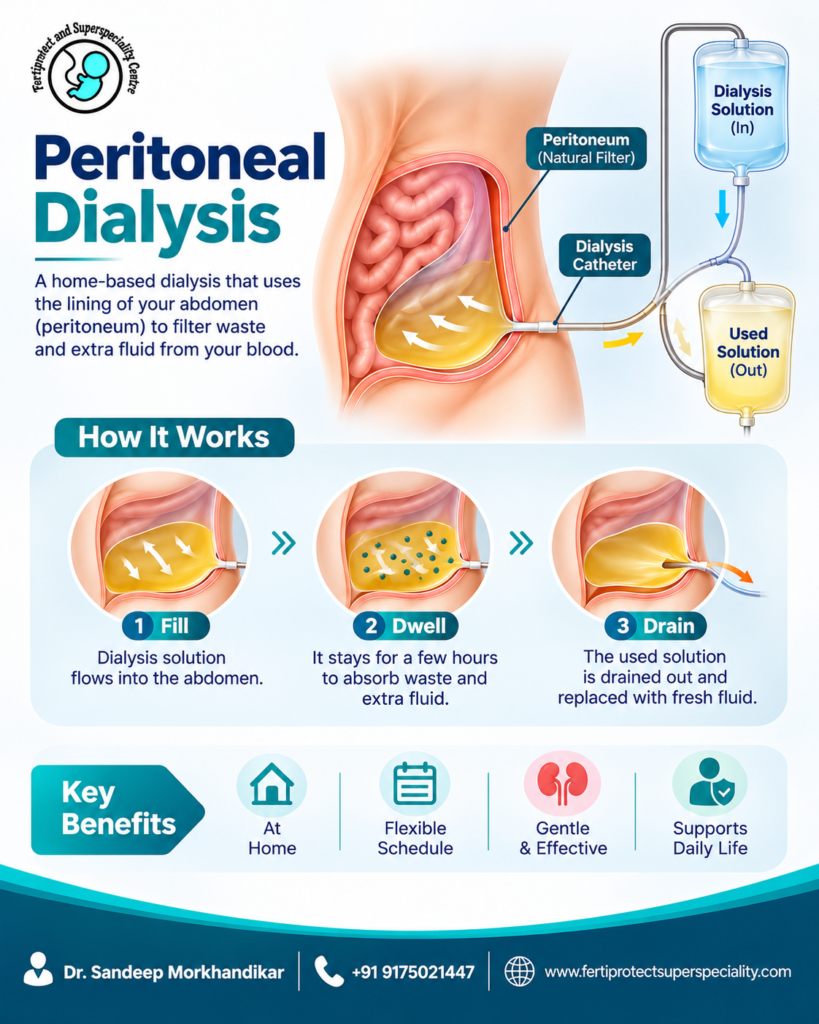
For people living with advanced kidney disease, dialysis can become an important part of ongoing medical care. When the kidneys are no longer able to remove enough waste products and excess fluid from the body, dialysis can help perform some of these essential functions. One option is peritoneal dialysis, a treatment that uses the natural lining of the abdomen, called the peritoneum, as a filtering membrane.
Understanding how this treatment works can help patients and families have more informed discussions with their nephrologist about available kidney replacement options.
What Is Peritoneal Dialysis?
Peritoneal dialysis uses the peritoneum inside the abdomen to help remove waste and extra fluid from the bloodstream. A soft catheter is placed into the abdomen through a planned medical procedure. A special dialysis solution is then introduced through this catheter.
The solution remains inside the abdominal cavity for a specific period. During this time, waste products and excess fluid move from the blood across the peritoneal membrane into the dialysis solution. The used solution is then drained and replaced with fresh solution.
Unlike conventional haemodialysis, which generally requires blood to pass through a dialysis machine, this method uses the body’s own peritoneal membrane as part of the filtration process.
How Does the Process Work?
Peritoneal dialysis generally involves three basic stages:
1. Fill: Fresh dialysis solution is introduced into the abdominal cavity through the catheter.
2. Dwell: The solution remains in the abdomen for a prescribed period. During this time, waste products and excess fluid move into the solution.
3. Drain: The used solution is drained and replaced with fresh solution.
The exact treatment schedule depends on the patient’s medical condition, kidney function, fluid balance and the type of peritoneal dialysis prescribed.
Two commonly used approaches include continuous ambulatory peritoneal dialysis and automated peritoneal dialysis. The appropriate method is selected according to individual requirements and the nephrologist’s recommendations.
Why Is Peritoneal Dialysis Considered?
One of the important features of this form of dialysis is that it can be performed outside a conventional dialysis centre after appropriate training and medical assessment. For suitable patients, this may offer greater flexibility in managing treatment around everyday activities.
It may also be considered for people who prefer a home-based dialysis approach. However, home treatment does not mean treatment without professional supervision. Patients require proper training, regular monitoring and clear instructions regarding catheter care, fluid management, dialysis exchanges and warning signs.
The suitability of this treatment varies from person to person. Factors such as overall health, abdominal conditions, previous surgeries, home environment, ability to perform the exchanges safely and availability of caregiver support may all be considered.
What Are the Benefits?
Potential benefits can include greater flexibility, the ability to receive treatment at home and a dialysis schedule that may fit more easily around certain daily routines.
Another consideration is that peritoneal dialysis can provide continuous or repeated fluid and waste removal depending on the prescribed method. This may help some patients maintain a more consistent fluid balance.
However, no dialysis method is universally suitable. The decision should be based on an individual’s medical condition, lifestyle, preferences and ability to safely follow the treatment plan.
What Precautions Are Important?
Catheter care and hygiene are extremely important. Because a catheter provides access to the abdominal cavity, patients must follow the recommended cleaning and exchange procedures carefully.
Patients should also be aware of symptoms that may require prompt medical attention. These can include abdominal pain, fever, unusual fluid appearance, redness or discharge around the catheter site, nausea or other unexpected changes during treatment.
One important complication associated with peritoneal dialysis is peritonitis, an infection involving the abdominal lining. Recognising possible warning signs early and contacting the treating medical team promptly can be important.
Regular follow-up helps the nephrology team assess treatment effectiveness, nutrition, fluid status, blood tests and overall kidney health.
Is Peritoneal Dialysis Suitable for Everyone?
No. Dialysis selection is highly individualised. Some patients may be better suited to haemodialysis, while others may be appropriate candidates for a home-based peritoneal dialysis programme.
A nephrologist may review kidney function, other medical conditions, previous abdominal procedures, physical ability, home circumstances and personal preferences before recommending an appropriate dialysis pathway.
Patients should not select a dialysis method based only on convenience or information found online. A detailed medical evaluation is important before making this decision.
The Importance of Patient Education
Successful home dialysis depends significantly on patient education. Before starting treatment, patients and caregivers generally need training on how to perform exchanges, maintain hygiene, identify potential complications and store dialysis supplies appropriately.
Understanding the purpose of each step can make the treatment process easier to follow. Regular communication with the healthcare team is also important, particularly when patients notice changes in symptoms, weight, blood pressure, fluid balance or dialysis performance.
Peritoneal Dialysis Care in Pune
For patients looking for Peritoneal Dialysis in Pune, Dr. Sandeep Morkhandikar provides nephrology consultation and guidance regarding kidney replacement therapies. His Fertiprotect and Superspeciality Center is located in Kalyani Nagar, Pune, and publicly listed information identifies his areas of nephrology practice as including different renal replacement therapies and home dialysis.
Conclusion
Peritoneal dialysis can be an important kidney replacement option for selected patients with advanced kidney disease. By using the peritoneal membrane to remove waste and excess fluid, it provides an alternative to dialysis performed through a conventional blood-filtering machine.
The treatment requires careful training, hygiene, regular monitoring and ongoing medical supervision. Understanding the process, benefits and possible complications can help patients participate more confidently in decisions about their kidney care.
If dialysis has been recommended, discuss the available options with a qualified nephrologist. The right treatment plan should be based on your medical needs, lifestyle, preferences and long-term kidney care goals.