
Starting a family is an important decision, and for some couples, conception may take longer than expected. Fertility treatment can provide different options depending on the underlying cause, age, reproductive health and medical history of both partners. One commonly considered assisted reproductive technique is intrauterine insemination, or IUI.
Understanding the process can make fertility care feel less confusing and help couples have more informed discussions with their doctor. Dr. Archana Salve, a gynecologist and fertility specialist in Pune, provides individualized guidance based on each couple’s fertility assessment and treatment needs.
What Is IUI?
Intrauterine insemination is a fertility procedure in which specially prepared sperm is placed directly into the uterus around the time of ovulation. The aim is to bring healthy sperm closer to the egg during the fertile window.
IUI may be considered in selected situations, including certain ovulation-related concerns, unexplained fertility challenges, some male-factor fertility issues and situations where donor sperm is being considered. However, it is not appropriate for every couple. A detailed evaluation is important before deciding whether this approach is suitable.
For couples looking for IUI treatment in Pune, understanding the steps involved can help them prepare for consultation and ask relevant questions about their individual treatment plan.
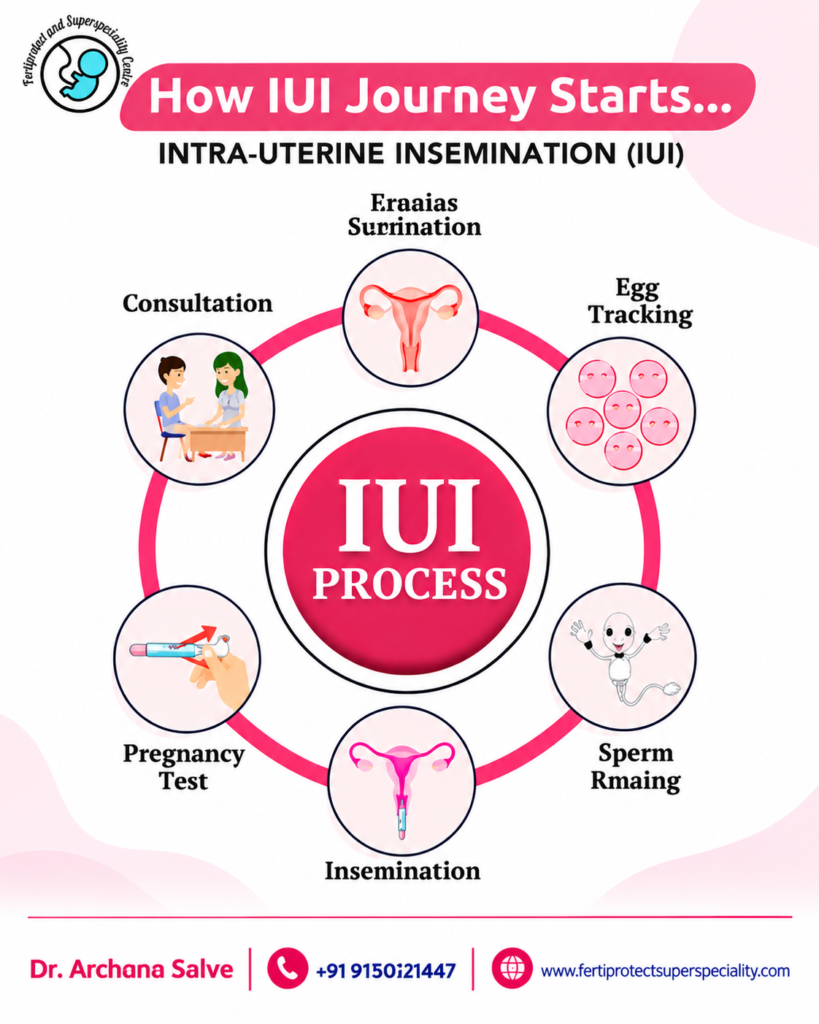
Step 1: Initial Consultation
The journey generally begins with a detailed consultation. The doctor may discuss menstrual history, previous pregnancies, duration of trying to conceive, previous fertility treatments, medical conditions, medications and lifestyle factors.
Fertility evaluation usually considers both partners because conception depends on reproductive health on both sides. Depending on the situation, investigations may include ovulation assessment, hormone testing, ultrasound evaluation and semen analysis.
The purpose of these assessments is not simply to perform tests but to understand possible factors affecting conception and determine whether IUI is an appropriate option.
Step 2: Ovulation Monitoring
Timing is an important part of IUI. The procedure is usually planned around ovulation because the egg is available for fertilization for a limited period.
The doctor may monitor follicular development using ultrasound scans. In selected cases, medication may be prescribed to support or stimulate ovulation. The exact approach depends on the woman’s menstrual pattern, ovarian function and overall fertility assessment.
Regular monitoring helps the medical team determine the appropriate timing for insemination.
Step 3: Sperm Preparation
On the day of insemination, a semen sample is generally collected and processed in the laboratory.
The preparation process separates suitable, motile sperm from other components of the semen. The prepared sample is then used for the insemination procedure.
This step is performed according to established laboratory protocols and is an important part of the IUI process.
Step 4: The Insemination Procedure
During insemination, the prepared sperm sample is introduced into the uterus using a thin catheter. The procedure is generally brief and does not usually require anesthesia.
Some women may experience mild cramping or temporary discomfort, although experiences vary. After the procedure, the patient may usually return to routine activities according to the treating doctor’s advice.
It is important to remember that IUI is a medical procedure rather than a guarantee of pregnancy. Its suitability and expected outcome can vary significantly between individuals.
Step 5: After IUI
After insemination, the focus shifts to the waiting period before pregnancy testing. The doctor may provide instructions regarding medications, activity and follow-up.
It is normal for couples to feel hopeful and anxious during this period. Avoiding unnecessary self-medication and following the prescribed treatment plan can help maintain appropriate care during the cycle.
A pregnancy test is generally advised at the appropriate time rather than immediately after the procedure, as testing too early may not provide a reliable result.
Who May Be Considered for IUI?
IUI may be considered in selected fertility situations. Possible factors include irregular or absent ovulation that can be medically managed, unexplained infertility, certain mild male-factor concerns and some situations involving donor sperm.
However, the decision depends on several factors. Age, ovarian reserve, fallopian tube health, sperm parameters, duration of infertility and previous treatment history may all influence the recommendation.
This is why fertility evaluation should come before choosing a treatment. A procedure that may be appropriate for one couple may not be suitable for another.
When Should You Seek Fertility Guidance?
If pregnancy has not occurred despite regular attempts, it may be useful to discuss the situation with a fertility specialist rather than continuing to wait without evaluation. Earlier consultation can be particularly useful when there are irregular periods, known reproductive health conditions, previous pelvic surgery, suspected tubal problems or concerns about sperm health.
A consultation does not necessarily mean that advanced fertility treatment will be required. It simply provides an opportunity to understand the possible factors involved and discuss appropriate next steps.
Conclusion
IUI is one of several fertility treatment options available to selected couples. The process generally involves consultation, fertility assessment, ovulation monitoring, sperm preparation, timed insemination and follow-up.
The most important step is choosing treatment based on individual medical needs rather than comparing one person’s fertility journey with another’s. With appropriate evaluation, clear communication and personalized medical guidance, couples can better understand their options and make informed decisions about family planning.
If you are considering fertility care in Pune, Dr. Archana Salve can help you understand your reproductive health, available treatment approaches and the next appropriate step based on your individual circumstances.