
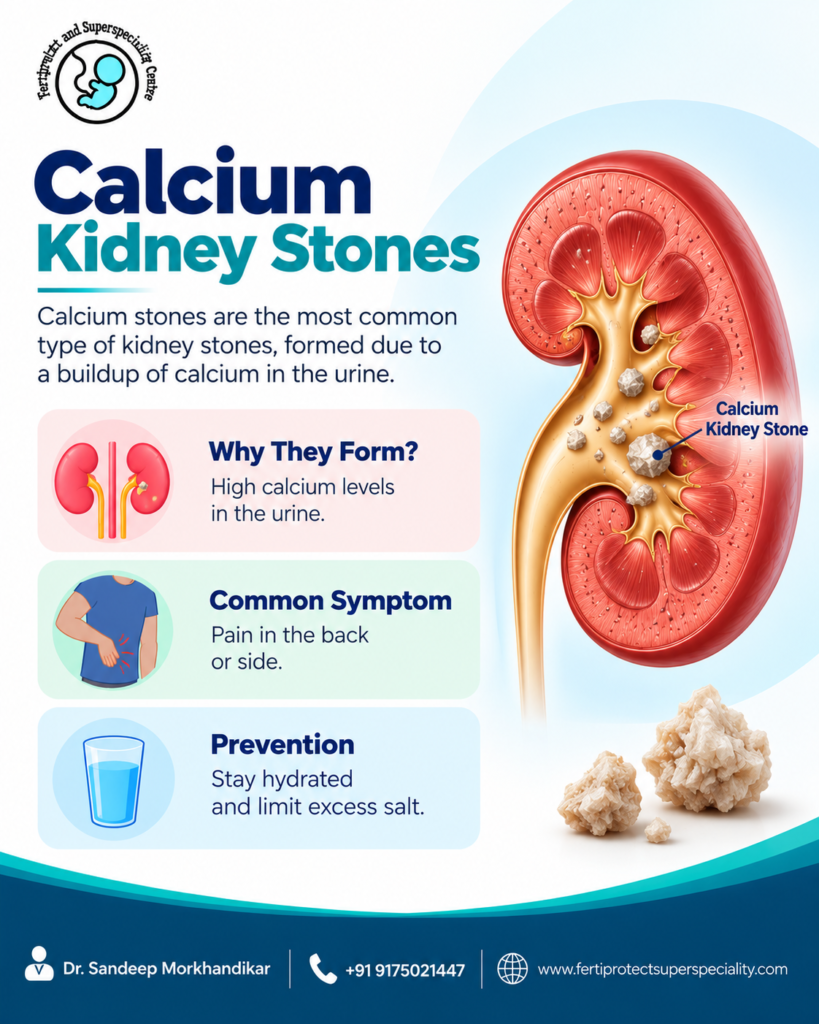
Calcium kidney stones are one of the most common types of kidney stones. They develop when certain substances present in urine become highly concentrated and form crystals that can gradually grow into stones. Although a small kidney stone may sometimes pass without major problems, larger or recurrent stones can cause significant discomfort and may require medical evaluation.
Understanding why these stones develop, recognizing possible symptoms, and taking appropriate preventive measures can help reduce the risk of recurrence. At Fertiprotect and Superspeciality Centre, Dr. Sandeep Morkhandikar provides nephrology consultation and guidance for people dealing with kidney stones and other kidney-related concerns in Pune.
What Are Calcium Kidney Stones?
Calcium stones form when calcium combines with substances such as oxalate or phosphate in the urine. Calcium oxalate stones are particularly common. The formation of a stone is influenced by several factors, including urine concentration, dietary habits, fluid intake, medical conditions, and individual metabolic factors.
Having calcium in the urine does not necessarily mean that a person has unhealthy bones or consumes too much calcium. The process of stone formation is more complex and can vary significantly between individuals.
What Causes Calcium Stones?
Several factors may contribute to calcium stone formation.
Low Fluid Intake
When the body does not receive enough fluids, urine becomes more concentrated. Higher concentrations of minerals and salts can make crystal formation more likely.
Maintaining appropriate Hydration for Kidney Health is therefore an important part of kidney stone prevention.
High Oxalate Intake
Oxalate is naturally present in several foods. In some individuals, higher urinary oxalate levels can contribute to calcium oxalate stone formation.
Foods containing oxalate include spinach, certain nuts, chocolate, and some other plant-based foods. However, completely avoiding these foods is not appropriate for everyone. Dietary recommendations should be based on individual risk factors and stone composition.
High Sodium Intake
A diet high in sodium can increase the amount of calcium released into the urine. For people who are prone to calcium stones, reducing excessive salt intake may be an important part of Kidney Stone Prevention.
Family History
Some people have a greater tendency to develop kidney stones because of genetic or metabolic factors. A family history of recurrent stones may increase individual risk.
Certain Medical Conditions
Some metabolic and hormonal conditions can increase the likelihood of stone formation. Recurrent stones may therefore require evaluation beyond simply increasing water intake.
What Symptoms Can Calcium Stones Cause?
Small stones may sometimes cause no noticeable symptoms. Symptoms can appear when a stone moves through the urinary tract or causes an obstruction.
Possible symptoms include:
- Sharp pain in the back or side
- Pain that may move toward the lower abdomen or groin
- Burning while urinating
- Increased urinary frequency
- Blood in the urine
- Nausea or vomiting
- Difficulty passing urine
Fever or chills along with urinary symptoms can require prompt medical attention because an infection associated with urinary obstruction can be serious.
How Are Calcium Kidney Stones Diagnosed?
Evaluation usually begins with a detailed medical history and physical examination. Depending on the symptoms, a doctor may recommend urine and blood tests.
Urine testing can help identify blood, infection, crystals, and other abnormalities. Blood tests may provide information about kidney function and mineral levels.
Imaging such as ultrasound or other appropriate scans may be recommended to determine the size and location of a stone and whether there is any urinary obstruction.
For people with recurrent stones, additional metabolic evaluation may help identify factors that increase the likelihood of future stone formation.
Does Every Kidney Stone Need Treatment?
Not every stone requires an immediate procedure. Management depends on factors such as the stone’s size, location, symptoms, obstruction, infection, and likelihood of passing naturally.
Some small stones may pass through the urinary tract with appropriate medical guidance and observation. Larger stones or stones causing persistent symptoms or obstruction may require a suitable intervention.
The right approach should be decided after evaluating the individual rather than relying on a general treatment method.
How Can Calcium Stones Be Prevented?
Prevention is particularly important for people who have experienced kidney stones before.
Drink Adequate Fluids
Appropriate fluid intake can help keep urine diluted. The amount required can vary depending on climate, activity level, medical conditions, and individual needs.
Limit Excess Salt
Reducing excessive dietary sodium may help lower urinary calcium levels in some people.
Maintain a Balanced Diet
A balanced diet is generally preferable to extreme dietary restrictions. Depending on the type of stone and metabolic findings, a doctor or dietitian may recommend adjustments to calcium, oxalate, sodium, animal protein, or other dietary factors.
Do Not Restrict Calcium Without Medical Advice
Dietary calcium has an important role in normal nutrition. Avoiding calcium unnecessarily may not prevent stones and can sometimes have unintended effects. Dietary recommendations should be personalised according to the person’s medical history and stone risk.
Maintain a Healthy Lifestyle
Regular physical activity, appropriate weight management, and control of conditions such as high blood pressure and diabetes can support overall health and kidney care.
When Should You Consult a Nephrologist?
Medical evaluation is advisable when kidney stones keep returning, symptoms persist, urine contains blood, or there are concerns about kidney function.
People with recurrent stones may benefit from identifying the reason behind repeated stone formation rather than simply treating each episode separately. Understanding the stone type and associated metabolic factors can help develop a more appropriate prevention plan.
Calcium Kidney Stone Care in Pune
Dr. Sandeep Morkhandikar at Fertiprotect and Superspeciality Centre provides nephrology consultation for kidney-related concerns, including kidney stone evaluation, prevention, and ongoing kidney care.
The business profile Dr. Sandeep S. Morkhandikar, Kidney Transplant & Specialist is associated with Kalyani Nagar, Pune.
If you have experienced kidney stones repeatedly, do not focus only on treating the immediate pain. Understanding why stones are forming can be an important part of long-term care. Appropriate testing, dietary guidance, hydration, and medical follow-up can help reduce the possibility of recurrence in suitable patients.
Frequently Asked Questions
Are calcium stones the most common kidney stones?
Calcium-containing stones are among the most frequently occurring types of kidney stones, with calcium oxalate being particularly common.
Can drinking water prevent calcium stones?
Adequate fluid intake can help dilute urine and may reduce the concentration of substances that contribute to stone formation. Individual fluid needs vary.
Should people with calcium stones stop eating calcium?
Not necessarily. Calcium is an essential nutrient, and unnecessary restriction may not be beneficial. Dietary changes should be based on individual medical advice.
Can calcium kidney stones come back?
Yes. People who have had a kidney stone may develop another one, particularly when underlying risk factors remain. Identifying those factors can help with prevention.
Is every kidney stone painful?
No. Some stones may remain unnoticed, particularly when they are small and do not obstruct urine flow. Symptoms often occur when a stone moves or causes obstruction.