
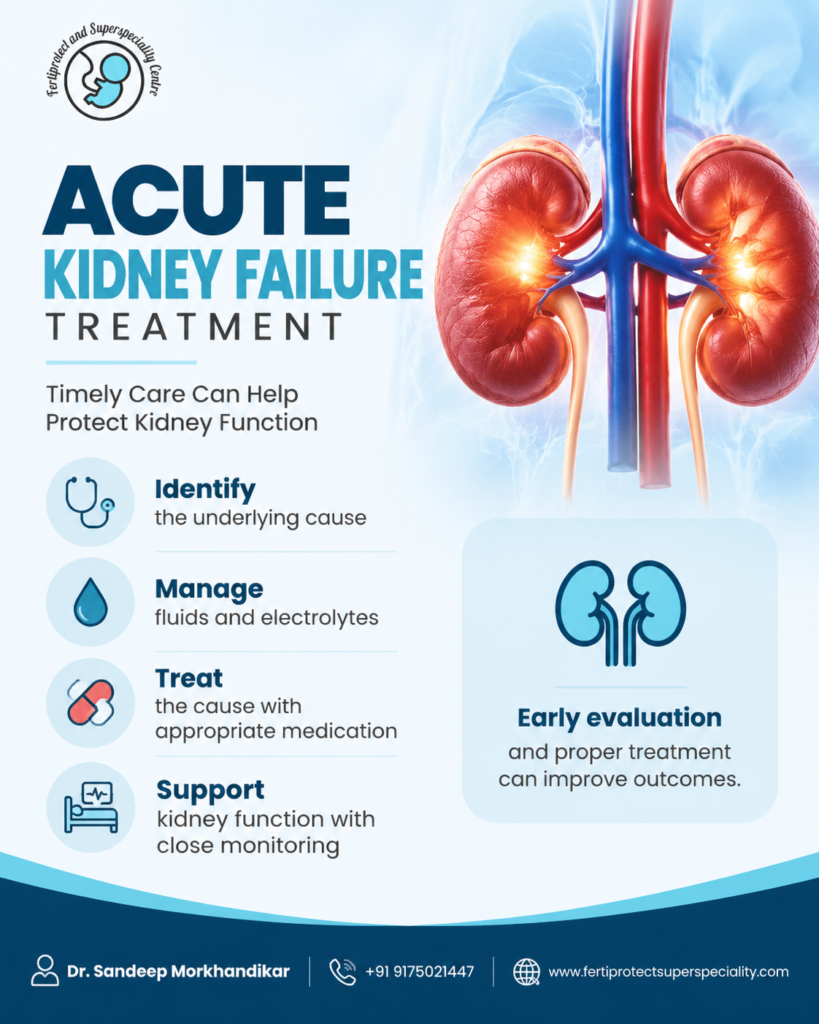
The kidneys are vital organs responsible for removing waste products, balancing fluids, regulating minerals, and supporting many important functions of the body. Sometimes, kidney function can decrease suddenly due to various medical conditions, infections, dehydration, medication effects, or other health issues.
When kidney function declines rapidly, early diagnosis and appropriate medical management become important. Acute kidney problems may require immediate evaluation to understand the cause and support kidney function.
At Dr. Sandeep Morkhandikar, patients receive guidance for kidney-related concerns with a focus on accurate assessment, personalised treatment planning, and long-term kidney health management.
What Is Acute Kidney Failure?
Acute kidney failure, also known as acute kidney injury, occurs when the kidneys suddenly lose their ability to filter waste and maintain the body’s fluid and electrolyte balance properly.
Unlike Chronic Kidney Disease, which generally develops gradually over time, acute kidney problems can occur within a short period and may need urgent medical attention.
The treatment approach depends on:
- The underlying cause
- Severity of kidney function changes
- Overall health condition of the patient
- Response to medical management
Common Causes of Acute Kidney Failure
Several conditions can affect kidney function suddenly.
1. Reduced Blood Supply to the Kidneys
A decrease in blood flow due to dehydration, blood loss, severe illness, or other medical conditions may affect kidney performance.
2. Direct Kidney Injury
Certain infections, inflammation, or exposure to substances that affect kidney function may contribute to acute kidney problems.
3. Blockage of Urine Flow
Conditions that prevent normal urine flow can increase pressure on the kidneys and affect their function.
Identifying the cause is an important step in planning appropriate care.
Symptoms That May Need Medical Attention
Symptoms of acute kidney problems may vary depending on the cause and severity.
Possible signs include:
- Reduced urine output
- Swelling in feet, ankles, or face
- Fatigue and weakness
- Nausea or loss of appetite
- Shortness of breath
- Changes in blood pressure
Some kidney problems may be detected through medical tests even before severe symptoms appear.
How Is Acute Kidney Failure Diagnosed?
A detailed evaluation helps doctors understand kidney function and identify the reason behind the problem.
Blood Tests
Blood tests help assess kidney function by checking levels of waste products and other important markers.
Urine Tests
Urine evaluation can provide information about kidney health, protein leakage, infection, or other abnormalities.
Imaging Tests
Imaging such as ultrasound may help assess kidney structure and identify possible blockages or changes.
Medical History Review
Doctors consider:
- Existing health conditions
- Recent illnesses
- Medication history
- Lifestyle factors
This information helps create an appropriate care plan.
Treatment Approach for Acute Kidney Failure
The treatment depends on the underlying cause and the patient’s overall condition.
Treating the Underlying Cause
Managing the reason behind kidney function decline is an important part of care.
Managing Fluids and Electrolytes
Maintaining proper fluid balance and electrolyte levels helps support kidney function.
Medication Review
Some medicines may need adjustment based on kidney function and medical advice.
Continuous Monitoring
Regular monitoring helps doctors understand improvement and modify treatment when required.
In certain situations, temporary dialysis support may be considered depending on medical needs.
Importance of Early Kidney Care
Timely medical attention can help:
- Identify the cause early
- Monitor kidney function changes
- Prevent further complications
- Support recovery planning
People with diabetes, high blood pressure, or previous kidney concerns should discuss regular kidney monitoring with a healthcare professional.
Lifestyle Steps to Support Kidney Health
Along with medical care, healthy habits can support kidney wellness:
✔ Maintain healthy blood pressure
✔ Manage diabetes effectively
✔ Follow a balanced diet as advised
✔ Avoid unnecessary medicines without medical guidance
✔ Stay hydrated according to individual health needs
✔ Schedule regular health check-ups
Expert Kidney Care Guidance by Dr. Sandeep Morkhandikar
At Fertiprotect and Superspeciality Centre, Dr. Sandeep Morkhandikar provides guidance for patients seeking evaluation and management of kidney-related health concerns.
With a patient-centred approach, the focus is on understanding individual health needs, evaluating kidney function, and providing suitable medical guidance.
If you notice changes related to kidney health or require expert consultation, timely evaluation can help you understand the next steps for care.
Frequently Asked Questions (FAQs)
1. What is acute kidney failure?
Acute kidney failure is a sudden decline in kidney function that affects the body’s ability to remove waste and maintain fluid balance.
2. Can acute kidney failure be treated?
Treatment depends on the cause and severity. Early evaluation and appropriate medical management can help support kidney function.
3. What tests are done for acute kidney problems?
Doctors may recommend blood tests, urine tests, imaging studies, and other evaluations based on the patient’s condition.
4. When should I consult a kidney specialist?
Consult a specialist if you notice changes in urine output, swelling, abnormal kidney reports, or have concerns about kidney function.
5. Can kidney function improve after acute kidney failure?
Recovery depends on the underlying cause, severity of kidney injury, and overall health condition. Regular follow-up helps monitor kidney recovery.