
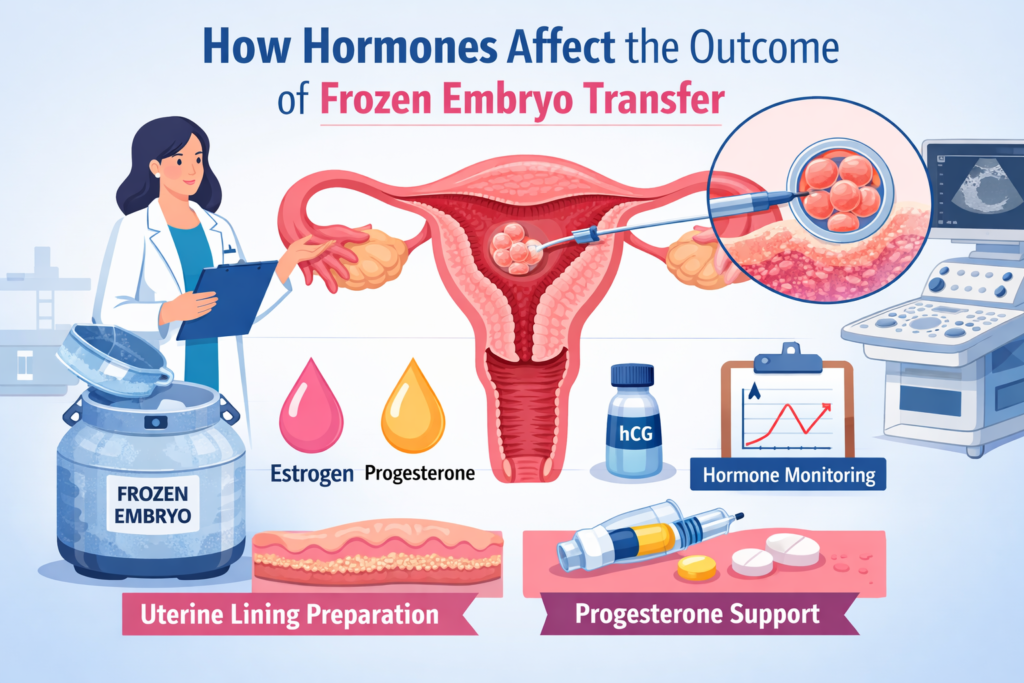
Frozen Embryo Transfer (FET) has become an important part of modern fertility treatment. It allows embryos created through IVF to be frozen and transferred into the uterus at the most suitable time. While advanced technology plays a major role in the success of this procedure, hormones are one of the most critical factors that influence the outcome. The right hormonal balance helps prepare the uterus and ensures the embryo can implant successfully.
For couples seeking Fertility Treatment in Kalyani Nagar, understanding how hormones affect frozen embryo transfer can help them feel more confident and prepared during the IVF journey.
What is Frozen Embryo Transfer?
Frozen Embryo Transfer is a procedure where previously frozen embryos are thawed and placed into a woman’s uterus during a carefully planned cycle. The goal is to synchronize the embryo with the uterine lining so implantation can occur.
Unlike fresh embryo transfer, FET allows doctors to better control the hormonal environment of the body. This improves the chances of a successful pregnancy because the uterus can be prepared in an optimal way.
A skilled specialist, such as the Best gynecologist in Kalyani Nagar, carefully monitors hormone levels and the uterine lining before performing the transfer.
Role of Hormones in Frozen Embryo Transfer
Hormones act as messengers that control the reproductive system. During a frozen embryo transfer cycle, several hormones play essential roles in preparing the body for pregnancy.
The most important hormones involved include:
- Estrogen
- Progesterone
- Luteinizing Hormone (LH)
- Human Chorionic Gonadotropin (hCG)
Each hormone contributes to creating the ideal environment for embryo implantation.
Estrogen and Uterine Lining Preparation
Estrogen is responsible for thickening the uterine lining, also known as the endometrium. A healthy and receptive endometrial lining is necessary for the embryo to attach and grow.
During an FET cycle, doctors may prescribe estrogen supplements to ensure the lining develops properly. Ultrasound scans are used to measure the thickness of the lining, which usually needs to reach around 7–10 mm for optimal implantation.
If estrogen levels are too low, the lining may remain thin, reducing the chances of successful implantation.
Progesterone and Implantation Support
Progesterone is often called the “pregnancy hormone.” It prepares the uterus to accept the embryo and helps maintain early pregnancy.
After the uterine lining has thickened with estrogen, progesterone is introduced to transform the lining into a supportive environment for implantation.
In frozen embryo transfer cycles, progesterone is commonly given through injections, tablets, or vaginal gels. The timing of progesterone administration is extremely important because the embryo must be transferred when the uterine lining is perfectly synchronized with its development stage.
Improper progesterone timing can reduce implantation success.
Natural Cycle vs Hormone Replacement Cycle
Frozen embryo transfer can be done in two different types of cycles:
Natural Cycle FET
In this method, the transfer is timed according to the woman’s natural ovulation cycle. Hormone levels are monitored closely to identify the correct transfer window.
Hormone Replacement Therapy (HRT) Cycle
In this approach, estrogen and progesterone medications are used to control the cycle. This allows doctors to schedule the transfer precisely.
Both approaches have good success rates when managed properly by an experienced specialist offering Fertility Treatment in Kalyani Nagar.
Hormonal Imbalance and Its Impact
Hormonal imbalances can affect the success of frozen embryo transfer in several ways.
Low estrogen may prevent the uterine lining from reaching the required thickness. Insufficient progesterone can make the uterus unreceptive to the embryo. Conditions such as thyroid disorders, PCOS, or stress-related hormonal changes may also influence implantation success.
This is why thorough evaluation and hormonal monitoring are essential before and during the FET cycle.
Importance of Hormone Monitoring
Doctors regularly check hormone levels using blood tests and ultrasound scans. Monitoring helps ensure the uterus is ready for embryo transfer and allows adjustments to medication if necessary.
This personalized approach significantly increases the chances of successful implantation and pregnancy.
Patients are also advised to follow medical instructions carefully, take medications on time, maintain a healthy lifestyle, and avoid stress during the treatment cycle.
Final Thoughts
Hormones play a crucial role in determining the success of frozen embryo transfer. From preparing the uterine lining to supporting early pregnancy, each hormone works together to create the ideal environment for implantation.
With proper hormonal monitoring, personalized treatment plans, and expert guidance, frozen embryo transfer can offer excellent chances of pregnancy for couples struggling with infertility.
Consulting the gynecologist in Kalyani Nagar can help ensure that hormone levels are carefully managed throughout the process, improving the success rate of Fertility Treatment.
Dr. Archana Salve, known as the Best Gynecologist in Kalyani Nagar, provides expert guidance to help couples achieve their dream of parenthood.
 Select an element to maximize. Press ESC to cancel.