
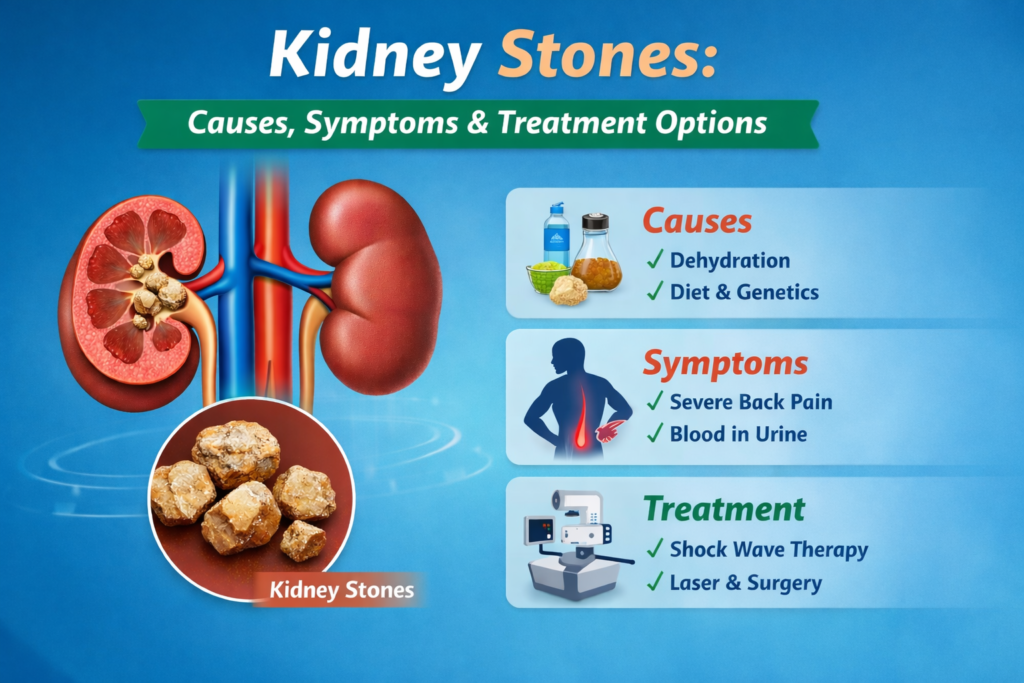
Kidney stones are a common health problem that can cause severe pain and discomfort if not treated in time. They develop when minerals and salts in the urine form hard crystals inside the kidneys. These stones can vary in size, from tiny particles to larger stones that may block the urinary tract. Understanding the causes, symptoms, and latest treatment options for kidney stones can help patients seek timely medical care and prevent complications. If you are experiencing symptoms, consulting a Kidney doctor in Pune can help you receive proper diagnosis and treatment.
What Are Kidney Stones?
Kidney stones are hard deposits made of minerals such as calcium, oxalate, uric acid, or cystine that form inside the kidneys. Normally, urine contains substances that prevent crystal formation. However, when there is an imbalance of these substances, crystals can form and gradually develop into stones.
Kidney stones can remain in the kidney or travel through the urinary tract. Small stones may pass naturally through urine, while larger ones may require medical intervention.
Common Causes of Kidney Stones
Several factors can increase the risk of developing kidney stones. Some of the most common causes include:
- Dehydration
Not drinking enough water is one of the leading causes of kidney stones. When the body lacks sufficient fluids, urine becomes concentrated, allowing minerals to crystallize and form stones. - Dietary Habits
Diets high in salt, sugar, and oxalate-rich foods can contribute to stone formation. Excess salt increases calcium levels in urine, which may lead to stone development. - Family History
People with a family history of kidney stones have a higher risk of developing them. - Obesity
Being overweight or obese can alter the body’s metabolism, increasing the chances of stone formation. - Certain Medical Conditions
Conditions such as urinary tract infections, gout, and digestive diseases can increase the likelihood of kidney stones.
Consulting a Best nephrologist in Pune can help identify the exact cause and create a personalized prevention plan.
Symptoms of Kidney Stones
The symptoms of kidney stones often appear when the stone begins to move in the urinary tract. Some common signs include:
- Severe pain in the back or side (often called renal colic)
- Pain that spreads to the lower abdomen or groin
- Burning sensation during urination
- Frequent urge to urinate
- Blood in urine
- Nausea and vomiting
- Cloudy or foul-smelling urine
In some cases, kidney stones may not cause noticeable symptoms until they become large or block the urinary tract. If you experience sudden severe pain or blood in urine, it is important to seek medical help immediately.
Diagnosis of Kidney Stones
Doctors usually diagnose kidney stones using several tests. These may include:
- Urine tests to check for minerals and infections
- Blood tests to evaluate kidney function and mineral levels
- Ultrasound or CT scan to locate the stone and determine its size
A timely diagnosis by a Kidney doctor in Pune can help determine the best treatment method and prevent complications.
Latest Treatment Options for Kidney Stones
Medical technology has significantly improved the treatment of kidney stones. Today, several advanced and minimally invasive procedures are available.
- Medications and Hydration
For small kidney stones, doctors often recommend drinking plenty of water along with medications that help relax the urinary tract muscles. This makes it easier for the stone to pass naturally.
- Extracorporeal Shock Wave Lithotripsy (ESWL)
ESWL is a non-surgical treatment that uses shock waves to break kidney stones into smaller pieces. These fragments then pass through the urinary tract more easily.
- Ureteroscopy
In this procedure, a thin tube with a camera is inserted through the urethra and bladder to reach the stone. The doctor then removes or breaks the stone using specialized tools.
- Percutaneous Nephrolithotomy (PCNL)
For larger stones, PCNL may be recommended. This minimally invasive surgery involves making a small incision in the back to remove the stone directly from the kidney.
- Laser Treatment
Laser technology is often used during ureteroscopy to break stones into tiny fragments, allowing them to pass easily through urine.
A Best nephrologist in Pune can recommend the most suitable treatment based on the stone’s size, location, and the patient’s overall health.
Tips to Prevent Kidney Stones
Prevention plays a key role in avoiding recurrent kidney stones. Here are some helpful tips:
- Drink at least 2–3 liters of water daily
- Reduce salt intake in your diet
- Limit foods high in oxalates such as spinach and nuts
- Maintain a healthy weight
- Follow your doctor’s dietary recommendations
- Avoid excessive consumption of sugary drinks
Conclusion
Kidney stones can be extremely painful, but early diagnosis and advanced treatments can help manage them effectively. Understanding the causes, recognizing the symptoms, and adopting preventive measures are essential for maintaining kidney health. If you experience symptoms such as severe back pain or blood in urine, consulting an experienced Kidney doctor in Pune is crucial.
With proper care and guidance from the Best nephrologist in Pune, Dr. Sandeep Morkhandikar, patients can receive the latest treatments and take the right steps to prevent kidney stones from recurring.
 Select an element to maximize. Press ESC to cancel.