Polycystic ovary syndrome (PCOS) is a common hormonal condition that can affect menstrual cycles, ovulation, and reproductive health. For some women, irregular or absent ovulation can make conception more difficult. However, having PCOS does not mean that pregnancy is impossible. With appropriate evaluation and individualized care, many women with the condition can work toward their reproductive goals.
Dr. Archana Salve provides women’s health and fertility-related care in Viman Nagar, with treatment plans tailored to each patient’s individual circumstances. Dr. Archana Salve Infertility Treatment in Viman Nagar focuses on understanding potential factors affecting conception rather than using a single approach for every patient.
What Is PCOS?
PCOS is a hormonal and metabolic condition that can affect the way the ovaries function. Women with PCOS may experience irregular menstrual periods, changes related to androgen levels, or features associated with polycystic ovaries.
Not every woman experiences the same symptoms. Some may primarily notice irregular periods, while others may seek medical advice because of difficulties with conception.
A proper medical assessment is important because irregular periods and ovulation problems can have several possible causes.
How Can PCOS Affect Fertility?
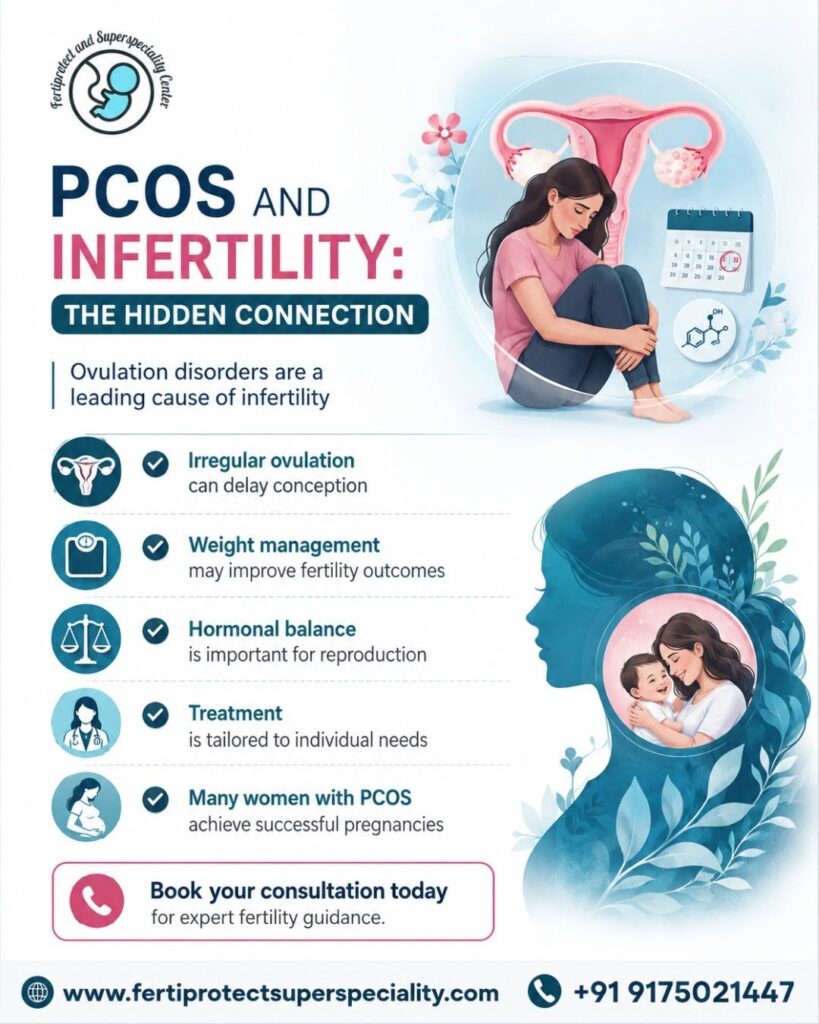
Ovulation is the release of an egg from an ovary. Regular ovulation provides opportunities for fertilization during the menstrual cycle.
In some women with PCOS, hormonal changes can interfere with regular ovulation. This may result in fewer opportunities for conception or make it harder to predict the fertile period.
Importantly, PCOS is only one possible factor associated with difficulty conceiving. Age, sperm health, fallopian tube factors, thyroid function, other hormonal conditions, and several additional factors can also influence fertility.
A fertility evaluation can therefore help identify the factors relevant to an individual couple.
Irregular Ovulation and Conception
One of the challenges associated with PCOS is unpredictable ovulation. A woman may have longer or irregular menstrual cycles, making it difficult to determine when ovulation is occurring.
Depending on the patient’s circumstances, a doctor may assess menstrual history, hormone levels, ultrasound findings, and other relevant factors. This information can help guide an appropriate ovulation assessment and treatment plan.
Rather than relying on assumptions about cycle timing, professional evaluation can provide a clearer understanding of reproductive health.
Does Weight Management Matter?
Weight and metabolic health can be relevant considerations for some women with PCOS. For individuals who are overweight, even modest lifestyle changes may sometimes support improvements in metabolic health and menstrual regularity.
However, PCOS can also occur in women who are not overweight. Therefore, weight should not be viewed as the only factor or as a measure of reproductive health.
A personalized PCOS lifestyle management plan may include balanced nutrition, appropriate physical activity, adequate sleep, and strategies for maintaining overall metabolic health.
Patients should avoid extreme diets or rapid weight-loss programs without professional guidance.
Hormonal Balance and Reproductive Health
Hormones play an important role in menstrual cycles and ovulation. Changes involving reproductive hormones can contribute to irregular cycles and other symptoms associated with PCOS.
A healthcare professional may recommend appropriate tests based on the patient’s symptoms and medical history. Treatment should address the individual’s specific concerns rather than attempting to achieve a generalized concept of “hormonal balance.”
For women planning pregnancy, the focus may be on identifying whether ovulation is occurring and addressing factors that could be affecting conception.
Treatment Is Individualized
There is no single treatment suitable for every woman with PCOS. Management depends on symptoms, reproductive goals, age, medical history, metabolic health, and other relevant factors.
For women who are trying to conceive, treatment may involve approaches designed to support ovulation when medically appropriate. In some circumstances, additional fertility procedures may be considered.
The appropriate option should be selected following an evaluation by a qualified gynecologist or fertility specialist.
Fertility evaluation can also help determine whether factors other than PCOS may be contributing to difficulty conceiving.
Can Women With PCOS Have a Successful Pregnancy?
Yes. Many women with PCOS become pregnant, either naturally or with medical assistance when needed. A diagnosis of PCOS should not automatically be interpreted as a prediction of infertility.
The time required to conceive varies considerably between individuals. Women who have irregular periods, suspected ovulation problems, or have been trying to conceive without success may benefit from discussing their situation with a healthcare professional.
Early evaluation can help identify potential issues and provide an opportunity to discuss suitable options.
When Should You Seek Fertility Guidance?
Consider speaking with a gynecologist or fertility specialist if you have persistently irregular periods, suspected ovulation problems, or concerns about conception.
A consultation can help establish a medical history, identify relevant risk factors, and determine whether further investigations are appropriate. Fertility care should be approached as a personalized process rather than based solely on information available online.
For women seeking women’s health and fertility care in Viman Nagar, Dr. Archana Salve can provide professional guidance based on individual needs.
A Personalized Approach to PCOS and Fertility
PCOS can affect reproductive health, but its impact varies from woman to woman. Understanding ovulation, addressing relevant lifestyle factors, and receiving appropriate medical evaluation can help patients make informed decisions about their reproductive health.
Dr. Archana Salve Infertility Treatment in Viman Nagar emphasizes individualized assessment and care. If you have concerns about PCOS, menstrual irregularities, ovulation, or conception, discussing them with a qualified healthcare professional is an appropriate next step.
This article is intended for general educational purposes and does not replace medical diagnosis, treatment, or individualized advice. Fertility and PCOS management should be discussed with a qualified healthcare professional.