
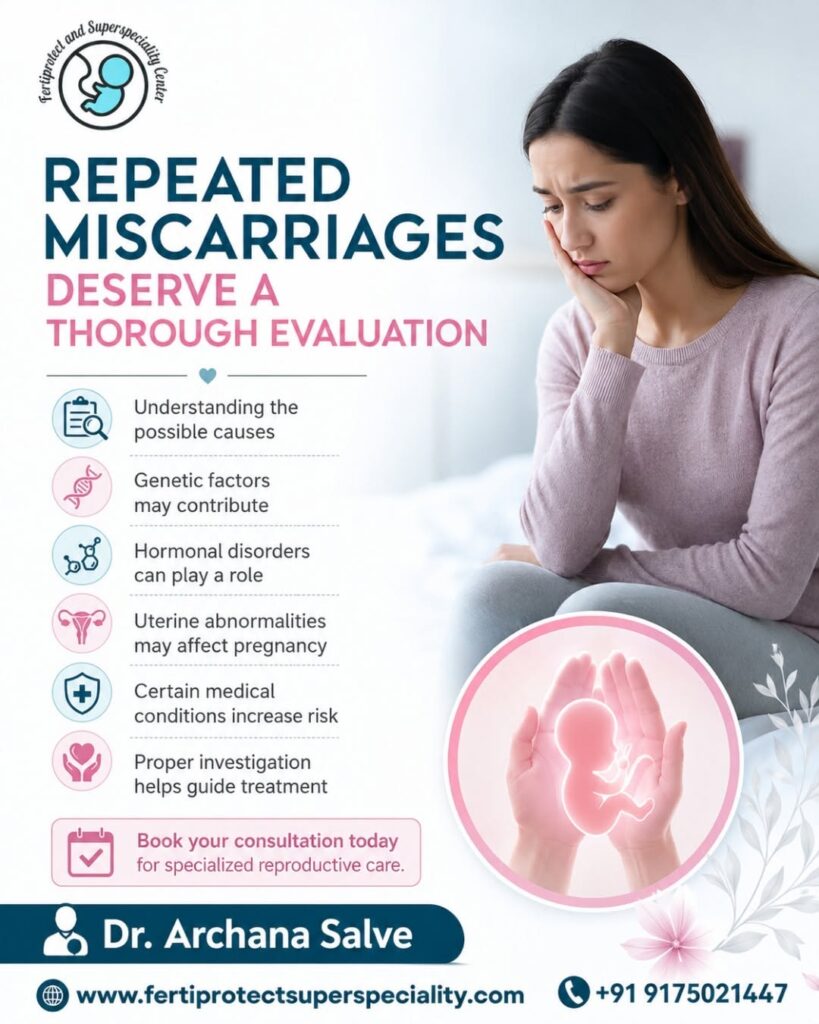
Pregnancy loss can be emotionally challenging, especially when it happens more than once. Recurrent pregnancy loss may have several possible causes, including genetic, hormonal, anatomical and medical factors. A careful evaluation can help determine whether any potentially manageable factor is present.
At the same time, it is important to remember that not every pregnancy loss has an identifiable cause. Medical care should therefore focus on the individual rather than assuming a particular diagnosis.
Why Can Miscarriage Happen?
Early pregnancy development involves many biological processes. Chromosomal abnormalities can occur during the formation of an embryo and may prevent normal development. Such changes can happen randomly and are often not caused by anything the woman did.
Other possible factors may include certain uterine abnormalities, endocrine conditions and selected medical disorders.
A healthcare professional may consider these factors based on the patient’s history and examination.
Genetic Factors
Genetic factors may be relevant in some cases of recurrent pregnancy loss.
Chromosomal changes in an embryo are among the common causes of early miscarriage. In selected circumstances, doctors may discuss genetic testing or genetic counselling.
The decision depends on individual circumstances and should be made with appropriate medical guidance.
Hormonal and Metabolic Factors
Certain hormonal conditions may need attention when planning pregnancy.
Thyroid disorders, diabetes and other metabolic problems can affect general health and pregnancy and may therefore be assessed when appropriate.
Managing an existing medical condition before conception can be an important part of pregnancy preparation.
Uterine Factors
The structure of the uterus can also be relevant in selected patients.
Certain anatomical conditions may affect implantation or pregnancy development. Depending on the medical history, a doctor may recommend an ultrasound or other imaging examination.
Not every patient with repeated miscarriage will have a uterine abnormality, and testing decisions should be individualized.
What Happens During an Evaluation?
The first step is usually a detailed consultation.
The doctor may review:
- Previous pregnancy history
- Timing and circumstances of miscarriages
- Menstrual history
- Existing medical conditions
- Previous surgeries
- Current medications
- Family history
- Previous ultrasound and laboratory reports
Depending on the findings, selected investigations may be recommended.
The aim is to obtain useful information that can guide appropriate care rather than performing every available test.
Preparing for Pregnancy After Miscarriage
Pregnancy planning after miscarriage can involve both physical and emotional considerations.
A preconception check-up may help identify health issues that should be addressed before conception. The doctor may discuss nutritional requirements, medications, lifestyle factors and management of existing medical conditions.
Patients should avoid starting supplements or medicines based solely on online information. Any treatment should be discussed with a qualified healthcare professional.
Emotional Support Matters
Repeated miscarriage can cause grief, fear and anxiety. These feelings are valid and should not be dismissed.
Support from a partner, family member, counsellor or mental-health professional can be valuable. Taking time to process pregnancy loss may be an important part of preparing emotionally for another pregnancy.
Meet Dr. Archana Salve
For women looking for professional guidance regarding recurrent pregnancy loss, fertility concerns, or pregnancy planning, consultation with a gynaecologist can help clarify the next steps.
Dr. Archana Salve Gynaecologist in Viman Nagar provides women’s healthcare consultations, including reproductive and pregnancy-related concerns. Individual history and available reports can be reviewed to determine whether further evaluation is appropriate.
The purpose of medical evaluation is to understand potential contributing factors and provide evidence-based guidance. No medical consultation can guarantee a particular pregnancy outcome.
Conclusion
Repeated miscarriage can be associated with several possible factors, but each woman’s circumstances are different. Appropriate evaluation may help identify conditions that require attention and support informed pregnancy planning.
If you have experienced repeated pregnancy loss, consider consulting a qualified healthcare professional for individualized advice instead of relying on generalized online information.
For women searching for a gynaecologist in Viman Nagar, recurrent miscarriage care, fertility consultation, or preconception care, Dr. Archana Salve can provide a clinical assessment based on individual healthcare needs.