
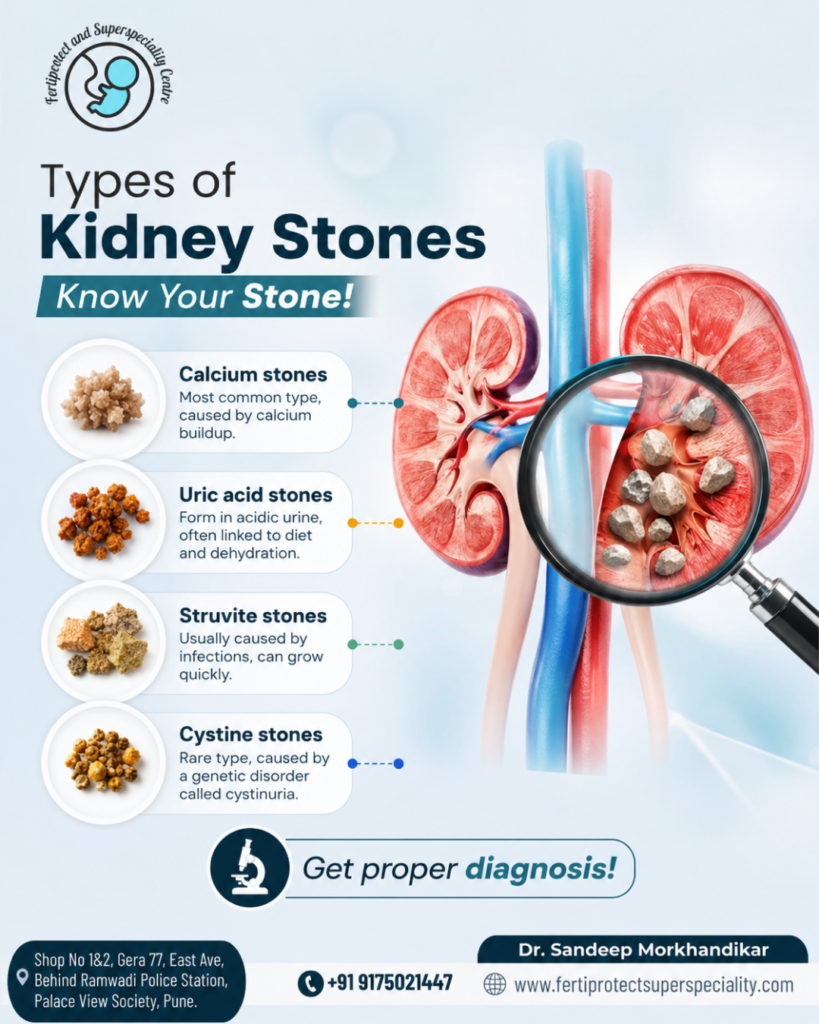
Kidney stones are one of the most common urinary tract disorders affecting people of all ages. These hard mineral deposits form inside the kidneys and can cause severe pain, discomfort, and urinary problems. Understanding the different types of kidney stones is essential because each type has unique causes, risk factors, and treatment approaches.
If you are experiencing recurrent kidney stones or symptoms such as severe back pain, blood in urine, or difficulty urinating, consulting an experienced kidney specialist is crucial. Dr. Sandeep Morkhandikar, Best Nephrologist in Pune, provides comprehensive diagnosis and treatment for kidney stones and other kidney-related conditions at Fertiprotect & Superspeciality Centre.
What Are Kidney Stones?
Kidney stones are solid masses formed from crystals that develop in the kidneys due to excess minerals and salts in the urine. These stones can vary in size, from tiny grains to larger stones that block the urinary tract.
Common symptoms of kidney stones include:
- Severe pain in the back, side, or lower abdomen
- Burning sensation during urination
- Blood in urine
- Frequent urge to urinate
- Nausea and vomiting
- Cloudy or foul-smelling urine
- Fever and chills in case of infection
Early diagnosis and treatment can help prevent complications and protect kidney function.
Types of Kidney Stones
1. Calcium Stones
Calcium stones are the most common type of kidney stone, accounting for nearly 80% of all cases. They usually form as calcium oxalate stones, although some may develop as calcium phosphate stones.
Causes of Calcium Stones
- High levels of calcium in urine
- Excessive intake of oxalate-rich foods
- Dehydration
- Certain metabolic disorders
- Excess vitamin D supplementation
Foods High in Oxalates
- Spinach
- Nuts
- Chocolate
- Tea
- Beets
People with recurrent calcium stones should undergo proper evaluation to identify the underlying cause and prevent recurrence.
2. Uric Acid Stones
Uric acid stones develop when urine becomes too acidic. These stones are commonly seen in people who consume a high-protein diet or suffer from conditions that increase uric acid levels.
Risk Factors for Uric Acid Stones
- Dehydration
- High intake of red meat and seafood
- Gout
- Obesity
- Diabetes
Unlike some other types of stones, uric acid stones can often be dissolved through medications and dietary modifications if detected early.
3. Struvite Stones
Struvite stones are usually associated with urinary tract infections (UTIs). These stones can grow rapidly and become quite large if not treated promptly.
Causes of Struvite Stones
- Recurrent urinary tract infections
- Bacterial infections affecting the urinary system
- Poor bladder emptying
Symptoms
- Frequent UTIs
- Flank pain
- Fever
- Difficulty passing urine
Because these stones can enlarge quickly, early diagnosis and treatment are essential to prevent kidney damage.
4. Cystine Stones
Cystine stones are relatively rare and occur due to a hereditary condition called cystinuria. This genetic disorder causes the kidneys to release excessive amounts of certain amino acids into the urine, leading to stone formation.
Characteristics of Cystine Stones
- Often occur at a younger age
- Tend to recur frequently
- May require long-term medical management
Individuals with a family history of recurrent kidney stones should consider specialized evaluation for genetic causes.
Why Identifying the Type of Kidney Stone Matters
Many patients assume that all kidney stones are the same, but proper stone analysis is extremely important. Different stones require different prevention strategies.
For example:
- Calcium stones may require dietary modifications and calcium metabolism evaluation.
- Uric acid stones often respond to medications that reduce urine acidity.
- Struvite stones require treatment of underlying infections.
- Cystine stones need specialized long-term management.
Accurate identification helps reduce the risk of recurrence and protects long-term kidney health.
How Kidney Stones Are Diagnosed
At Fertiprotect & Superspeciality Centre, Dr. Sandeep Morkhandikar, Best Nephrologist in Pune, utilizes advanced diagnostic methods to identify kidney stones and their underlying causes.
Diagnostic tests may include:
- Urine analysis
- Blood tests
- Ultrasound scan
- CT scan
- Kidney function tests
- Stone composition analysis
A detailed evaluation helps create a personalized treatment and prevention plan.
Treatment Options for Kidney Stones
Treatment depends on the size, location, and type of stone.
Conservative Treatment
Small stones may pass naturally with:
- Increased water intake
- Pain management medications
- Medications to facilitate stone passage
Advanced Treatment Options
For larger stones, treatment may include:
- Extracorporeal Shock Wave Lithotripsy (ESWL)
- Ureteroscopy
- Percutaneous Nephrolithotomy (PCNL)
- Laser stone removal procedures
The most suitable treatment is determined based on the patient’s condition and stone characteristics.
Tips to Prevent Kidney Stones
Preventing kidney stones is often easier than treating them. Here are some effective prevention strategies:
- Drink at least 2.5 to 3 liters of water daily
- Limit excessive salt intake
- Maintain a healthy weight
- Reduce excessive consumption of animal protein
- Follow dietary recommendations based on stone type
- Treat urinary tract infections promptly
- Schedule regular kidney health checkups
Individuals with a history of kidney stones should undergo periodic monitoring to detect recurrence early.
Consult Dr. Sandeep Morkhandikar for Expert Kidney Stone Care
Kidney stones can significantly affect your quality of life and may lead to serious complications if left untreated. Understanding the type of kidney stone you have is the first step toward effective treatment and prevention.
If you are experiencing symptoms of kidney stones or recurrent urinary problems, consult Dr. Sandeep Morkhandikar, Best Nephrologist in Pune, at Fertiprotect & Superspeciality Centre. With expert diagnosis, advanced treatment options, and personalized care, you can receive comprehensive kidney stone management and long-term kidney health support.